Does a Cow Have to Be Pregnant to Produce Milk?
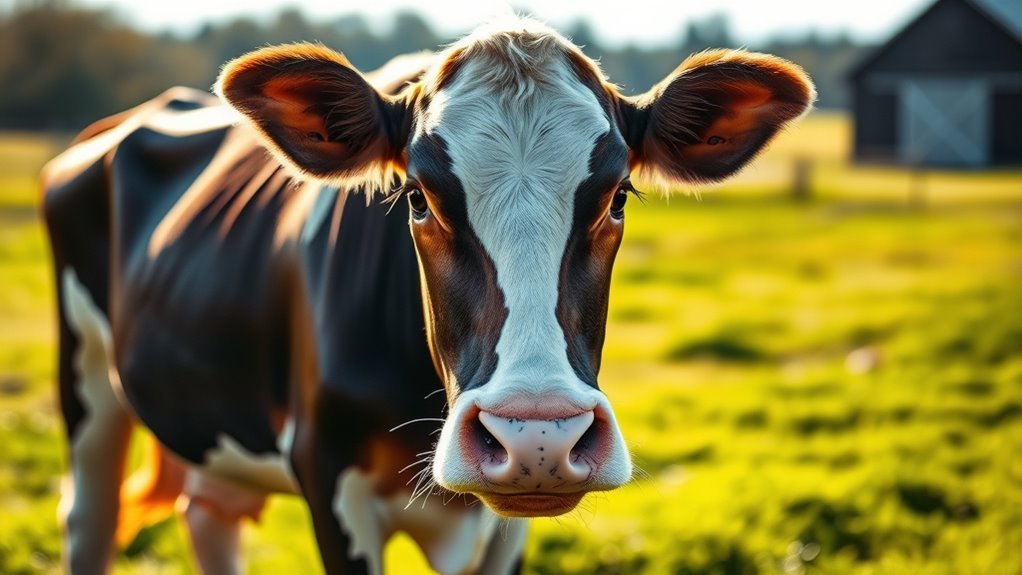
Yes, a cow has to be pregnant and give birth before she can produce milk. Pregnancy triggers important hormonal changes—like rising levels of progesterone, estrogen, and prolactin—that get her udder ready for milk production.
After calving, another hormone called oxytocin helps release the milk. Without pregnancy and giving birth, these essential hormonal signals won’t happen, so milk production stops.
Curious about how these hormones work together? Or why milk production ends if the cow doesn’t calve? Keep exploring the topic to learn more about this fascinating process!
Key Takeaways
- Milk production in cows begins only after calving, not merely pregnancy. Pregnancy hormones get the udder ready, but the actual milk secretion starts after the calf is born.
- Oxytocin, a hormone released at calving, triggers the milk let-down and flow from the udder. Without a recent pregnancy or calving, the hormonal signals needed for milk production just aren’t there.
- So, cows aren’t pregnant while they’re actively producing milk. Instead, their milk production is closely tied to their reproductive cycles.
How Does Pregnancy Start Milk Production in Cows?
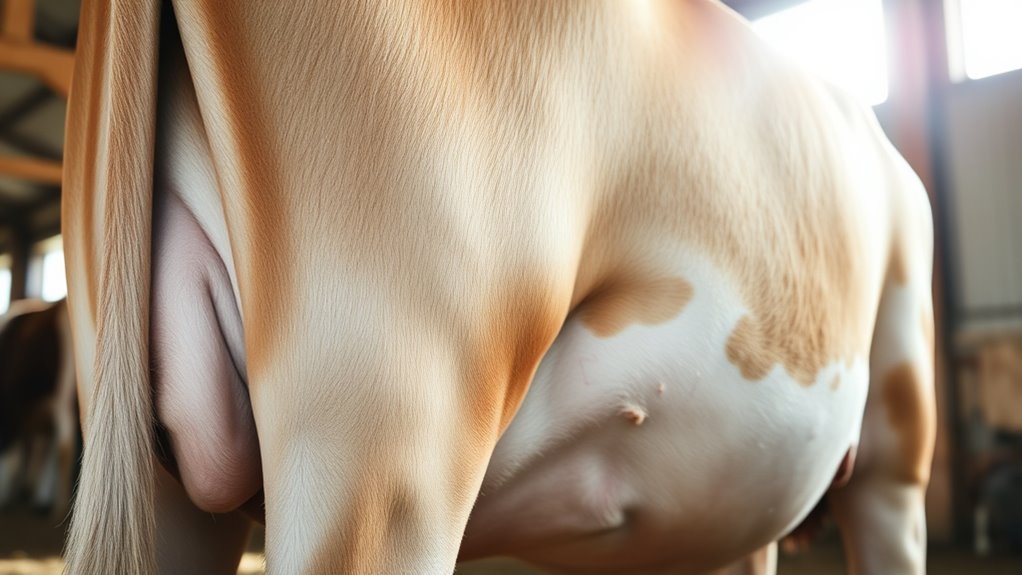
Although milk production in cows only begins after they give birth, pregnancy plays a crucial role in starting the process. During pregnancy, hormonal changes trigger the development of the milk duct system within the udder.
You’ll notice that progesterone and estrogen levels rise, preparing the udder for upcoming milk production. Prolactin also increases, supporting the growth and function of milk-producing cells.
When calving finally happens, oxytocin is released, stimulating milk let-down so the milk can flow from the milk duct to the teat. These hormones work together to guarantee the udder is ready and capable of producing milk right after birth.
Why Does Milk Production Stop Without Calving?
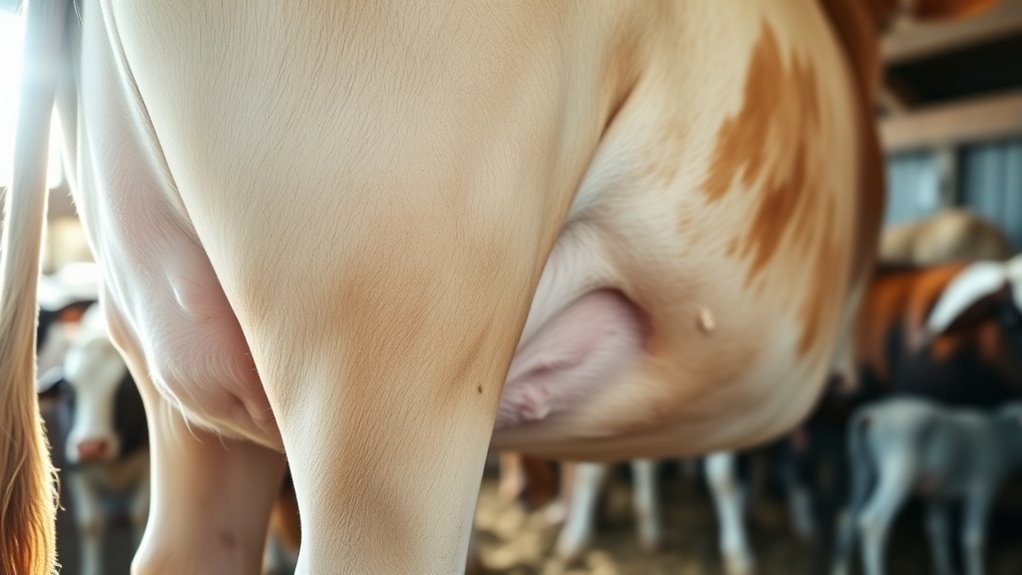
Because milk production depends on hormonal signals triggered by pregnancy and calving, a cow stops producing milk when she isn’t pregnant or hasn’t recently given birth. Hormones like oxytocin and prolactin play key roles in lactation after calving.
Without these hormonal cues from pregnancy and calving, milk production ceases naturally. When a cow is dried off, usually about two months before her next calving, milk production declines in preparation for milk cessation.
This cycle aligns with her reproductive cycles, ensuring milk is only produced when needed. It’s pretty much the cow’s way of saving energy and resources for when milk is actually required.
| Stage | Key Hormones | Milk Production Status |
|---|---|---|
| Pregnancy | Prolactin | Initiates lactation |
| Calving | Oxytocin | Maintains lactation |
| Dried Off | Hormone decline | Milk cessation |
Frequently Asked Questions
Can You Milk a Cow That Hasn’t Been Pregnant?
No, you can’t milk a cow that hasn’t been pregnant. She needs to have calved first to produce milk since hormonal changes only trigger milk production after giving birth. Without that, her udder stays inactive.
Do Virgin Cows Produce Milk?
No, virgin cows don’t produce milk because their udders haven’t developed without pregnancy. You can’t expect them to lactate since milk production only starts after they’ve given birth and gone through the natural biological process.
Can Cows Produce Any Milk Without Being Pregnant?
You won’t find cows producing milk like a medieval alchemist conjuring potions—they can’t make milk without pregnancy. Their bodies need that hormonal trigger post-calving, so no pregnancy means no milk naturally.
How Long Do Cows Produce Milk After Giving Birth?
You can expect a cow to produce milk for about ten months after giving birth. Milk production starts right after calving and gradually decreases, with cows usually dried off two months before their next calf arrives.
Conclusion
So, you’re thinking cows just casually whip up milk like a coffee machine? Nope, they need to be pregnant first—surprise! Without a calf, the milk party’s canceled.
Nature’s way of saying, “No baby, no milk, no exceptions.” So next time you pour that glass, remember: it’s not magic, it’s biology.
Milk production is strictly a maternity gig, and cows don’t moonlight as dairy queens without a little pregnancy drama. In short, a cow has to be pregnant to produce milk, as it’s all tied to the birth and nursing of a calf.
Understanding this helps us appreciate the natural process behind dairy farming and the importance of pregnancy in milk production.