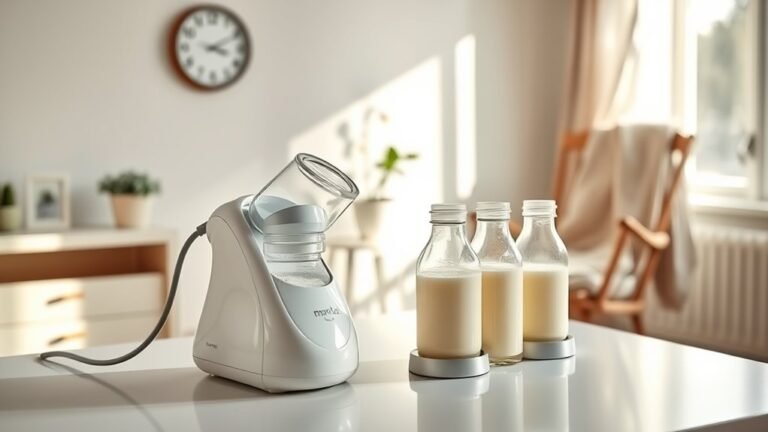
When Does Breast Milk Usually Come In After Birth?
Your breast milk usually comes in between two to five days after birth, following the initial colostrum phase. This transition from colostrum to mature milk is an exciting milestone for new moms.
You might notice your breasts feeling fuller, warmer, or firmer, sometimes even leaking as the milk flow begins.
Hormonal shifts, like rising prolactin levels, trigger this important change. Plus, your baby’s increased rooting and sucking play a big role in boosting your milk supply.
Frequent nursing or pumping helps support production and can ease any engorgement you might experience.
Keep exploring to discover how to recognize the signs your milk is coming in and learn tips to support your milk flow effectively. It’s all about tuning into your body and your baby’s needs during these first few days.
Key Takeaways
- Breast milk typically comes in between 2 to 5 days after birth following initial colostrum production. Hormonal changes, including a drop in progesterone and rise in prolactin, trigger milk production postpartum.
- You might notice physical signs like breast fullness, warmth, swelling, and occasional leaking. These are good indicators that your milk is coming in.
- Babies often show increased rooting and sucking behaviors as a cue that milk production has started. It’s their way of letting you know they’re ready to feed more.
- Frequent breastfeeding or pumping supports milk supply. It also helps manage engorgement during this transition, making things more comfortable for you.
When Does Breast Milk Come In After Birth?
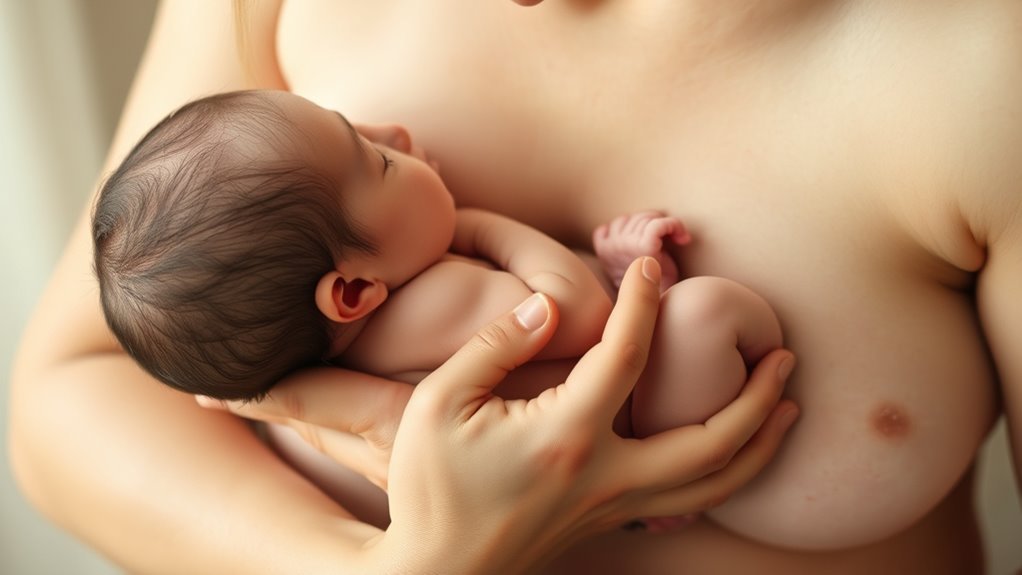
Although every mother’s experience is unique, breast milk usually starts coming in between two to five days after birth, following the initial production of colostrum.
Breast milk typically begins flowing two to five days after birth, following the first colostrum production.
In those first days postpartum, your body undergoes hormonal changes—mainly a drop in progesterone and a rise in prolactin—that trigger milk production. You might notice your breasts becoming fuller, warmer, or even leaking early milk as your milk supply establishes.
Frequent breastfeeding or pumping during this time helps stimulate and maintain milk production. Remember, the timing of breast milk coming in can vary based on factors like your health, birth process, stress, and breastfeeding support.
Understanding this process helps you prepare for the natural shift from colostrum to mature breast milk. It’s all part of your body getting ready to nourish your baby.
Signs Your Breast Milk Is Coming In and How to Support It
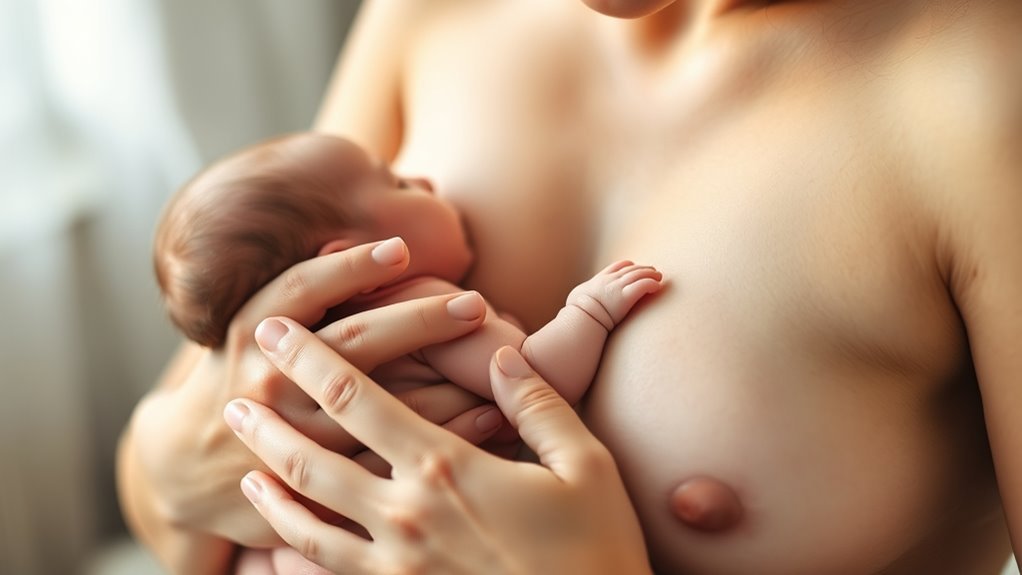
When your breast milk starts coming in, you’ll notice clear signs like increased fullness, warmth, and firmness in your breasts. You might experience engorgement and milk leakage, especially overnight, signaling that milk production is underway.
Your baby’s cues, such as rooting and sucking, often become more frequent as milk flow begins. To support breastfeeding and maintain a healthy milk supply, pay attention to these signs of milk production:
- Breast fullness easing as milk flow establishes, bringing relief
- Frequent milk expression or nursing to manage engorgement
- Responding promptly to baby cues to encourage steady milk supply
Frequently Asked Questions
What Triggers Breast Milk to Come In?
Hormonal changes after your placenta delivers trigger breast milk to come in. When your baby suckles or you pump, oxytocin releases, increasing supply. Skin-to-skin contact and frequent feeding also help your milk flow start.
How Quickly Do Breasts Refill?
Your breasts typically refill within 30 to 40 hours after birth, but it varies. Nursing or pumping regularly helps speed this up, preventing engorgement and ensuring your milk supply stays steady and consistent.
Will Breast Milk Dry up on Its Own?
Yes, your breast milk will dry up on its own if you stop breastfeeding or pumping regularly. It usually takes weeks or months, but factors like stress or illness can speed up the process.
How Can I Make My Milk Come in Faster After Birth?
You can speed milk production by breastfeeding or pumping every 1-3 hours—90% of moms see increased supply this way. Focus on a good latch, skin-to-skin contact, hydration, and gentle breast massage to help milk come in faster.
Conclusion
Just like the dawn follows night, your breast milk usually comes in within 2 to 5 days after birth. You might notice your breasts feeling fuller and warmer—that’s your body’s way of saying it’s ready to nourish your little one.
Trust this natural rhythm, and support it with plenty of skin-to-skin contact and hydration. These simple steps can really help your body get into its breastfeeding groove.
Remember, every new beginning has its perfect timing, and so does your breastfeeding journey. When breast milk comes in after birth, it’s a sign your body is gearing up to provide the best nutrition for your baby. Be patient and gentle with yourself during this time—you’re doing an amazing job nurturing your little one.