How to Safely Mix Breast Milk and Formula
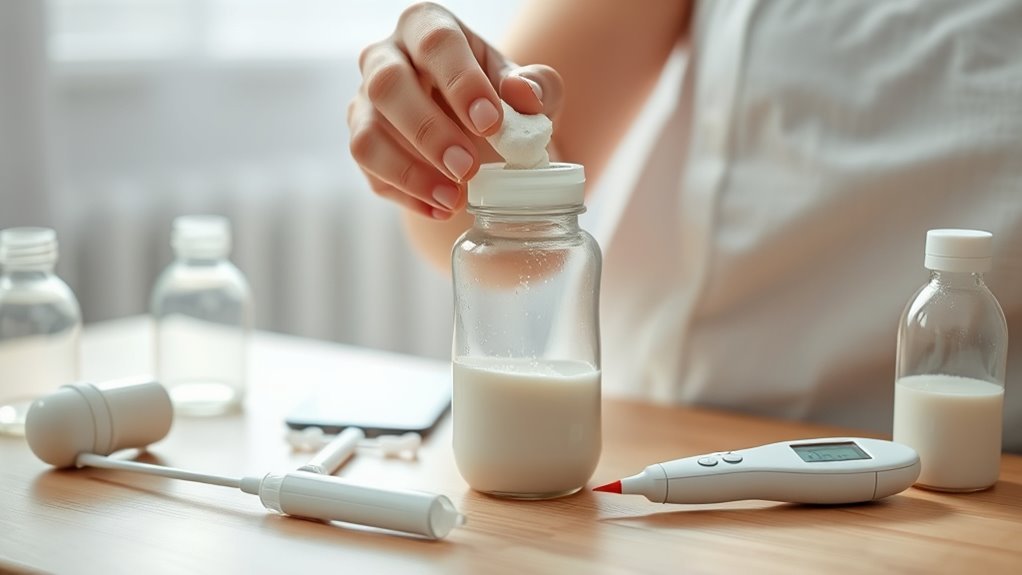
To safely mix breast milk and formula, it’s important to start by preparing the formula first. Follow the manufacturer’s instructions carefully, and always use sterilized bottles and utensils to keep everything clean.
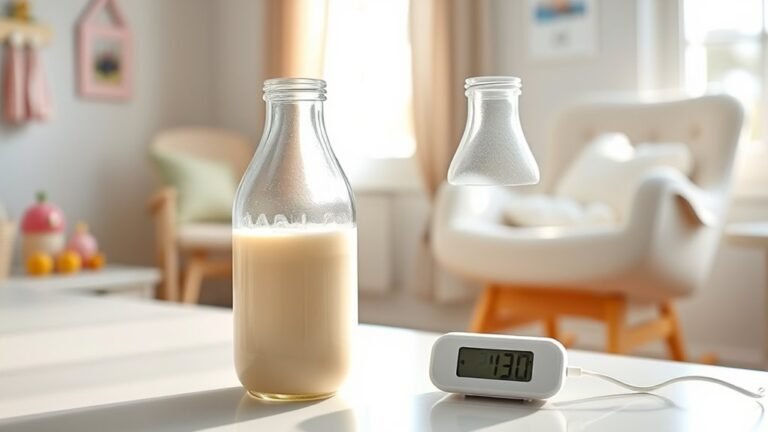
Once the formula is measured and mixed thoroughly, pour it into a clean, sterilized bottle. After that, add the breast milk to the bottle. This method helps maintain the safety and quality of both the breast milk and formula.
Make sure to store the mixed milk in the refrigerator right away. Avoid leaving it out at room temperature for more than an hour, as this can cause bacteria to grow.
If there’s any leftover milk after feeding, it’s best to discard it after 24 hours. This helps keep your baby safe and healthy.
Keep reading to learn more about how to properly store and handle the mixture for your little one.
Key Takeaways
- Always prepare formula separately following manufacturer’s instructions before adding breast milk.
- Use sterilized bottles and utensils to prevent contamination and bacterial growth.
- Pour formula into the sterilized bottle first, then add breast milk to minimize bacterial risk.
- Store the mixed milk in sterilized bottles and refrigerate immediately.
- Make sure to discard it if unused after 24 hours.
- Avoid keeping mixed milk at room temperature for more than one hour.
- This helps keep it safe and maintain its nutrition.
How to Safely Mix Breast Milk and Formula
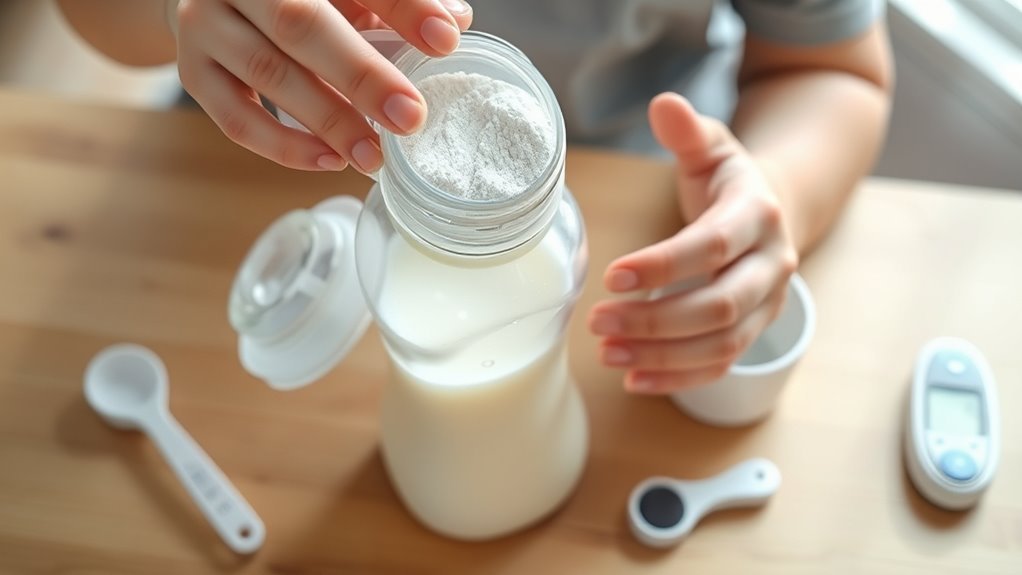
When mixing breast milk and formula, always prepare the formula according to the manufacturer’s instructions first. This guarantees your baby gets the right nutrition.
Use sterilized bottles and utensils during formula preparation and mixing breast milk. This helps follow safety rules and reduce contamination risks.
Always use sterilized bottles and utensils to ensure safety and prevent contamination when preparing formula and breast milk.
If you’re using powdered formula, measure it accurately and mix thoroughly. This prevents clumping and assures proper nutrition.
Pour the prepared formula into the sterilized bottle before adding expressed breast milk—never the other way around. This method helps maintain feeding safety by minimizing bacterial growth.
Storing and Handling Mixed Breast Milk and Formula
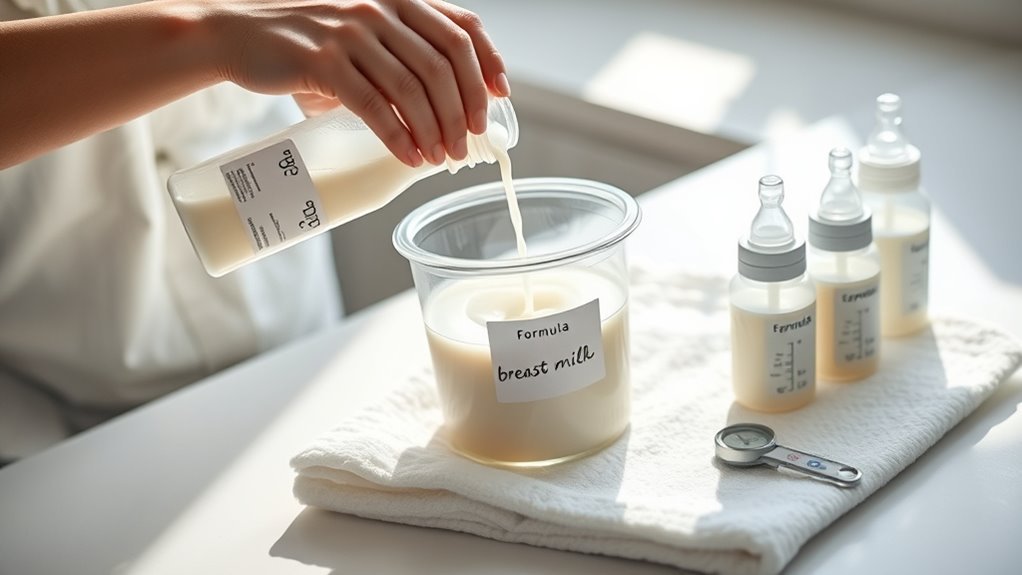
After mixing breast milk and formula following safe preparation steps, you need to focus on storing and handling the mixture properly to keep it fresh and safe for your baby. Always prepare formula separately according to instructions before combining it with breast milk.
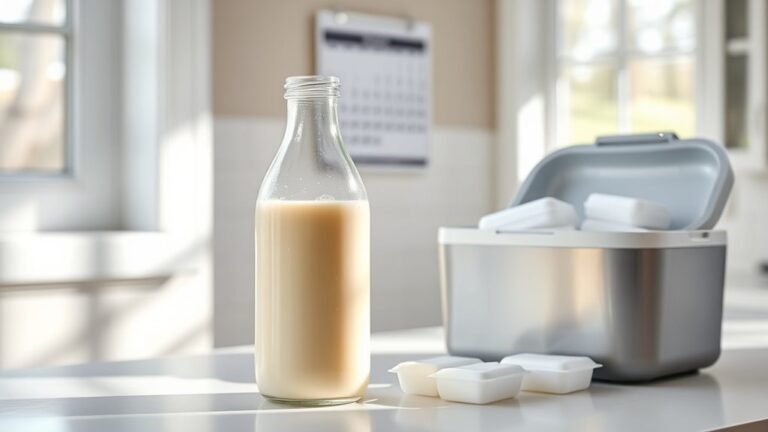
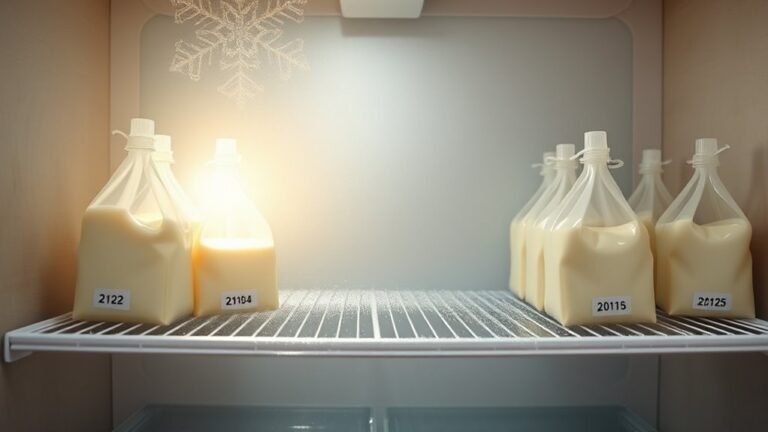
Store mixed breast milk and formula in sterilized bottles and refrigerate immediately to maintain safety. Keep in mind the storage duration to prevent spoilage and loss of immune components.
- Use sterilized bottles for storing mixed milk and formula.
- Refrigerate the mixture promptly and avoid room temperature storage beyond one hour.
- Discard any unused mixed milk within 24 hours.
- Whenever possible, store and feed breast milk and formula separately to protect immune components.
Proper storage and handling preserve nutrition and ensure your baby’s health. So, taking these simple steps can really make a big difference!
Frequently Asked Questions
What Is the Best Way to Mix Breastmilk and Formula Together?
The best way to mix breast milk and formula is to prepare the formula separately, then gently combine it with the expressed breast milk in a sterilized bottle, avoiding vigorous shaking to preserve breast milk’s beneficial properties.
Can Mixing Breastmilk and Formula Upset Baby’s Stomach?
Yes, mixing breast milk and formula can upset your baby’s stomach. You might notice gas or fussiness because their digestive system adjusts to the different compositions. Watch for symptoms and adjust feeding gradually to minimize discomfort.
Is 2 Oz of Breastmilk the Same as 2 Oz of Formula?
No, 2 oz of breast milk isn’t exactly the same as 2 oz of formula. They have equal volume but differ in calories and nutrients, since breast milk’s composition varies while formula’s is standardized.
Why Is It Not Recommended to Mix Breast Milk and Formula?
Mixing breast milk and formula is like mixing oil and water—it can ruin breast milk’s immune benefits and cause nutrient imbalances. You don’t want to risk bacterial growth or waste leftover formula, so it’s best to keep them separate.
Conclusion
Mixing breast milk and formula is like blending two colors on a canvas—each adds its unique hue to nourish your baby. By storing and handling the mixture carefully, you guarantee this delicate masterpiece stays safe and fresh.
Remember, just as an artist protects their work, you’re safeguarding your little one’s health with every thoughtful step. Trust your instincts, follow the guidelines, and watch your baby thrive in the beautiful blend you’ve created.
When you mix breast milk and formula, it’s important to keep safety in mind. Proper storage and handling help prevent any bacterial growth and keep the milk fresh for your baby. Always use clean bottles and prepare small amounts to avoid waste.
By following these simple steps to safely mix breast milk and formula, you’re ensuring your baby gets the best nutrition possible. This careful blend supports their growth and wellbeing, letting you feel confident and secure in your feeding routine.