5 Reasons You Should Use Buttermilk Instead of Milk
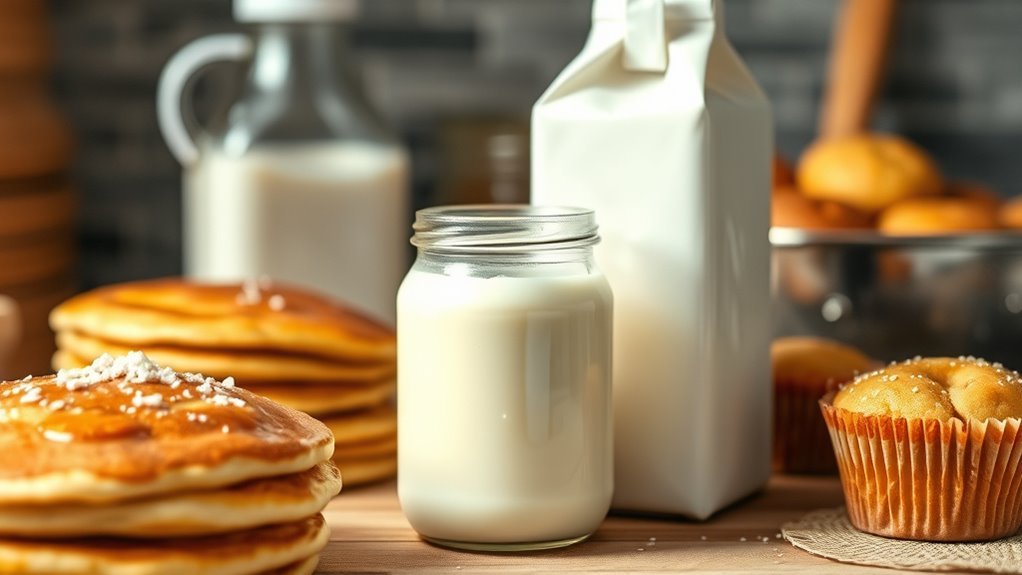
You should use buttermilk instead of milk because its natural acidity tenderizes gluten, giving your baked goods a softer, moister texture. It also boosts rise by activating baking soda, resulting in fluffier treats. This makes buttermilk a fantastic ingredient for cakes, pancakes, and muffins that need that perfect lightness.
Buttermilk offers a tangy flavor and extra nutrients like calcium and probiotics, which support digestion and bone health. Plus, it’s super easy to substitute in your favorite recipes without losing quality or taste.
Keep exploring to uncover how buttermilk transforms your recipes in delicious ways — you might just find it’s your new baking secret weapon!
Key Takeaways
- Buttermilk’s acidity tenderizes gluten, resulting in softer, more tender baked goods. It really helps give your treats that perfect texture.
- Its natural acidity also activates baking soda, which enhances the rise and creates lighter, fluffier textures. So your baked goods turn out airy and delicious.
- Buttermilk contains probiotics and extra nutrients like calcium and vitamin B12. These add some health benefits that regular milk just doesn’t offer.
- Plus, it adds a tangy, complex flavor that really enriches the taste profile of your recipes. That little twist can make a big difference in flavor.
- And the best part? Buttermilk offers convenient substitutes that maintain moisture, leavening, and flavor without any loss in quality. It’s a win-win for your cooking!
What Makes Buttermilk Different From Milk
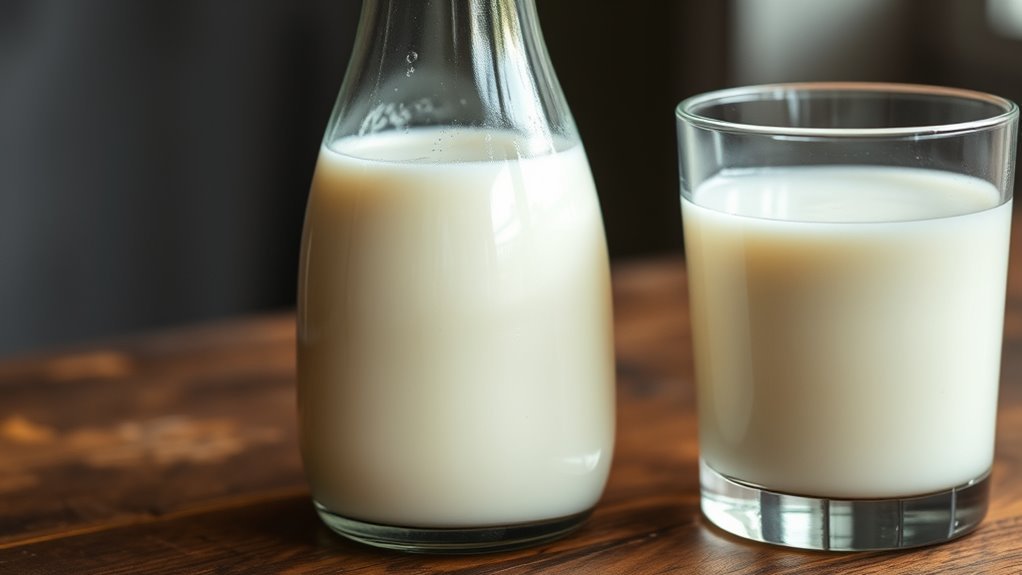
What sets buttermilk apart from regular milk? You’ll notice that buttermilk is more acidic, with a pH level between 4.4 and 4.8, thanks to its fermentation process. This acidity plays a vital role in activating leavening agents like baking soda, enhancing your recipes’ rise.
Unlike plain milk, buttermilk contains live probiotic cultures, which support your digestive health. The fermentation also boosts its nutritional profile, increasing calcium and vitamins.
You’ll find buttermilk has a thicker, creamier texture and a distinct tangy flavor that adds depth to your dishes. These unique culinary properties make buttermilk a versatile ingredient, enriching both the flavor and texture of your meals in ways regular milk simply can’t match.
How Buttermilk Makes Baked Goods Tender and Moist
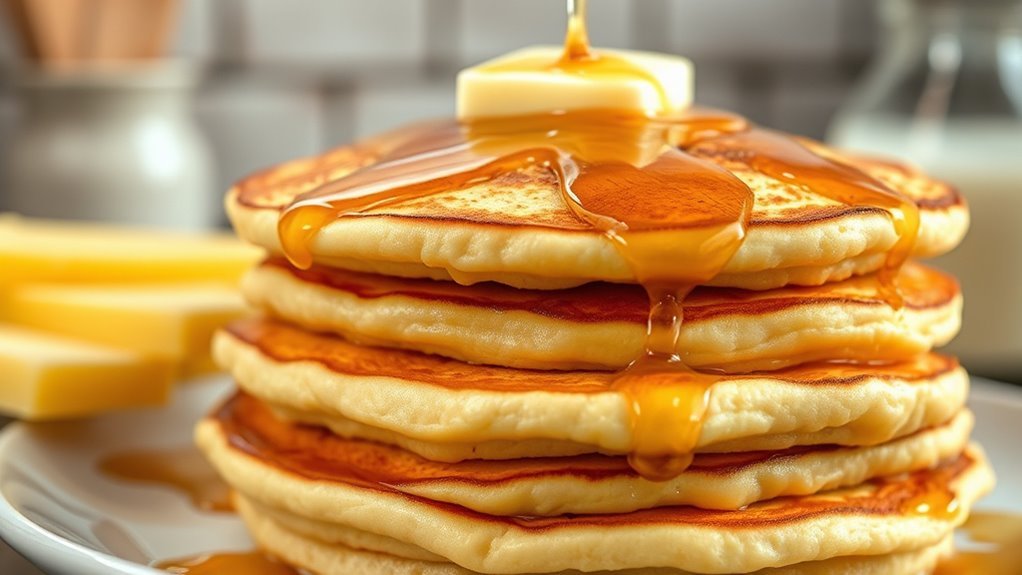
How does buttermilk transform your baked goods into tender, moist delights? Its acidity, thanks to fermentation and lactic acid, tenderizes gluten strands, creating softer textures.
This acidity also promotes moisture retention, preventing dryness in cakes, muffins, and biscuits. Buttermilk’s thick, creamy consistency adds extra moisture, enhancing the overall moistness of your baked goods.
Combined, these effects produce a tender crumb and a pleasant, moist bite you won’t get with regular milk.
| Feature | Benefit |
|---|---|
| Acidity | Tenderizes gluten |
| Lactic Acid | Enhances moisture retention |
| Fermentation | Improves texture |
| Moisture Content | Adds direct moistness |
| Leavening Partner | Supports tender crumb |
Using buttermilk guarantees baked goods that stay tender and moist longer.
How Buttermilk’s Acidity Boosts Rise and Leavening
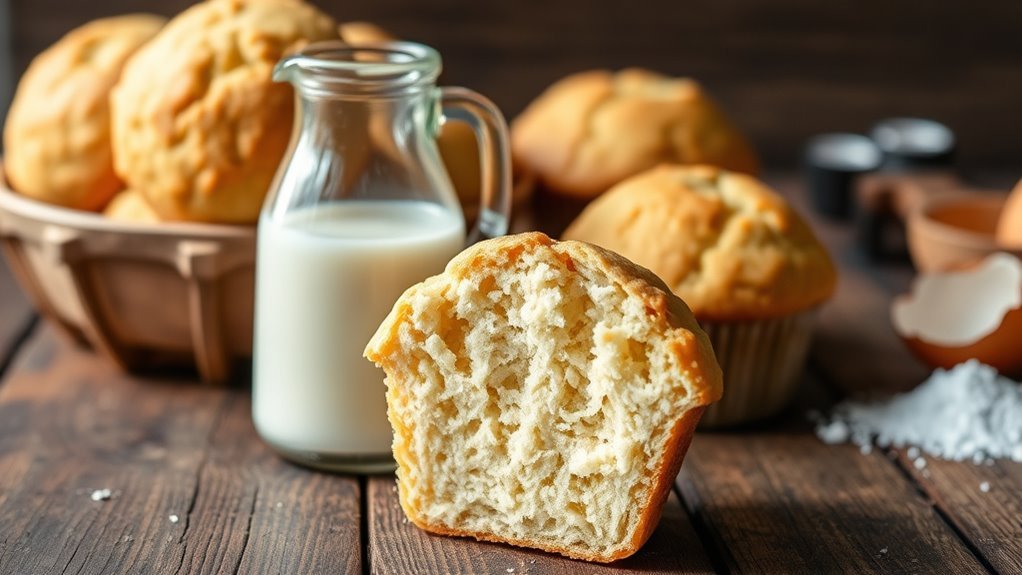
Because buttermilk’s natural acidity activates baking soda, it plays an essential role in helping your baked goods rise. As a fermented dairy with a low pH, buttermilk’s acidity reacts with baking soda to produce carbon dioxide bubbles. These bubbles create leavening and lift in your recipes.
Buttermilk’s natural acidity activates baking soda, producing bubbles that help your baked goods rise beautifully.
This reaction not only causes a higher rise but also adds lightness to cakes, muffins, and other baked goods.
Here’s how it benefits you:
- The acidity triggers baking soda to release carbon dioxide, enhancing leavening and rise.
- It tenderizes gluten, ensuring softer, more delicate textures.
- It improves crumb structure for fluffier, lighter baked goods.
Using buttermilk instead of milk means you’ll get better rise and texture, thanks to this natural acidity. It really makes a noticeable difference!
Flavor and Nutritional Benefits of Buttermilk
Why settle for plain milk when buttermilk can elevate both flavor and nutrition in your recipes? Buttermilk flavor offers a unique tangy taste that adds a complex flavor to baked goods and dishes, making your meals more exciting.
Beyond taste, the nutritional benefits are impressive. Buttermilk’s nutrient profile includes more calcium and vitamin B12 than regular milk, supporting bone health and energy metabolism.
It also contains probiotics and beneficial bacteria, which promote digestive health and bolster your immune system. These health benefits make buttermilk a smart choice for boosting both flavor and nutrition.
Incorporating buttermilk into your cooking not only enriches taste but also enhances the overall nutrient quality of your meals, making it a delicious and healthful alternative to milk.
Easy Buttermilk Substitutes That Don’t Sacrifice Quality
Buttermilk brings unique flavor and nutrition to your recipes, but you might not always have it on hand. Luckily, easy buttermilk substitutes capture the acidity in buttermilk and preserve its benefits, especially in baking recipes.
Here are three reliable options:
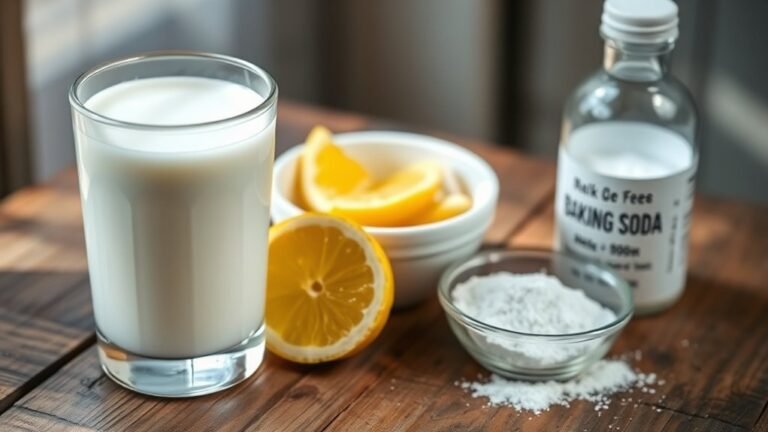
- Mix 1 tablespoon of vinegar or lemon juice with 1 cup of milk to mimic buttermilk’s tangy flavor and acidity. This is perfect for quick breads and other baked goods.
- Combine plain yogurt with milk for a creamy, dairy alternative. It supports the leavening agent and moisture in recipes.
- Use powdered buttermilk rehydrated with water for a shelf-stable substitute. It doesn’t sacrifice quality or flavor.
Each substitute guarantees your baked goods stay moist and rise beautifully without compromising taste. Easy, right?
Frequently Asked Questions
What Are the Benefits of Drinking Buttermilk Instead of Milk?
You’ll boost your digestion and immunity with probiotics, absorb nutrients better, and support stronger bones thanks to extra calcium and vitamin D. Plus, buttermilk’s lower fat and tangy flavor make it a healthier, tasty choice.
When Should You Not Use Buttermilk?
You shouldn’t use buttermilk when your recipe needs a neutral flavor, dairy-free option, low sodium, or thick non-acidic liquid. Also, avoid it if acidity could cause curdling or disrupt flavor balance in sensitive dishes.
Who Should Not Drink Buttermilk?
If you’re on a low-sodium diet, you shouldn’t drink buttermilk—it can have up to 500 mg of sodium per cup. Also, avoid it if you’re lactose intolerant, allergic to dairy, or have certain gut issues.
What Happens if You Use Buttermilk Instead of Whole Milk?
If you use buttermilk instead of whole milk, your baked goods’ll become fluffier and tangier. You’ll notice a softer texture and quicker browning, so you might need to adjust baking time or temperature accordingly.
Conclusion
You might think regular milk does the job just fine, but once you try buttermilk, you’ll wonder why you ever settled for less. Its tangy twist not only makes your baked goods tender and moist but also gives your rise a serious boost.
Plus, with its surprising nutritional perks, buttermilk isn’t just a substitute—it’s the upgrade you didn’t know you needed.
So go ahead, ditch the plain milk and embrace the tang! Using buttermilk instead of milk can transform your recipes with better texture and flavor. It’s a simple swap that adds moisture and a subtle tang, making every bite more delicious. Whether you’re baking cakes, pancakes, or biscuits, buttermilk helps your treats rise higher and taste richer. Don’t miss out on the benefits of buttermilk—make the switch today and enjoy the difference it brings to your cooking and baking adventures!