How Do You Say Milk in Spanish?
You say “milk” in Spanish as leche, pronounced LEH-cheh, with the emphasis on the first syllable. It’s a common word you’ll hear a lot when talking about food or drinks.
Since it’s a feminine noun, using the right pronunciation shows you understand gender rules and helps you sound natural.
You’ll often hear it in everyday phrases like “tomar leche” (drink milk) or in recipes saying “agregar leche” (add milk).
Getting comfortable with this word is a great step in speaking Spanish clearly.
Plus, there’s plenty more to explore about how it’s used in daily life.
Key Takeaways
- The Spanish word for milk is “leche,” pronounced LEH-cheh with emphasis on the first syllable.
- “Leche” is a feminine noun, so it pairs with feminine articles and adjectives.
- Common phrases include “tomar leche” (to drink milk) and “agregar leche” (to add milk).
- Getting the pronunciation of “leche” right helps you communicate more clearly and sound authentic.
- You’ll hear “leche” a lot in everyday conversation, recipes, and nutrition contexts.
How to Pronounce “Leche” (Milk) in Spanish
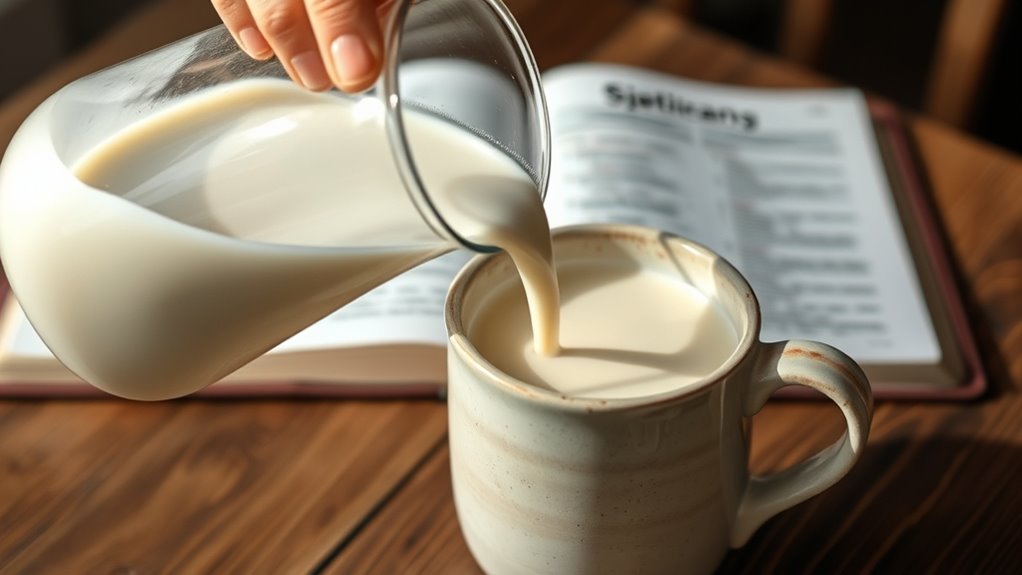
When you want to say “milk” in Spanish, you’ll say “leche,” pronounced LEH-cheh, with the emphasis on the first syllable. Knowing how to pronounce “leche” correctly is essential for clear communication, especially since it’s a common word.
Focus on stressing the “LEH” part to sound natural and align with Spanish pronunciation rules. Remember, “leche” is a feminine noun, so using the right pronunciation also shows your grasp of the language’s gender norms.
If you’re unsure, plenty of audio resources can help you practice and perfect how to pronounce “leche.” Listening and repeating will boost your confidence and guarantee you say it accurately every time you need to talk about milk in Spanish.
Common Spanish Phrases and Everyday Uses of “Leche” (Milk)
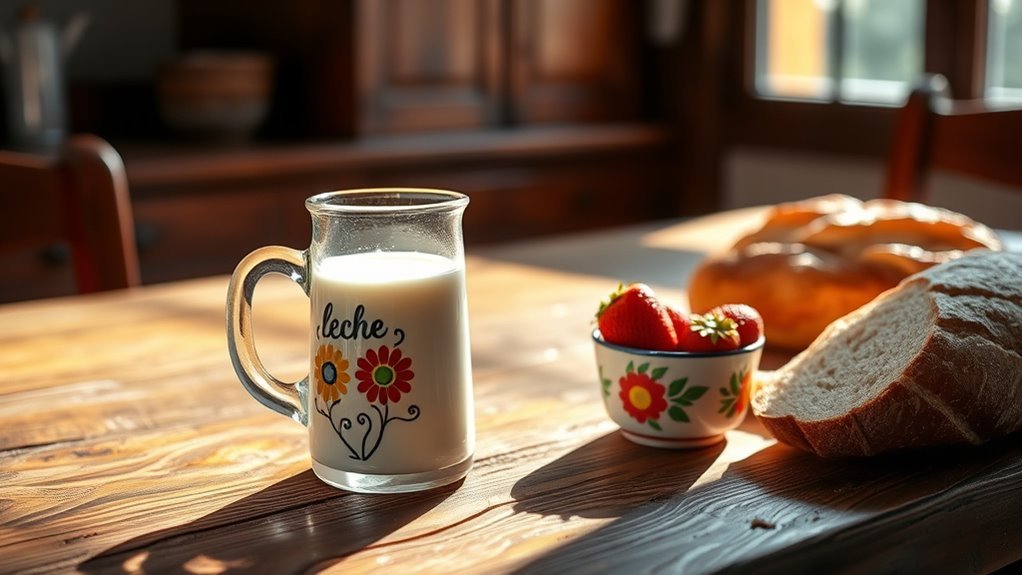
Although “leche” simply means milk, you’ll find it woven into many everyday Spanish phrases that make your conversations more natural. You might say “tomar leche” when talking about drinking milk or use “se acabó la leche” to mention the milk ran out.
In recipes, you’ll hear “agregar leche” or “sin leche” to specify including or excluding milk. Nutrition talks often include phrases like “la leche es buena para los huesos.”
Here’s a quick table with example sentences to help you understand common uses:
| Spanish Phrase | Example Sentence |
|---|---|
| tomar leche | Me gusta tomar leche en el desayuno. |
| darle leche a los niños | Ella le da leche a los niños cada día. |
| se acabó la leche | Se acabó la leche, necesito comprar más. |
| agregar leche | Voy a agregar leche a la receta. |
These examples show how “leche” fits naturally in daily speech. Pretty handy, right?
Frequently Asked Questions
What Do Mexicans Call Milk?
Mexicans call milk “leche.” You’ll hear it used everywhere, from markets to kitchens. When you say “leche,” people instantly know you mean milk, whether it’s from cows or plant-based alternatives like almond or soy milk.
What Does “No Leche” Mean?
“No leche” means “no milk.” You use it to say milk isn’t available or shouldn’t be included, like in recipes, menus, or when someone avoids milk for dietary reasons. It clearly denies milk’s presence.
How Do You Pronounce Leche?
You say “leche” like LEH-cheh, stressing the first syllable. Listen closely: the “LEH” sounds like “lay” without the “y,” and the “ch” clicks like chocolate. Practice pronouncing it perfectly!
How Do You Say Cow Milk in Spanish?
You say cow milk in Spanish as “leche de vaca.” If you’re reading labels or recipes, this term helps you distinguish it from other types like goat milk, which is “leche de cabra.”
Conclusion
Now that you know how to say “leche” in Spanish, you’re ready to add a splash of flavor to your conversations. Don’t let the word milk slip through your fingers like water—practice using it in everyday phrases to make it stick.
With a little effort, you’ll find yourself speaking Spanish more smoothly than ever, turning simple words like “leche” into stepping stones on your language journey. Keep at it, and watch your skills pour over!
Remember, learning how to say milk in Spanish is just one small part of mastering the language. The more you use words like “leche” in daily conversations, the easier it becomes to remember and use them naturally.
So, keep practicing, stay curious, and soon enough, you’ll be confidently adding “leche” and many other Spanish words to your vocabulary. Your journey to fluency starts with small steps like this!