5 Facts About How Many Calories Are in a Gallon of Milk
If you drink a gallon of whole milk, you’re getting about 2,000 calories, mostly from fat, which packs a big energy punch. Fat content mainly drives the calorie count—whole milk has the most, skim the least.
Each cup of whole milk has roughly 150 calories, while skim milk has about 80.
Since a gallon holds 16 cups, it can easily exceed your daily calorie needs. That’s a lot of calories coming from just one drink!
Keep going to uncover how these calories fit into your diet and ways to manage them. Understanding the calorie content in milk helps you make smarter choices without sacrificing nutrition.
Key Takeaways
- A gallon of whole milk contains approximately 2,016 to 2,400 calories, depending on fat content variations. Fat content is the main factor influencing milk’s calorie count, with higher fat leading to more calories.
- Skim milk has significantly fewer calories, around 1,280 to 1,920 per gallon, due to its low or no fat. One gallon of milk equals 16 cups, with whole milk providing about 150 calories per cup.
- Choosing low-fat or skim milk helps reduce calorie intake while still providing essential nutrients like calcium. So, you can enjoy the benefits without all the extra calories!
Calories in a Gallon of Milk by Fat Content
Although milk comes in various fat levels, its calorie content changes noticeably with each type. When you look at a gallon of milk, whole milk packs the highest calorie count, with around 2,016 calories thanks to its 3.25% fat content.
If you switch to 2% reduced-fat milk, the calories drop slightly to about 1,920 per gallon, reflecting the lower fat content. Choosing skim milk cuts the calorie count even more, down to roughly 1,280 calories per gallon, since it contains no fat at all.
One percent milk falls between these, with approximately 1,440 calories per gallon. Understanding these differences helps you make informed nutrition choices based on how many calories you want from your milk’s fat content.
What Affects the Calorie Count in Milk?
When you choose milk, its calorie count mainly depends on the fat content, since fat provides about 9 calories per gram. Whole milk has a higher fat content, resulting in more calories per serving compared to skim milk, which has little to no fat.
Serving size also matters—a gallon contains 16 cups, so your total calorie intake depends on how much you drink. While nutrients like lactose add some calories, they don’t considerably affect the overall calorie differences between milk types.
Processing methods, such as fortifying with vitamins or removing fat, don’t greatly change the calorie count either. So, when you’re considering milk’s calories, focus on fat content and serving size to understand how much energy you’re actually getting.
Comparing Calories: Whole vs. Reduced-Fat vs. Skim Milk
Understanding the calorie differences between whole, reduced-fat, and skim milk helps you make better choices based on your dietary needs. When you compare calories in dairy, you’ll notice key differences in fat content and nutrient content across these milk types.
Here’s a quick calorie comparison per gallon: Whole milk has about 2,400 calories, with fat adding roughly 480 calories. Reduced-fat milk (2%) comes in around 1,920 calories, which is less fat than whole milk.
Skim milk also has about 1,920 calories, but it’s fat-free. Per cup, whole milk has 150 calories, while skim milk has 80 calories.
Choosing reduced-fat or skim milk helps lower calorie intake while still delivering essential nutrients like calcium and vitamin D. So, you get the benefits without all the extra fat.
How Calories in Milk Fit Into Your Daily Diet
Because a gallon of milk contains around 2,048 calories, it can make up a large portion of your daily energy intake if you drink it all. For someone on a 2,000-calorie daily diet, a gallon of milk exceeds 100% of your calorie intake. So, you need to weigh your other meals accordingly.
Each serving, about one cup, contributes roughly 150 calories along with valuable nutrition like calcium and vitamin D. Including milk in your diet provides essential nutrients but also adds significant calories.
Tips to Manage Milk Calories When Cooking and Drinking
Keeping an eye on how much milk you use can help you enjoy its benefits without overloading on calories. Here are some practical tips to manage milk calories when cooking and drinking:
Monitoring milk usage helps you enjoy its benefits without consuming too many calories.
- Opt for low-fat or skim milk instead of whole milk to cut calorie intake by about half per serving. It’s an easy swap that makes a big difference.
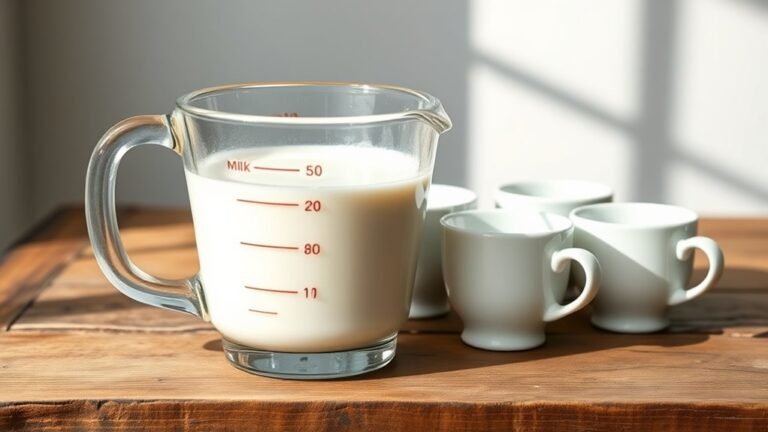
- Measure milk carefully rather than pouring directly from the gallon to control portion size and calorie intake. This way, you won’t accidentally use more than you intended.
- Substitute milk with water, broth, or plant-based alternatives in recipes to lower calories without sacrificing flavor. You might be surprised how well these work!
- Watch out for flavored milk, as added sugars and flavorings can considerably increase calorie content. So, it’s best to enjoy flavored milk only occasionally.
Frequently Asked Questions
Is It Healthy to Drink 1 Gallon of Milk a Day?
No, drinking a gallon of milk a day isn’t healthy. You’ll consume too many calories, saturated fat, and sugar, which can lead to weight gain and nutrient imbalances. It’s better to stick to moderate dairy portions.
What Are the Nutrition Facts for 1 Gallon of Whole Milk?
Imagine gulping down a creamy ocean of nutrients! One gallon of whole milk packs 2,400 calories, 128 grams of protein, 8 grams of fat per cup, plus loads of calcium, vitamins A and D to fuel you big time.
Do Bodybuilders Drink a Gallon of Milk?
Yes, you might drink a gallon of milk daily if you’re bodybuilding. It’s an easy way to boost calories and protein for muscle growth, but you’ll want to balance it with other nutrients to stay healthy.
Is 2 Gallons of Milk a Week Too Much?
Yes, drinking two gallons of milk a week is likely too much for you. It can add excessive calories, saturated fat, and nutrients, potentially disrupting your diet and health if you don’t balance it with other foods.
Conclusion
You might think all milk is the same, but the calorie difference between whole and skim milk is striking. While whole milk packs more energy, skim milk lets you enjoy the taste without the extra calories.
Balancing your choice can make all the difference in your diet—indulge or lighten up, it’s up to you. Understanding these facts helps you make smarter, tastier decisions every day.
When it comes to calories in a gallon of milk, knowing the difference between whole and skim is key. Whole milk has more calories, which means more energy, but skim milk gives you the flavor with fewer calories. This knowledge helps you choose milk that fits your lifestyle, whether you want to fuel up or cut back on calories. So, by understanding the calorie content in milk, you can make informed, healthy choices that suit your taste and dietary goals.