How Do You Make Buttermilk Out of Milk in 7 Easy Steps
To make buttermilk from regular milk in 7 easy steps, start by measuring 1 cup of milk—whole, 2%, or plant-based.
Adding the right acid like lemon juice or vinegar is key to turning your milk into buttermilk.
Add 1 tablespoon of lemon juice or vinegar, then stir gently.
Let it sit at room temperature for 5-10 minutes until it thickens and curdles slightly.
This simple process creates that tangy, creamy buttermilk flavor perfect for baking.
Use your homemade buttermilk immediately in recipes like pancakes or muffins.
It’s super easy and saves you a trip to the store!
Want tips on adjusting amounts, choosing acids, and storing it perfectly? Keep going to learn more.
You’ll be making delicious baked goods in no time!
Key Takeaways
- Measure 1 tablespoon of acid (lemon juice or vinegar) per 1 cup of milk for accurate proportions.
- Pour milk into a measuring cup up to the desired amount, then add the acid.
- Stir the milk and acid gently to combine without overmixing.
- Let the mixture sit at room temperature for 5–10 minutes to thicken and curdle.
- Use the homemade buttermilk immediately in baking or cooking recipes for best results.
Ingredients You’ll Need to Make Buttermilk at Home
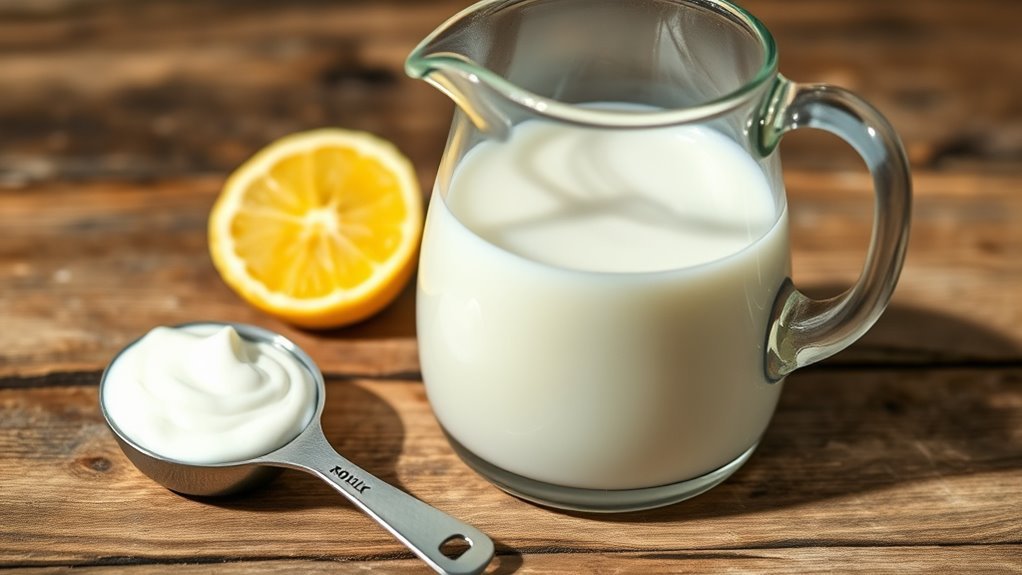
If you want to make buttermilk at home, you’ll need just two basic ingredients: milk and an acid like lemon juice or white vinegar. You can use whole, 2%, or even heavy cream as your milk base.
The acid causes curdling, which thickens the milk and creates those small curdled bits typical of buttermilk. This simple homemade substitute works well when you don’t have traditional buttermilk on hand.
For a dairy-free option, you can substitute cow’s milk with plant-based milk such as almond, soy, or coconut milk, adding the same amount of acid. Just keep the ratio consistent—about one tablespoon of lemon juice or vinegar per cup of milk—to guarantee proper curdling and texture for your recipes.
How to Mix Milk and Acid to Make Buttermilk
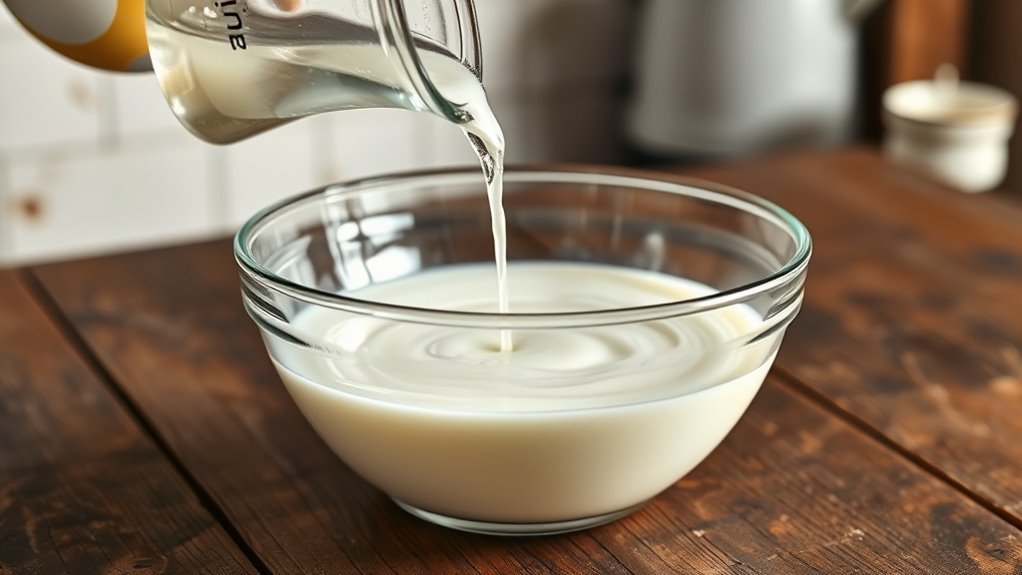
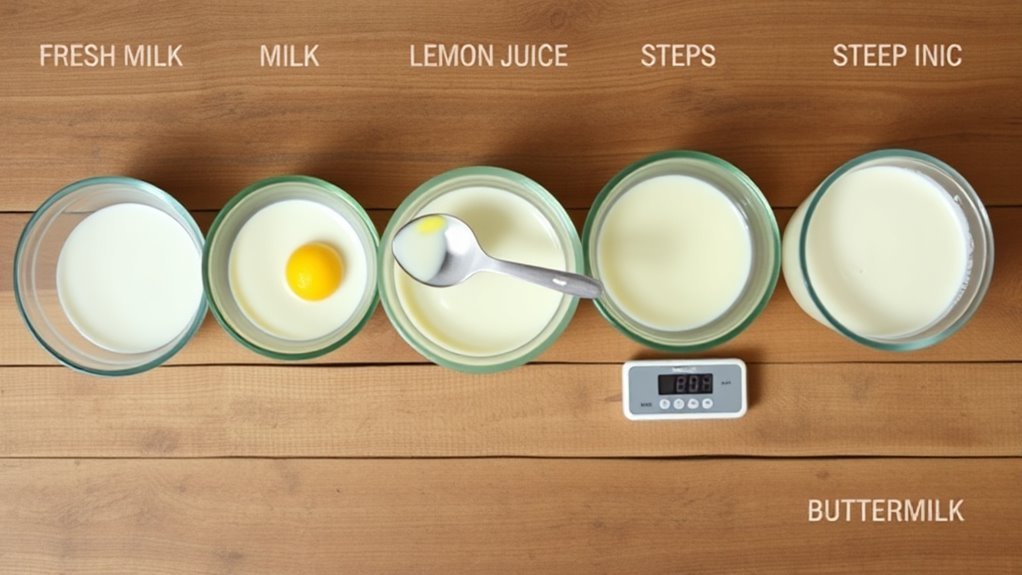
To make buttermilk, start by choosing your acid—lemon juice or white vinegar work best. Add one tablespoon of it to a cup, then fill the rest with your preferred milk and stir gently.
Now, just let the mixture sit at room temperature for 5 to 10 minutes. You’ll notice it thickens slightly and curdles, which means it’s ready to use.
Choosing Acid Types
When you mix an acid like lemon juice or white vinegar into milk, it reacts quickly to create the tangy flavor and slightly curdled texture that define buttermilk. The acid causes a reaction that makes the milk curdle just enough, giving you that classic buttermilk taste.
Typically, you’ll use 1 tablespoon of lemon juice or white vinegar per cup of milk. But if you want to experiment, apple cider vinegar, rice vinegar, or cream of tartar work as substitutions, each adding a subtle twist to the flavor.
You can even use neutral or flavored plant-based milk with acid to make a dairy-free buttermilk alternative. Choosing the right acid depends on what flavor you prefer and what you have on hand.
Mixing And Resting
Although the process is simple, mixing and resting the milk and acid properly is key to achieving the right texture and tang for your buttermilk.
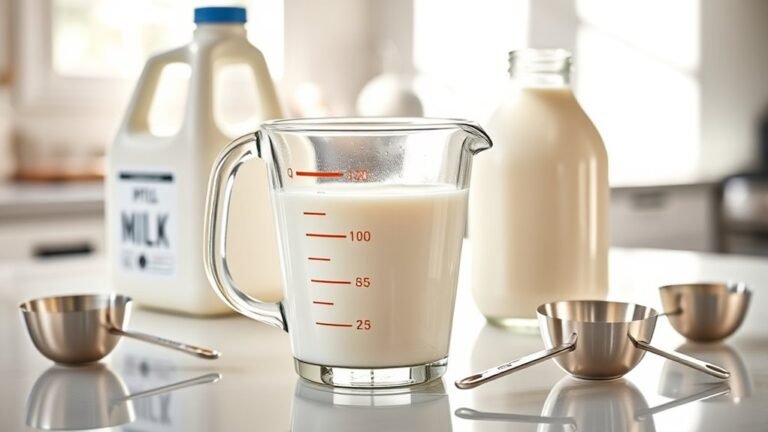
Start by measuring 1 tablespoon of lemon juice or white vinegar into a measuring cup. Then, fill the cup with milk—whole, 2%, or heavy cream—up to the 1-cup line.
Gently stir the mixture to combine the acid and milk evenly. Next, let the mixture rest at room temperature for 5 to 10 minutes.
During this time, the mixture will thicken slightly, and you’ll notice small curdled bits forming. These curdled bits indicate your homemade buttermilk is ready to use, providing the perfect tang and texture for your recipes.
Adjusting Buttermilk Quantities for Your Recipes
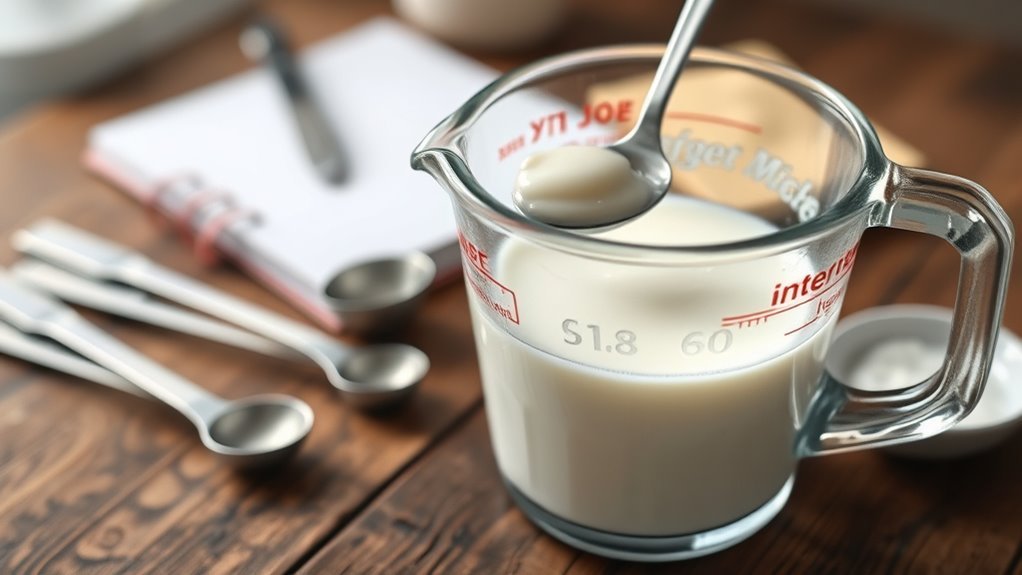
Since recipes often call for varying amounts of buttermilk, you’ll want to keep the ratio of 1 tablespoon of vinegar or lemon juice per 1 cup of milk consistent no matter how much you need. This acid ratio is key when using a buttermilk substitute to guarantee your homemade buttermilk reacts properly in any recipe.
Use a measuring cup to measure milk precisely, then add the right amount of vinegar or lemon juice. For smaller quantities, scale down accordingly—for example, ¾ teaspoon of acid for ¾ cup of milk.
When adjusting recipes, multiply or divide both the milk and acid to maintain the same proportion. Keeping this balance simplifies recipe adjustment and assures your buttermilk substitute performs just like the real thing.
Dairy-Free and Vegan Buttermilk Alternatives
If you’re looking for a dairy-free or vegan option, you can easily make buttermilk by adding 1 tablespoon of vinegar or lemon juice to 1 cup of plant-based milk like almond, soy, coconut, or oat milk.
This homemade buttermilk substitute curdles slightly within minutes, creating a tangy, vegan buttermilk perfect for baking and cooking. Using lemon juice or vinegar ensures the acidity needed for recipes, while the choice of plant-based milk, including coconut milk, adds subtle flavor differences without affecting the leavening.
This dairy-free alternative suits anyone avoiding dairy, providing the same texture and tang as traditional buttermilk. You can prepare this vegan buttermilk in advance, ensuring you always have a simple, effective homemade buttermilk substitute ready whenever your recipe calls for it.
Storing and Freezing Homemade Buttermilk
When you make homemade buttermilk, proper storage is crucial to maintaining its freshness and tangy flavor. Unlike store-bought buttermilk, your homemade version has a shorter shelf life, so you’ll want to handle it carefully.
Proper storage is key to keeping homemade buttermilk fresh and flavorful, as it spoils faster than store-bought versions.
Here’s how you can store and freeze it effectively:
- Use an airtight container for refrigerator storage and label it with the date to keep track of freshness; homemade buttermilk lasts about one week.
- For longer storage, freeze buttermilk in ice cube trays for up to 3 months. This lets you thaw only what you need.
- When thawing frozen buttermilk, do it in the refrigerator for several hours or overnight. Then, stir well to recombine any separation that occurs.
Proper handling ensures your homemade buttermilk stays fresh and ready for your recipes.
How to Use Homemade Buttermilk in Recipes
Now that you know how to store and freeze your homemade buttermilk, it’s time to explore how to use it in your cooking and baking. To make homemade buttermilk, mix 1 tablespoon of lemon juice or vinegar with 1 cup of milk and let it sit until it curdles slightly.
Use it immediately in recipes like pancakes, muffins, cakes, and fried chicken to enjoy the leavening benefits and tangy flavor it imparts. When making a substitution, just replace the required buttermilk amount directly. This way, you ensure the acidity activates baking soda or baking powder properly.
Remember to add your homemade buttermilk right after it curdles for the best results. And if you need to adjust quantities, just keep the acid-to-milk ratio consistent for any recipe. Easy, right?
Tips for Perfect Homemade Buttermilk Every Time
To get perfect homemade buttermilk every time, start by choosing fresh, high-quality milk that suits your taste and recipe needs. The type of acid you use—lemon juice or vinegar—can slightly affect the flavor and texture, so pick one that complements your dish.
Measuring ingredients precisely and letting the mixture sit just long enough will guarantee consistent results. It’s really not as tricky as it sounds once you get the hang of it! Just a little patience goes a long way.
Ideal Milk Choices
What kind of milk should you use to make the perfect homemade buttermilk? Choosing the right milk is vital for achieving the ideal texture and taste.
Here’s what to take into account:
- Use whole milk, 2%, or heavy cream for richer, creamier homemade buttermilk due to their higher fat content.
- Plant-based milks like almond, soy, or coconut are fine milk alternatives but may slightly change the flavor.
Always pick fresh, unsweetened milk without added flavors or preservatives. Make sure your milk is at room temperature or slightly warmed to promote proper acid curdling.
Avoid expired or off-smelling milk to guarantee the best results. By following these tips, you’ll get consistent, delicious homemade buttermilk every time.
Acid Type Effects
Although you can use various acids to make homemade buttermilk, each type impacts the flavor and texture differently. Lemon juice provides a milder tang and thicker curdling, giving your buttermilk a gentle acidity.
White vinegar creates a sharper, more acidic buttermilk with pronounced curds. It’s perfect for baking recipes that need a strong tangy kick.
Apple cider vinegar adds a subtle fruity note to the flavor profile, balancing acidity with a unique taste. Rice vinegar, being less acidic and milder, yields a softer tang, ideal for delicate baked goods.
Choosing the right acid affects not only the tanginess but also how your batter reacts during baking. So, consider the flavor profile and acidity level to get the perfect homemade buttermilk every time.
Frequently Asked Questions
How to Make Buttermilk From Milk Quickly?
You add a tablespoon of lemon juice or vinegar to a cup, fill it with milk, stir, and let it sit for 5 to 10 minutes. It’ll thicken and curdle, making a quick buttermilk substitute.
How to Make Buttermilk the Old Fashioned Way?
You’ll capture the sunrise’s gentle tang by mixing lemon juice or vinegar into milk, letting it sit until it curdles softly. This old-fashioned ritual transforms simple milk into buttermilk, ready to enrich your baking with warm tradition.
How to Make Buttermilk Step by Step?
You add 1 tablespoon lemon juice or vinegar to a cup, fill it with milk, stir gently, then let it sit 5-10 minutes. It thickens and curdles, becoming ready as buttermilk for your recipes.
Can You Make Buttermilk Out of Whole Milk?
Yes, you can make buttermilk from whole milk by adding lemon juice or vinegar. Let it sit 5–10 minutes until it thickens and curdles slightly. It gives you a creamy, tangy substitute perfect for baking recipes.
Conclusion
Now that you know how to whip up buttermilk in just seven easy steps, you’re all set to elevate your cooking game—no need for a time machine to taste that old-fashioned tang!
Whether you’re baking, marinating, or making pancakes, homemade buttermilk adds that perfect touch. It’s simple to make, saves money, and tastes fresher than store-bought versions.
Keep experimenting with your recipes and store your homemade buttermilk properly to maintain its flavor. And if you’re feeling adventurous, don’t forget to try dairy-free options to suit your dietary needs.
Making buttermilk from milk is a game-changer for your kitchen, adding versatility and deliciousness to your meals. So go ahead, enjoy the tangy goodness and make every dish a little more special with your homemade buttermilk!