5 Facts About How Many Calories Are in a Gallon of Whole Milk
You’ll consume about 2,400 calories when you drink a full gallon of whole milk, which is over your daily intake if you follow a 2,000-calorie diet. That’s a lot of calories packed into one gallon! Understanding how many calories are in a gallon of whole milk can really help you manage your daily energy intake.
Serving size matters—one cup has around 150 calories from fats and carbs that fuel your body. Compared to skim or 2% milk, whole milk packs more energy. So, if you’re watching your calorie intake, it’s good to keep an eye on the amount you drink.
You can manage calories by choosing smaller portions or lower-fat options. Keep exploring to discover how to balance milk in your diet. It’s all about making choices that work best for your lifestyle and nutrition goals.
Key Takeaways
- A gallon of whole milk contains approximately 2,400 calories based on 150 calories per 8-ounce serving. That’s quite a bit of energy packed into one gallon!
- Drinking a gallon exceeds 120% of the average 2,000-calorie daily intake. So, if you’re watching your calories, that’s something to keep in mind.
- Calories in whole milk mainly come from fat (8 grams per cup) and carbohydrates (12 grams per cup). These nutrients give milk its creamy texture and energy boost.
- Whole milk has significantly more calories than skim milk (800 calories) and 2% milk (1,920 calories) per gallon. So choosing your milk wisely can make a big difference.
- Managing portion sizes, like using smaller containers, helps control whole milk calorie consumption effectively. It’s a simple trick to keep your intake in check without giving up milk altogether.
Calories in a Gallon of Whole Milk
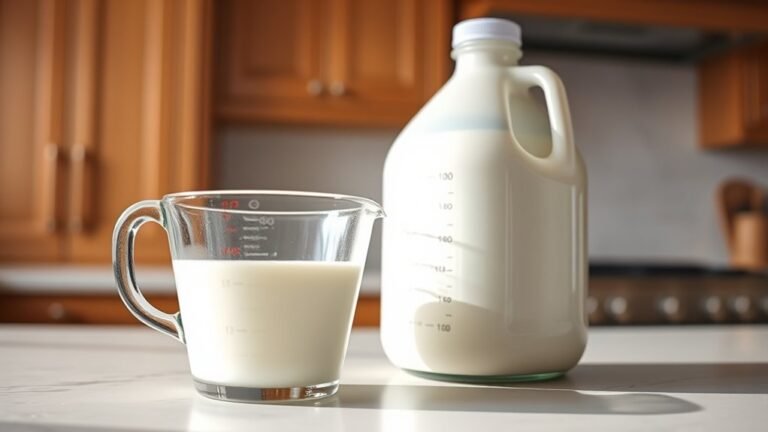
Wondering how many calories you’d get from a whole gallon of milk? A gallon of whole milk contains about 2,400 calories. This figure comes from the calorie content of one serving—a cup—providing roughly 150 calories, and with 16 cups in a gallon, the numbers add up quickly.
Whole milk’s nutrition is energy-dense, making it a richer choice compared to reduced-fat or skim milk. Keep in mind, the calorie content can vary slightly depending on the brand and processing methods.
Drinking a whole gallon in one go would supply around 120% of the typical 2,000-calorie daily intake, so it’s a significant amount. Understanding these numbers helps you manage your nutrition and calorie goals effectively.
How Serving Size Affects Whole Milk Calories
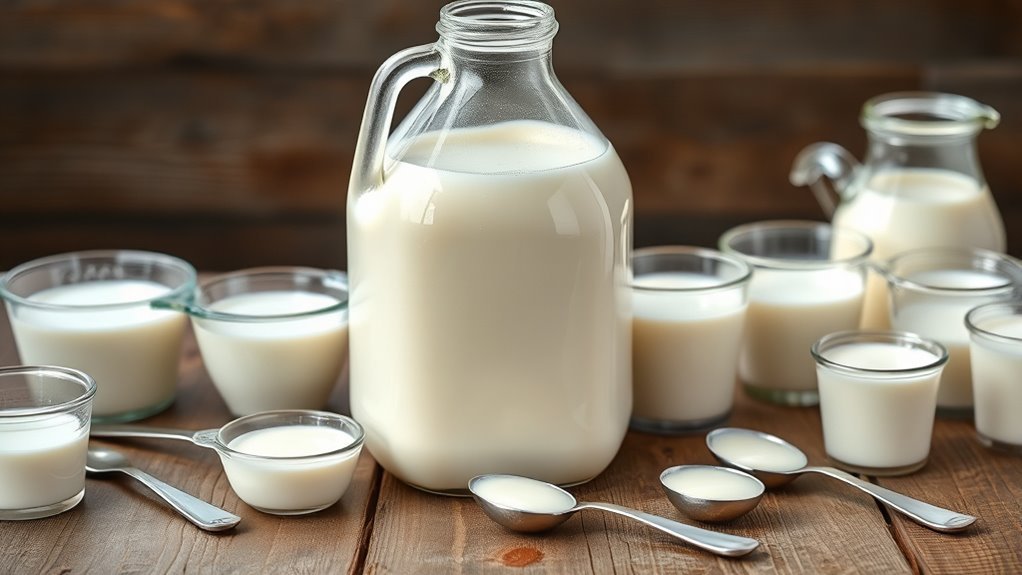
The calorie content in whole milk depends heavily on the serving size you choose. A standard serving size of 8 ounces contains about 150 calories, but if you opt for a smaller portion size like 4 ounces, your calorie intake drops to roughly 75 calories.
Since a gallon of whole milk holds 16 cups, it totals around 2,400 calories. Adjusting your serving size directly impacts how many calories you consume, making it essential to pay attention to nutrition facts when managing your diet.
Whether you drink a cup or half a cup, understanding serving sizes helps you control calorie intake and make informed choices about how whole milk fits into your daily nutrition plan. It’s all about knowing what works best for you!
What’s Behind the Calories in Whole Milk?
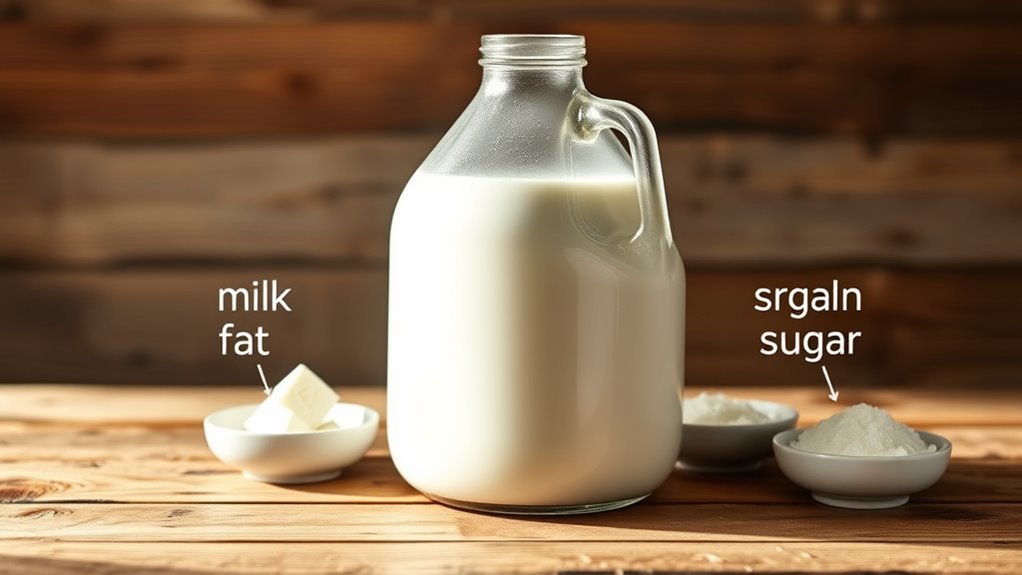
Because whole milk contains a rich blend of fats and carbohydrates, it packs a significant calorie punch. The energy content in whole milk comes mainly from its fat and carbohydrate makeup, which drives its calorie density.
When you pour a glass, you’re getting a complex mix of nutrition that fuels your body efficiently.
Here’s what’s behind those calories in whole milk:
- Fat: About 8 grams per cup, delivering roughly 150 calories, which contribute to its creamy texture.
- Carbohydrates: Primarily lactose, around 12 grams per cup, adding approximately 50 calories.
- Energy Content: The combination of fat and carbohydrates makes whole milk a calorie-dense beverage, with a gallon packing around 2,400 calories.
Understanding these components helps you see why whole milk is so energy-rich.
Calorie Comparison: Whole Milk vs. Other Milks
When you compare whole milk to other varieties, you’ll notice a big difference in calorie content. A gallon of whole milk packs about 2,400 calories, largely because of its 3.25% milk fat.
In contrast, skim milk has roughly 800 calories per gallon, making it much less energy-dense. Reduced-fat (2%) milk falls in between, with about 1,920 calories per gallon.
This calorie comparison highlights how milk fat considerably impacts the energy density of milk. If you’re looking at calories alone, whole milk provides nearly three times the calories of skim milk per gallon.
Understanding these differences can help you make informed choices based on your dietary needs and energy goals. It’s good to know what you’re drinking, right?
Tips for Managing Whole Milk Calories
Knowing that a gallon of whole milk contains around 2,400 calories, you’ll want to manage your portions carefully to keep your calorie intake in check.
Effective calorie management starts with portion control and understanding your serving size. Here are some tips to help:
- Use smaller containers like half-gallon or quart sizes to avoid drinking more than measured servings at once.
- Incorporate lower-fat options such as 2% or skim milk to reduce calories per serving without sacrificing taste.
- Balance your milk intake with other nutrient-dense foods to maintain a balanced diet throughout the day.
Frequently Asked Questions
Is It Healthy to Drink 1 Gallon of Milk a Day?
No, you shouldn’t drink a gallon of milk daily. It’s too many calories and saturated fats, which can harm your heart and cause weight gain. Instead, enjoy milk in moderation to stay healthy and balanced.
What Are the Nutrition Facts for 1 Gallon of Whole Milk?
You probably didn’t expect a whole gallon of milk to pack 2,400 calories, 128 grams of protein, and loads of vitamins like A, D, plus calcium galore. Drinking that much? Your body’s getting quite the workout!
Is Whole Milk Actually Healthy for You?
Yes, whole milk can be healthy for you when consumed in moderation. It provides essential nutrients like calcium and protein, but you should watch your saturated fat intake and consider your personal dietary needs.
Do Bodybuilders Drink a Gallon of Milk?
Yes, you’ll find some bodybuilders drink a gallon of milk to boost calories and protein for muscle growth. But don’t assume everyone does—it’s often too much, so most prefer smaller, controlled servings instead.
Conclusion
Think of a gallon of whole milk as a sturdy ship loaded with calories, each serving a wave that gently rocks your daily intake. By steering wisely—watching portion sizes and comparing milks—you can navigate these waters without capsizing your goals.
Remember, managing calories isn’t about abandoning the ship but learning to sail it skillfully. This way, you get to enjoy whole milk’s richness while staying on course toward a balanced, healthy lifestyle.
Understanding how many calories are in a gallon of whole milk helps you make smarter choices. Keep an eye on servings to control calorie intake and maintain your nutrition goals. With a little mindfulness, you can savor whole milk without tipping the scale.