Does Almond Milk Need to Be Refrigerated for Storage?
If you’ve ever wondered whether almond milk needs refrigeration, you’re not alone. Almond milk storage can be tricky because it depends on the type you have and how it’s been processed. Understanding almond milk shelf life and storage requirements is key to keeping it fresh and safe.
Store-bought cartons can be confusing—some almond milk varieties stay fresh on the shelf until opened, while others require cold storage right away. Even homemade almond milk has its own guidelines to maintain quality and prevent spoilage.
Before you pour your next glass, it’s worth understanding what proper almond milk storage really means. Knowing when and how to refrigerate almond milk helps ensure you enjoy its best taste and texture every time.
Understanding Almond Milk Types and Their Storage Needs

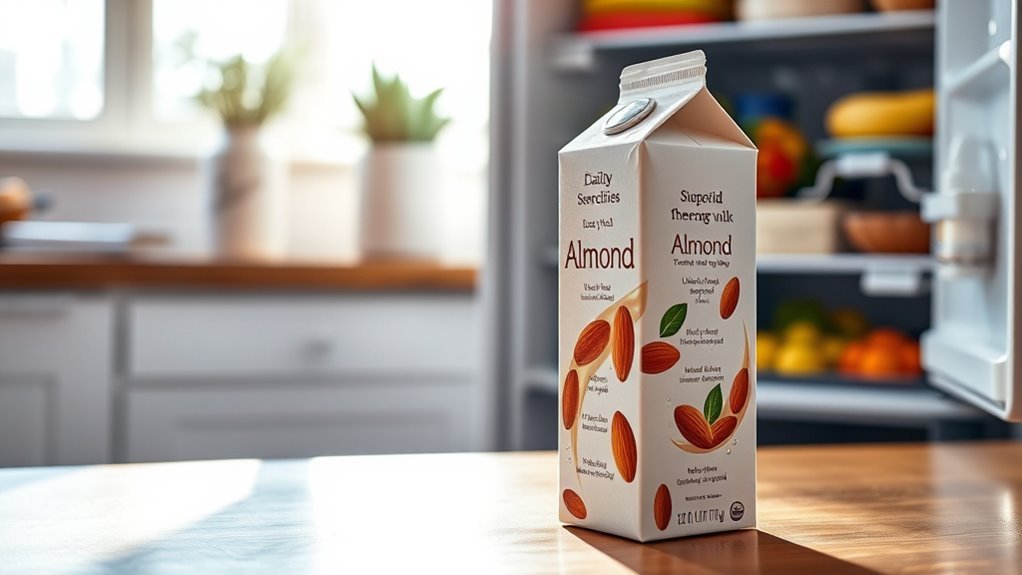
While you might find almond milk in various forms on store shelves, understanding the differences between shelf-stable and refrigerated types is key to storing them properly. Shelf-stable almond milk comes in ultra-pasteurized Tetra Pak cartons, allowing you to store it at room temperature until you open it.
Once opened, though, you must refrigerate it to keep it fresh, usually for 10-14 days.
Refrigerated almond milk, whether store-bought or homemade, needs cold storage from the start to avoid spoilage. Keep it at or below 40°F (4°C), and it can last 5-7 days past the sell-by date if stored in the coldest part of your fridge.
Knowing these storage rules helps you enjoy almond milk safely and with minimal waste.
Shelf-Stable Almond Milk: Pantry Storage Guidelines

You’ll find shelf-stable almond milk in Tetra Pak cartons designed to keep the product fresh without refrigeration until opened. For proper storage, keep the carton in a cool, dark pantry or cupboard away from heat and sunlight.
The ultra-pasteurization process allows shelf-stable almond milk to last up to a year at room temperature, but always check the expiration date before use.
Once opened, refrigerate it promptly and consume within 10-14 days.
To guarantee the best quality, remember to:
- Store unopened cartons away from direct light and heat sources
- Always reseal opened cartons tightly before refrigeration
- Monitor the expiration date to avoid using spoiled almond milk
These steps help maintain freshness and safety before and after opening.
Refrigerated Almond Milk: Best Practices for Freshness

Since refrigerated almond milk is more perishable than its shelf-stable counterpart, you should keep it at or below 40°F (4°C) and consume it within 7-10 days after opening to guarantee freshness and safety.
Refrigerated almond milk stays fresh and safe when kept at or below 40°F and used within 7-10 days after opening.
Unopened almond milk stored properly in the fridge typically has a shelf life of 5-7 days past the sell-by date. To maintain the best quality, always store refrigerated almond milk toward the back of your refrigerator where the temperature is most consistent.
Make sure to seal the container tightly after each use to prevent contamination and spoilage. Avoid leaving almond milk out at room temperature for more than two hours, as this shortens its shelf life.
Following these best practices ensures your refrigerated almond stays fresh and safe to enjoy.
Storing Homemade Almond Milk Safely
Because homemade almond milk lacks preservatives, you need to refrigerate it immediately after making it to keep bacteria at bay.
Store your homemade almond milk in the refrigerated section of your fridge, ideally in an airtight container to preserve its freshness and prevent contamination. Maintaining a consistent temperature below 40°F (4°C) is vital to extend its shelf life.
To store homemade almond milk safely:
- Use airtight containers to avoid exposure to air and odors.
- Keep it refrigerated at all times and avoid leaving it out for more than 2 hours.
- Consider freezing in portions to extend shelf life, but consume thawed milk within 1-2 days.
Following these tips ensures your almond milk stays fresh and safe to enjoy.
How Long Does Almond Milk Last Unopened and Opened?
Keeping your almond milk properly refrigerated is key, but understanding how long it stays fresh both unopened and opened helps you prevent waste and ensures safety.
Unopened refrigerated almond milk typically maintains its shelf life for 5-7 days past the sell-by or expiration date when stored correctly in your fridge.
Once opened, you should consume it within 10-14 days to enjoy it at its best.
For shelf-stable almond milk, the unopened package can last about a year at room temperature, but once opened, it requires refrigeration and the same 10-14 day window applies. Always keep opened almond milk in a sealed container at the back of your fridge to maximize freshness and avoid spoilage.
Signs That Almond Milk Has Spoiled
How can you tell if your almond milk has gone bad? Keep an eye out for these clear signs to avoid consuming spoiled milk.
First, visible mold, especially black mold, on the surface or inside the container means it’s time to toss it.
Second, an off-odor like sourness or smells resembling wet cardboard signals spoilage.
Third, if you notice curdling, thickening, or persistent separation after shaking, bacteria or yeast have likely grown.
- Mold growth inside or on the surface
- Sour or off-odor that’s unusual
- Curdling or thick texture despite shaking
If you spot any of these signs, don’t risk it. Discard your almond milk immediately to stay safe.
Effects of Improper Storage on Almond Milk Quality
If you leave almond milk out at room temperature after opening, you’ll speed up spoilage and encourage bacterial growth. Improper storage exposes almond milk to heat and fluctuating temperatures, which accelerates microbial activity and causes the milk to darken, develop off-flavors, and risk mold formation.
Warm environments may even trigger unintended fermentation, resulting in a sour taste and potential health hazards.
Frequent temperature changes also worsen natural separation, compromising texture and safety.
How to Extend the Shelf Life of Almond Milk
To slow down spoilage and maintain almond milk’s freshness, store it in the coldest part of your fridge, usually the back. Although shelf stable almond milk can sit unrefrigerated until opened, once opened, refrigeration is key to extending its shelf life and delaying expiration. Always keep the container tightly sealed to prevent contamination and retain freshness.
Avoid leaving almond milk out at room temperature for more than two hours, as this accelerates spoilage.
Here are three tips to extend almond milk’s shelf life:
- Store opened almond milk in the back of the fridge where temperature stays consistent.
- Seal the container tightly after each use to limit exposure to air and bacteria.
- Freeze almond milk in small portions, like ice cubes, to preserve it up to 6 months, but note texture changes.

Health Risks of Consuming Spoiled Almond Milk
When you consume spoiled almond milk, you risk experiencing unpleasant gastrointestinal symptoms like nausea, diarrhea, and vomiting caused by bacterial or mold contamination.
Drinking almond milk past its expiration date increases these health risks, especially if you notice off flavors, a sour smell, or curdling.
Consuming expired almond milk raises health risks, especially with sour smell, off flavors, or curdling present.
Mold toxins such as mycotoxins present in spoiled almond milk can trigger allergic reactions or more severe issues.
Additionally, containers that show swelling or visible mold are clear signs to avoid consuming the product.
To minimize these health risks, always check the expiration date and store almond milk properly in the refrigerator.
Proper refrigeration slows microbial growth, helping you avoid the dangers associated with spoiled almond milk and ensuring your safety and well-being.
Alternatives to Almond Milk for Dairy-Free Storage Options
Although almond milk remains a popular choice, you have several dairy-free alternatives that offer convenient storage options. Just like shelf-stable almond milk, many plant-based milks come in ultra-pasteurized cartons that don’t need refrigeration until opened.
Once opened, refrigeration is essential to maintaining freshness and extending shelf life.
Consider these options:
- Shelf-stable cashew milk: Similar packaging to almond milk, stays fresh unrefrigerated until opened.
- Shelf-stable oat milk: Offers a creamy texture with room temperature storage pre-opening.
- Homemade plant milks: Require refrigeration immediately and have a shorter shelf life (5-7 days).
Choosing the right type depends on your lifestyle, but remember, refrigeration after opening is vital for safety with all dairy-free milks.

Frequently Asked Questions
How Long Can Almond Milk Sit Out Unrefrigerated?
You shouldn’t let almond milk sit out unrefrigerated for more than 2 hours. After that, bacteria can grow, making it unsafe.
Always refrigerate it promptly to keep it fresh and avoid spoilage.
Is It Okay Not to Refrigerate Almond Milk?
You shouldn’t skip refrigeration once you open almond milk; it can spoil quickly.
Unopened cartons are fine at room temperature due to special packaging, but after opening, keep it chilled to stay safe and fresh.
What Almond Milk Does Not Need to Be Refrigerated?
You don’t need to refrigerate shelf-stable, ultra-pasteurized almond milk before opening. Keep it in a cool, dark place.
But once opened, refrigerate it promptly to keep it fresh and safe to drink.
Does Silk Unsweetened Almond Milk Need to Be Refrigerated?
Silk Unsweetened Almond Milk doesn’t need refrigeration until you open it. Once opened, you’ve got to refrigerate it and use it within 7-10 days to keep it fresh and safe from spoilage.
Conclusion
So, you might think almond milk can chill on your counter forever, but nope—it’s not a cute little shelf ornament. Whether it’s shelf-stable or homemade, once opened, it needs to be refrigerated to avoid turning into a science experiment you didn’t sign up for.
If you want to enjoy it fresh and safe, don’t ignore the fridge—because spoiled almond milk isn’t exactly the treat you’re craving. Keep it cool, and your taste buds will thank you.
In conclusion, almond milk needs to be refrigerated for storage once opened. Proper refrigeration helps maintain its freshness and prevents spoilage, ensuring you get the best taste and quality every time.