How to Safely Put Milk in Your Keurig
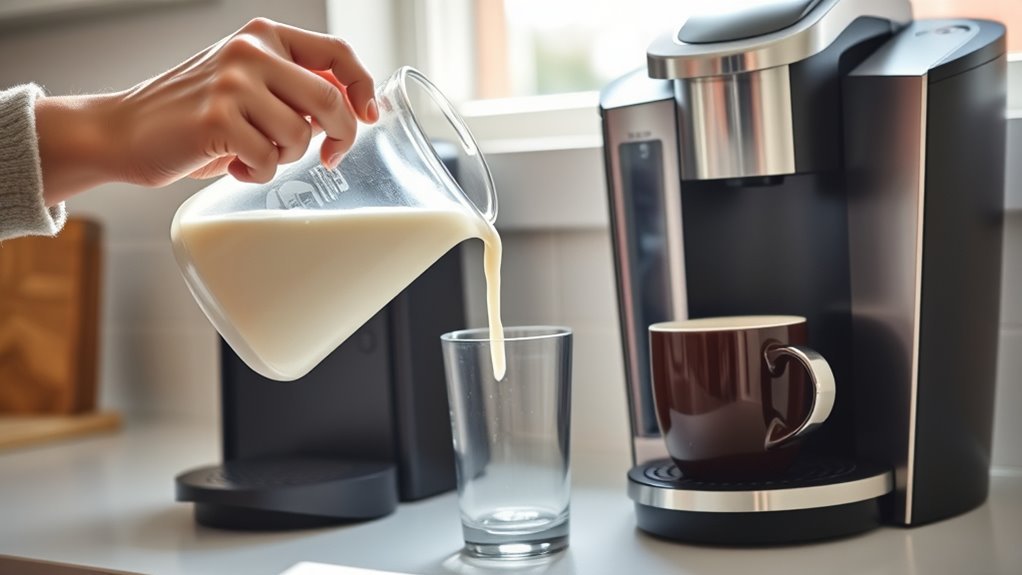
You shouldn’t put milk directly into your Keurig because it can clog tubes, cause mineral buildup, and lead to mold or foul odors that damage the machine. Milk can be tricky with these coffee makers since they’re not designed to handle dairy liquids.
Instead, brew your coffee first, then heat and add milk separately—whether on the stove, microwave, or using milk pods designed for Keurig.
Always clean your machine thoroughly after any milk use to keep it running smoothly. This helps prevent any leftover milk from causing issues down the line.
Keep following this guide to explore the best ways to enjoy milk-based drinks safely without harming your Keurig.
Key Takeaways
- Never pour milk directly into the Keurig’s water reservoir or brewing components. This helps avoid clogs and damage to your machine.
- It’s best to brew your coffee first. Then, heat and add milk separately to your cup for safe milk use.
- You can also use milk pods or containers made specifically for Keurig machines. These help prevent internal residue buildup.
- Make sure to clean your Keurig thoroughly after using milk. This gets rid of proteins and fats that can cause odors and mold.
- Regular maintenance and good hygiene are key. They help keep your machine running smoothly and prolong its life when you use milk.
Why You Shouldn’t Put Milk Directly in Your Keurig

Although it might seem convenient, you shouldn’t put milk directly into your Keurig because it can clog the internal tubes and cause mineral buildup.
Milk residue inside the machine encourages bacterial growth and mold development, especially if you don’t clean thoroughly after each use. This buildup can lead to foul odors and impair brewing efficiency.
Over time, clogging tubes and mineral deposits cause internal damage that may permanently harm your machine. Using milk this way is considered improper use and can even void your warranty.
To avoid damaging your machine and costly repairs, it’s best to keep milk out of the water reservoir and brewing components.
Protect your Keurig by understanding how milk residue affects its function and longevity. It’s definitely worth the extra effort to keep it running smoothly!
How to Add Milk to Your Keurig Coffee Safely
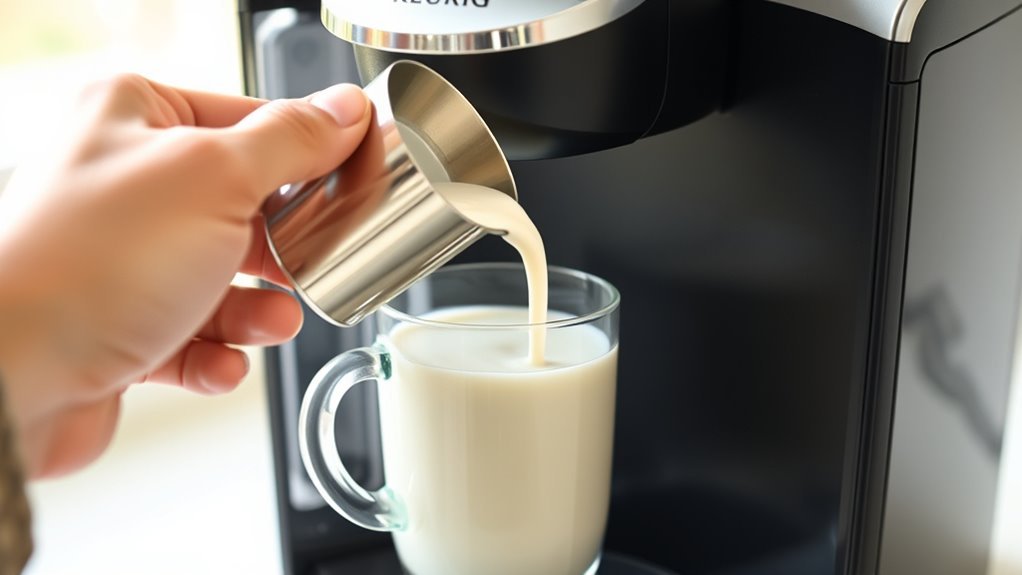
When you want to enjoy milk in your Keurig coffee, brew your coffee first and heat the milk separately before adding it to your cup. Never put milk directly into the water reservoir to avoid damage and mold growth.
To safely add milk, consider these tips:
- Use milk pods or milk containers designed for Keurig to make milk-based drinks without clogging.
- Heat the milk on the stove or microwave before pouring it into your brewed coffee or hot chocolate.
- Always clean your Keurig thoroughly after using milk to remove residual proteins and fats that can cause odors or mold.
Frequently Asked Questions
Is It Safe to Put Milk in a Keurig?
No, you shouldn’t put milk directly in your Keurig. It can damage the machine, cause clogs, and promote mold. Instead, brew your coffee first, then add steamed or frothed milk separately for safety.
Can I Put Milk in My Keurig Instead of Water?
Don’t do it! You can’t put milk instead of water in your Keurig—it’ll clog and damage your machine. Instead, brew coffee with water and add milk separately to keep your Keurig safe and working well.
Can You Provide Me With the Manual for the Keurig With Milk Frother?
I can’t provide the manual directly, but you can download it from Keurig’s official website. Just search your model number with “milk frother manual,” and you’ll find detailed instructions and safety tips there.
What Can I Run Through My Keurig to Clean It Out?
You can run a cycle with just water to flush the system, then brew a mixture of equal parts white vinegar and water or a descaling solution to remove buildup. Repeat as needed for thorough cleaning.
Conclusion
You shouldn’t put milk directly in your Keurig because it can clog the machine and cause damage. Instead, brew your coffee first, then add milk separately for the best taste and safety.
Did you know that 60% of Keurig users report machine issues from improper liquids? By following simple steps, you’ll keep your Keurig running smoothly and enjoy a perfect cup every time.
It’s easy to protect your machine and savor your coffee! Just remember, adding milk after brewing not only prevents clogs but also ensures your coffee tastes just right. Taking these precautions helps you get the most out of your Keurig and keeps your coffee experience safe and enjoyable.