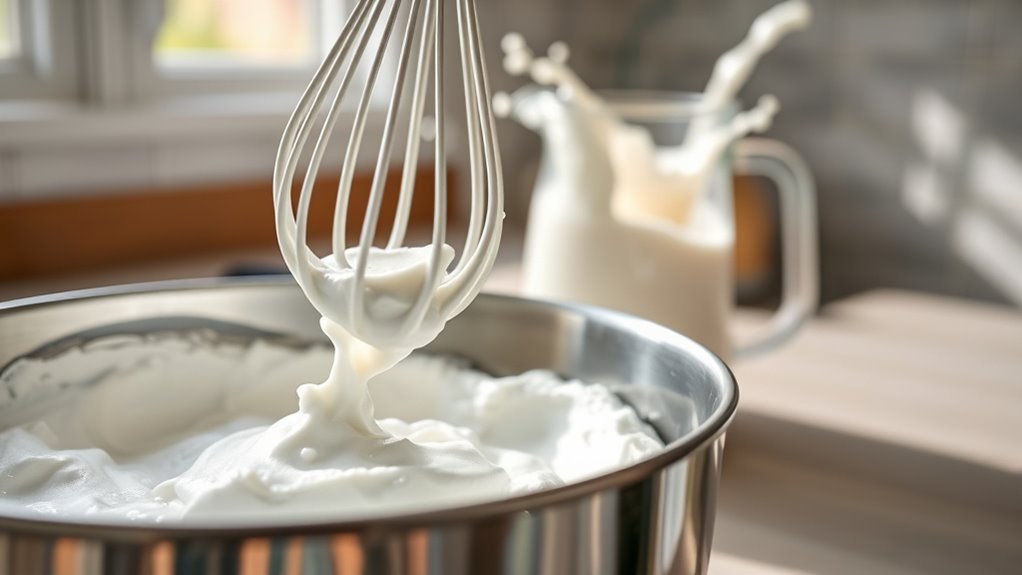
How to Make Whipped Cream With Milk: Easy Step-by-Step Guide
Did you know that traditional whipped cream contains at least 30% fat to hold its shape? Since milk has much less fat, you can’t just whip it as is. However, learning how to make whipped cream with milk is possible with some clever adjustments.
With a few simple tweaks, you can create a light and fluffy whipped topping using milk alone. If you’re curious about making this at home without heavy cream, it’s worth exploring how butter and gelatin play a surprising role in achieving the right texture.
These ingredients help mimic the fat content and stability of traditional whipped cream, allowing you to enjoy a dairy-based topping even when you only have milk on hand.
Understanding Milk Fat Content for Whipping

Although whole milk contains only about 3.25% fat, which is far below the 33% needed for traditional whipped cream, you can’t whip it into stiff peaks on its own.
The key to whipping cream lies in its high milk fat content, which stabilizes air pockets during whipping.
When the fat content is too low, like in whole milk, the mixture won’t hold the structure you need for whipped cream.
To get milk whipped properly, you need to boost the milk fat level markedly.
Without enough fat, the milk won’t form a stable foam, making it impossible to achieve the fluffy, creamy texture of whipping cream.
Understanding this fat content threshold is essential before you try whipping milk into cream.
Key Ingredients Needed for Milk-Based Whipped Cream

To make whipped cream using milk, you’ll need a few key ingredients that help compensate for milk’s lower fat content. The most important is cold, full-fat milk, which provides the necessary creaminess.
Since milk alone won’t whip like heavy cream, you’ll use gelatin as a stabilizer to help the mixture hold its shape and develop that fluffy whipped cream texture.
Milk can’t whip like cream, so gelatin stabilizes and shapes it into fluffy whipped cream.
Along with these, a sweetener enhances flavor and texture.
Here’s what you’ll need:
- Full-fat milk, chilled for best consistency
- Unflavored gelatin or agar agar as a stabilizer
- Confectioners’ sugar for sweetness and smoothness
These ingredients work together to create a milk-based whipped cream that’s both stable and delicious.
The Role of Butter in Creating Whipped Cream Texture

When you melt butter and mix it with milk, you boost the fat content needed to create a rich, creamy texture similar to traditional whipped cream. Butter contains about 80% milk fat, which is essential for achieving that desired whipped texture.
As the melted butter emulsifies with milk, it forms tiny fat droplets that act as building blocks for a stable, fluffy foam. Properly melted and cooled butter ensures an even distribution of milk fat, increasing your chances of reaching stiff peaks.
The amount of butter you add directly impacts the richness, stability, and volume of your whipped milk alternative. Understanding butter’s role in emulsification helps you create a texture that closely mimics classic whipped cream using just milk and butter.
Step-by-Step Method to Whip Milk and Butter
Since achieving the right texture requires careful preparation, start by melting 1/4 cup of unsalted butter and letting it cool slightly before mixing it with 1 cup of cold full-fat milk. Whisk the two together until the mixture thickens a bit, then chill it in the fridge for at least 5 minutes until creamy and slightly viscous.
Next, use an electric mixer on high speed to whip the chilled mixture until it doubles in volume and forms soft to medium peaks.
This simple recipe yields a smooth, creamy whipped cream alternative ready to use immediately or store in the fridge for up to 2 hours.
- Melt butter and combine with cold milk
- Chill mixture for supreme whipping
- Whip with electric mixer to desired peaks
Using Gelatin to Stabilize Milk Whipped Cream
Although milk-based whipped cream can be delicate, adding unflavored gelatin helps you stabilize it and keep its shape longer. To do this, dissolve 1 teaspoon of unflavored powdered gelatin in 2 tablespoons of cold water, then gently heat until fully melted.
Let the gelatin mixture cool in the fridge until it’s cold but still liquid. Before whipping, combine this chilled gelatin with your cold milk base.
When you whip the milk, the gelatin will create a firmer texture, ensuring your whipped cream holds up well over time.
This method is especially useful for layered desserts or decorations since the whipped cream won’t collapse quickly.
Tips for Achieving the Perfect Consistency
To achieve the perfect consistency for milk whipped cream, start by thoroughly chilling your milk and mixing equipment. Cold temperatures help the cream whip up thicker and hold its shape better.
Use full-fat milk with at least 3.25% fat to provide enough richness for whipping.
Opt for full-fat milk with 3.25% fat or higher to achieve rich, stable whipped cream.
Incorporate stabilizers like gelatin, properly dissolved and cooled, to enhance firmness and prevent collapse.
Whip at high speed until you see soft or stiff peaks, but stop before over-whipping to avoid graininess or separation.
Once whipped, refrigerate immediately and use within 24 hours for ideal texture.
Always use cold equipment and ingredients.
Add stabilizers carefully for better hold.
Watch for soft or stiff peaks without over-whipping. Following these tips ensures creamy, stable whipped cream every time.
Common Challenges and How to Overcome Them
Achieving the ideal whipped cream with milk can be tricky because milk alone lacks the fat content needed for stable peaks. To improve whipped cream stability, you’ll want to use full-fat milk with at least 3.25% milk fat and chill both your milk and mixing tools beforehand.
Since milk’s fat is lower than cream’s, incorporating thickening agents like gelatin or agar agar becomes essential to get that fluffy texture. Be careful not to over-whip, as this can cause the milk to turn grainy or separate into butter.
If your whipped cream feels too runny, try re-chilling and whipping again or add more thickening agents. Staying mindful of these challenges will help you create a stable, creamy whipped topping using milk.
Flavor Variations and Add-ins for Milk Whipped Cream
When you want to elevate your milk whipped cream, experimenting with flavor variations and add-ins can make all the difference. Start by adding a splash of vanilla extract for a classic, rich flavor. You can also try other extracts like almond or peppermint to create unique twists.
Elevate your milk whipped cream with vanilla or unique extracts like almond and peppermint for delightful flavor twists.
For a fresh, fruity touch, mix in fruit purees such as strawberry or mango. If you want to add sophistication, a dash of liqueurs like Baileys or Grand Marnier will bring depth and adult flavor notes.
Here are some ideas to try:
- Blend in vanilla extract or flavored syrups for smooth sweetness.
- Stir fruit purees for vibrant, fresh flavor.
- Spike with liqueurs to add complexity and warmth.
These simple add-ins transform your milk whipped cream into a deliciously versatile topping.
Best Uses and Storage Recommendations
How should you use and store whipped cream made with milk to keep it fresh and tasty? For the best texture and presentation, use whipped milk immediately as a topping or filling on desserts like pies, cakes, or mousses.
Since it doesn’t freeze well, avoid freezing to preserve its consistency.
For storage, place the whipped cream in an airtight container and refrigerate it promptly.
Consume it within 2 hours for prime flavor and texture, though you can keep it chilled for up to 2 days if necessary.
Keep in mind that over time, the texture may weaken, so it’s ideal to enjoy it fresh.
Proper storage and timely consumption will help you get the most out of your homemade milk whipped cream.

Frequently Asked Questions
Can You Make Whipped Cream From Milk?
You can’t whip plain milk into true whipped cream since it lacks enough fat. But you can mix milk with melted butter or gelatin, then whip it to create a creamy, whipped-like texture for desserts.
How Do You Turn Regular Milk Into Heavy Whipping Cream?
You turn regular milk into heavy whipping cream by blending cold milk with melted unsalted butter, then chilling the mixture thoroughly.
Whip it at high speed to achieve a creamy, fluffy texture similar to heavy cream.
How to Thicken Milk Into Whipped Cream?
You thicken milk into whipped cream by adding melted butter or gelatin, chilling the mixture well, then whipping it. This boosts fat content and texture, helping you create fluffy, stable whipped cream from regular milk.
How to Make Cream at Home With Milk?
You combine cold full-fat milk with melted butter, chilling this mix until it thickens like morning fog over a warm field.
Then, whip it swiftly, adding sugar and vanilla to craft creamy homemade cream.
Conclusion
Now that you’ve mastered whipping milk into fluffy, dreamy cream, you’re basically a kitchen wizard! With just a splash of butter and a sprinkle of gelatin, you’ve transformed ordinary milk into clouds of sweet, velvety delight. Imagine dolloping this magic on everything—from pancakes to pies—and watching jaws drop.
Seriously, your whipped cream game just went from zero to hero, making every dessert an unforgettable masterpiece. Get ready for endless compliments!
Making whipped cream with milk opens up a world of delicious possibilities. This easy technique turns simple ingredients into a luscious topping that elevates any sweet treat. Enjoy the creamy goodness and impress everyone with your newfound skill in whipped cream with milk!