How Do You Warm up Breast Milk in 10 Simple Steps
Before warming breast milk, wash your hands thoroughly to keep everything clean.
Thaw frozen milk slowly, either in the fridge or by placing it in warm water—not at room temperature. This helps preserve the milk’s nutrients and keeps it safe for your baby.
Always use a BPA-free container when warming breast milk.
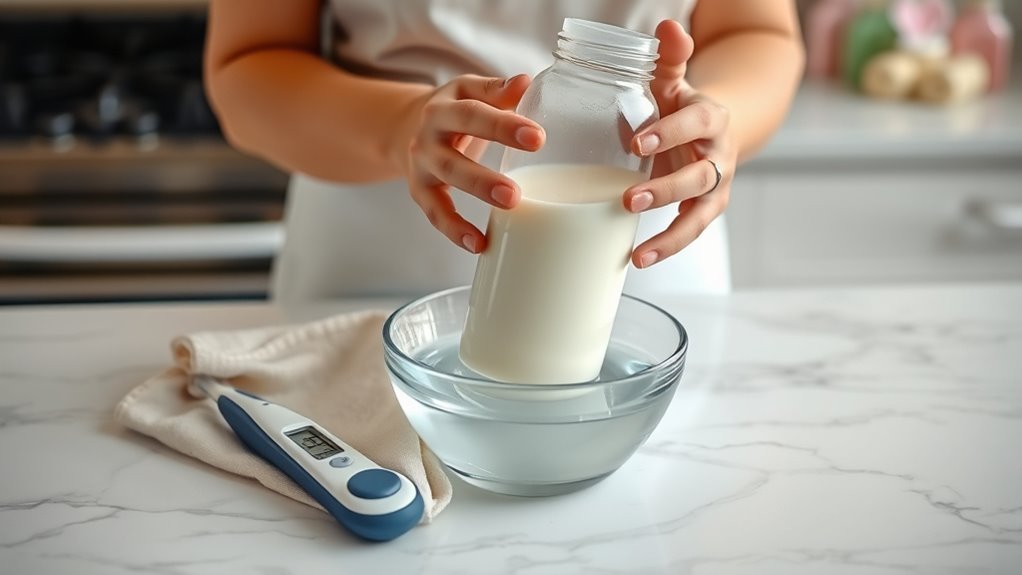
Warm the milk gently by placing the container in warm water around 99°F. Give it a gentle swirl to mix the milk evenly.
Make sure to test the temperature on your wrist before feeding, so you don’t accidentally burn your baby.
Never microwave, reheat, or refreeze breast milk.
And remember, discard any leftovers after feeding.
Following these steps will help keep your baby safe and healthy. There’s more helpful advice ahead!
Key Takeaways
- Warm breast milk by placing the sealed container in warm water (around 99°F) for 1-2 minutes. Give it a gentle swirl to help the heat spread evenly.
- Before feeding, test the milk temperature on your wrist. It should feel warm, not hot.
- Never microwave breast milk. It heats unevenly and can destroy important nutrients.
- Also, avoid reheating or refreezing warmed milk. If your baby doesn’t finish it, it’s best to discard the leftovers.
- Label your containers with the date and amount. Storing milk in small portions helps reduce waste and keeps it fresh.
Wash Your Hands Before Handling Breast Milk
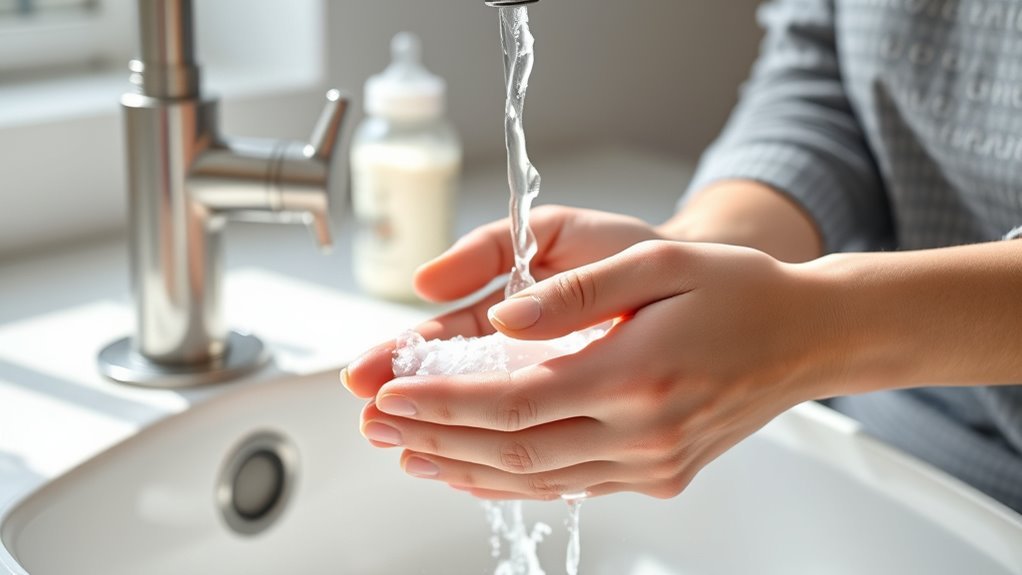
Before you handle breast milk, always wash your hands thoroughly with soap and water to prevent bacterial contamination. Practicing good hand hygiene is essential for safety and proper handling of breast milk.
Clean hands reduce the risk of transferring germs or dirt, keeping the milk safe for your baby. Even if you haven’t touched anything dirty, it’s important to wash your hands before expressing, storing, or warming breast milk.
If soap and water aren’t available, use an alcohol-based sanitizer with at least 60% alcohol and let your hands dry completely. By maintaining proper hygiene, you guarantee the quality of the breast milk and protect your baby from potential infections.
Thaw Frozen Breast Milk Safely
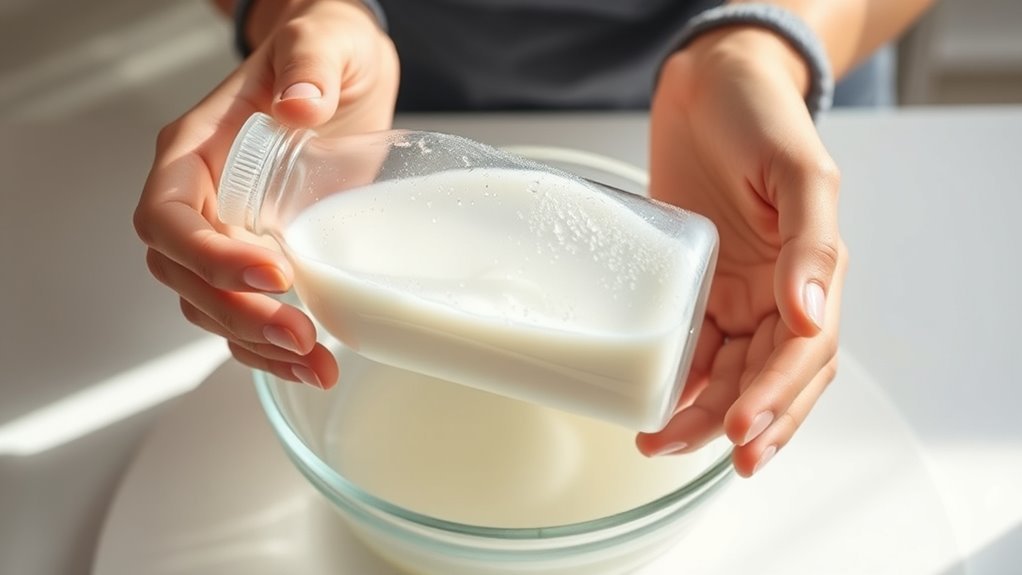
When you’re ready to use frozen breast milk, thaw it gradually in the refrigerator overnight to preserve its quality and safety. This slow thawing process helps prevent bacterial growth, keeping the milk safe for your baby.
If you need the milk sooner, you can thaw frozen breast milk safely by placing the sealed container in warm water. Just make sure the water is warm, not hot, and gently swirl the container until the milk becomes liquid.
Avoid thawing breast milk at room temperature because it can encourage harmful bacterial growth. Once thawed, use the milk within 24 hours if kept refrigerated, and never refreeze it.
Also, be sure to discard any milk left out at room temperature for more than two hours to keep your baby safe.
Pick the Best Container to Warm Breast Milk
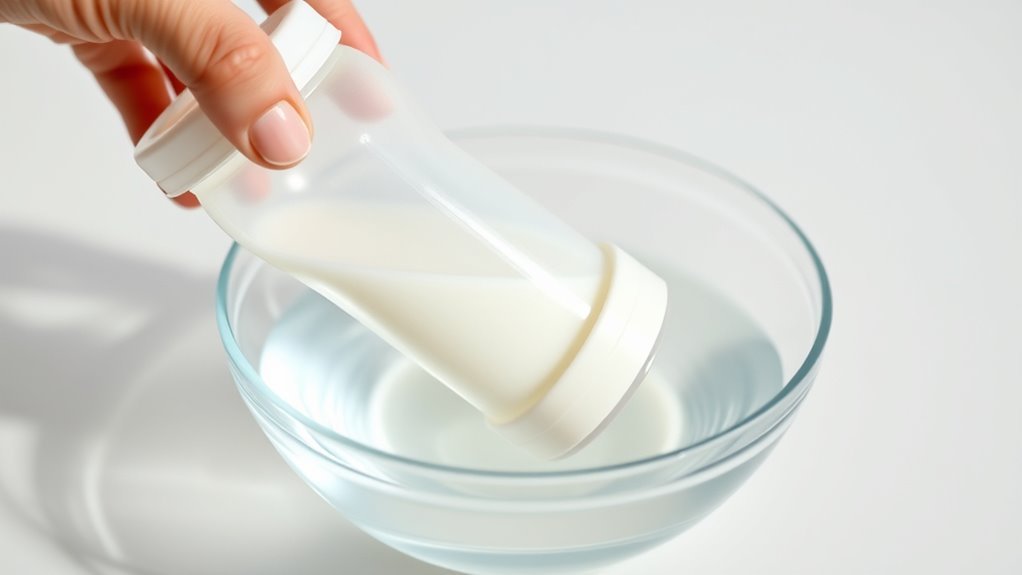
Choose a clean, BPA-free bottle or storage bag designed specifically for breast milk. This helps keep it safe and fresh.
Pick small portions, around 2-4 ounces. Warming smaller amounts is more efficient and helps reduce waste.
Also, make sure the container has a tight-fitting lid. This prevents leaks and spills during warming.
Container Material Options
Although selecting the right container might seem simple, using BPA-free plastic bottles, glass containers, or specially designed breast milk storage bags guarantees safety during warming. You’ll want containers that are leak-proof and have tight-fitting lids to avoid spills.
When warming breast milk, choose microwave-safe options only if you plan to use a water bath—not direct microwaving—to maintain nutrition and safety. Glass containers are sturdy and easy to clean, while BPA-free plastic bottles offer lightweight convenience.
Storage bags designed for breast milk are another great option. But avoid disposable liners or non-food-grade plastics, as they might not withstand warming temperatures.
Label each container with the date and amount to keep track of freshness and reduce waste when reheating your baby’s milk. It really helps to stay organized and makes feeding time easier.
Size And Seal
Since warming breast milk requires careful handling, picking a container that fits the right size and seals tightly is essential. Choose a clean, airtight bottle or food-grade container sized between 2 to 6 ounces to match your baby’s feeding needs. This prevents wasting milk and guarantees efficient warming.
Before warming, always seal the container securely to avoid leaks and protect freshness during storage. Avoid disposable liners or non-designated plastic bags—they may not be safe for warming or proper storage.
Label your container with the date of expression to track freshness and maintain safe use. By selecting the right container and ensuring a tight seal, you keep the breast milk safe, fresh, and ready to warm without contamination or spills.
Use Warm Water to Gently Heat Breast Milk
When you want to warm breast milk safely, place the sealed container in a bowl or mug filled with warm water around 99°F. This method lets you gently heat the breast milk without risking nutrient loss or overheating.
Let the container sit in the warm water for 1-2 minutes, swirling it occasionally to guarantee the milk warms evenly. Avoid using boiling water or anything too hot, as that can damage the milk’s quality.
After warming, test the temperature by placing a drop on your wrist—it should feel warm, never hot. Using warm water is a safe and effective way to prepare breast milk for feeding, keeping it at the right temperature while preserving its valuable nutrients.
Why You Should Never Microwave Breast Milk
You shouldn’t microwave breast milk because it heats unevenly, creating hot spots that can burn your baby’s mouth.
Microwaves also damage important nutrients and antibodies, reducing the milk’s health benefits.
To keep your baby safe and nourished, it’s best to avoid microwave warming altogether.
Nutrient Damage Risks
Although microwaving might seem like a quick way to warm breast milk, it poses serious risks to its nutritional quality. Using a microwave can cause hot spots and uneven heating, which destroy nutrients and increase the risk of thermal injury to your baby.
Sensitive proteins, enzymes, and antibodies crucial for your baby’s immune system get damaged, reducing the milk’s health benefits. Here’s a clear breakdown of nutrient damage caused by microwaving:
| Issue | Effect on Breast Milk | Result for Baby |
|---|---|---|
| Hot spots | Can cause burns | Thermal injury risk |
| Uneven heating | Destroys sensitive nutrients | Reduced immune protection |
| Protein damage | Alters protein structure | Impaired nutrient absorption |
| Enzyme reduction | Lowers enzyme activity | Weakened digestion |
| Antibody loss | Decreases antibodies | Less immune support |
Uneven Heating Hazards
Because microwaves heat breast milk unevenly, they create dangerous hot spots that can burn your baby’s mouth or throat. These hot spots can reach temperatures above 120°F, posing a serious burn risk during feeding.
The uneven heating from a microwave also compromises the milk’s safety by destroying essential nutrients, fragile cells, and enzymes that support your baby’s immune system.
Besides the risk of burns, the varying temperature throughout the milk makes it hard to guarantee it’s evenly warmed. This increases the chance of feeding discomfort or injury.
Health experts and the FDA strongly advise against using a microwave to heat or thaw breast milk. For your baby’s safety, always choose gentler warming methods that provide consistent temperature control without creating hot spots.
Swirl Breast Milk Gently Before Feeding
When breast milk warms, its fat layers tend to separate, so gently swirling the container before feeding helps mix these layers back together. This swirl ensures the milk’s nutrients and antibodies are evenly distributed, maintaining a consistent texture and balanced nutrition for your baby.
Avoid shaking vigorously, as it can damage delicate components and create unwanted air bubbles. Instead, use gentle circular motions with your hand or a spoon to softly mix the milk.
Here’s why swirling is vital:
- It reverses fat separation caused by warming.
- It preserves the milk’s nutrient-rich consistency.
- It prevents damage to sensitive antibodies and enzymes.
Swirling breast milk gently guarantees your baby gets the best nourishment every time. It’s a simple step, but it makes a big difference!
Test Breast Milk Temperature on Your Wrist
Before feeding your baby, you should always test the breast milk temperature on your wrist to make sure it feels warm but not hot. This quick test guarantees the milk is at a safe, comfortable temperature, similar to your body temperature—around 98–102°F.
Just place a few drops on your wrist and feel if it’s warm enough without burning your skin. This simple step helps prevent overheating and keeps your baby safe.
| What to Feel | Action to Take |
|---|---|
| Warm and comfortable | Safe to feed |
| Slightly hot | Let it cool a bit |
| Cool or cold | Warm the milk gently |
Always test the temperature before feeding, especially after warming or storing. It’s a small step that makes a big difference!
Safely Use a Bottle Warmer
When you use a bottle warmer, always follow the manufacturer’s instructions to heat the milk evenly and safely. Keep the bottle in the warmer for just a few minutes and test the temperature on your wrist before feeding.
Never reheat milk, and unplug the warmer right after use to avoid overheating. It’s a simple way to keep things safe and make sure your baby gets milk at just the right temperature.
Proper Bottle Warmer Use
Although bottle warmers offer a convenient way to heat breast milk, you need to follow the manufacturer’s instructions carefully to guarantee even warming and prevent overheating. Proper use ensures your baby’s safety and preserves the milk’s quality.
To use a bottle warmer correctly, remember to heat breast milk only for the recommended time, usually a few minutes. Then, unplug the device immediately to avoid overheating.
Also, follow safety guidelines by never reheating previously warmed milk. Make sure to regularly disinfect the bottle warmer to keep things hygienic.
And don’t forget to always test the milk temperature on your wrist before feeding. This helps check for even heating and avoids any hot spots.
Monitoring Temperature Safety
How do you make sure your baby’s breast milk is warmed safely using a bottle warmer? First, always follow the manufacturer’s instructions for setting the correct warming time and temperature. After warming, swirl the bottle gently to distribute heat evenly and avoid hot spots.
Never rely solely on the warmer’s indicator lights; you need to verify the temperature yourself. Use a thermometer or test a drop of milk on your wrist to ensure it’s lukewarm—around 98–102°F.
If it feels too hot, let it cool, then recheck before feeding. Also, avoid reheating the same milk multiple times, as inconsistent temperature monitoring can create unsafe conditions.
Never Reheat or Refreeze Warmed Breast Milk
Since reheating or refreezing warmed breast milk can promote bacterial growth and degrade essential nutrients, you should never reheat it more than once or refreeze thawed milk. Reheating warmed milk increases the risk of bacterial contamination, making it unsafe for your baby.
Any leftovers after feeding must be discarded immediately to prevent exposure to harmful bacteria and nutrient loss.
To keep your baby safe, follow these key points:
- Warm only the amount needed to avoid leftovers.
- Never reheat milk that’s already been warmed.
- Discard any leftover milk after feeding—don’t store or refreeze it.
Store and Label Breast Milk Correctly After Feeding
When you finish feeding, always label breast milk containers with the date and time they were expressed to keep track of freshness. Properly labeled containers help you store milk efficiently and avoid confusion.
Store breast milk in small portions, typically 2-6 ounces, so you only thaw what you need. This helps reduce waste and makes feeding time easier.
Place the labeled containers toward the back of your fridge or freezer. This prevents accidental spoilage and makes it easier to rotate stock.
Use the oldest milk first, following the first-in, first-out rule. It’s a simple way to make sure nothing goes to waste.
If you’re sending milk to childcare providers, clearly label each container with your child’s name, date, time, and any specific storage instructions. This helps keep the milk fresh and safe for your little one after feeding.
Frequently Asked Questions
What Is the Easiest Way to Warm up Breast Milk?
The easiest way to warm breast milk is by placing the sealed container in a bowl of hot water for a few minutes. Swirl gently, check the temperature on your wrist, and avoid microwaving to protect nutrients.
What Is the 3-3-3 Rule for Breast Milk?
You should follow the 3-3-3 rule for breast milk: use it within 3 hours at room temperature, 3 days refrigerated, and 3 months frozen. This keeps nutrients intact and reduces bacteria, ensuring your baby’s safety.
How to Warm up Your Breast Milk?
You warm breast milk by placing the sealed container in warm water for a couple of minutes. Gently swirl it, test the temperature on your wrist, and never microwave or reheat leftovers to keep nutrients intact.
How to Warm up Breast Milk With No Warmer?
Did you know 85% of parents skip warmers? You can warm breast milk by placing the sealed bottle in a bowl of warm water for 3-5 minutes, swirling gently, and testing the temperature before feeding your baby.
Conclusion
Warming breast milk isn’t rocket science, but skipping these steps could turn your precious liquid gold into a science experiment! You don’t want to risk overheating or contaminating it—your baby’s health is on the line.
By washing your hands, choosing the right container, avoiding microwaves, and testing the temperature, you’re basically a milk-warming superhero. These simple precautions make all the difference.
Follow these simple steps, and you’ll always have perfectly warmed milk ready to fuel your little one’s adventures! Warming breast milk safely is key to preserving nutrients and ensuring your baby gets the best feeding experience. Stick to the right techniques, and you’ll keep your baby happy and healthy every time.