How Long Can Milk Last Out of the Fridge Safely? Storage & Safety Tips
You might not realize that milk left out at room temperature can become unsafe in as little as two hours. Understanding how long milk can last out of the fridge safely is crucial to prevent foodborne illness.
When temperatures rise above 90°F, that window shrinks to just one hour. This rapid change happens because bacteria multiply quickly, but the exact timeline depends on several factors you may not have considered.
Understanding these details can help you keep milk fresh and safe longer. Always be mindful of the environment where milk is stored to ensure its safety and quality.
Understanding Milk’s Safe Time Outside the Refrigerator

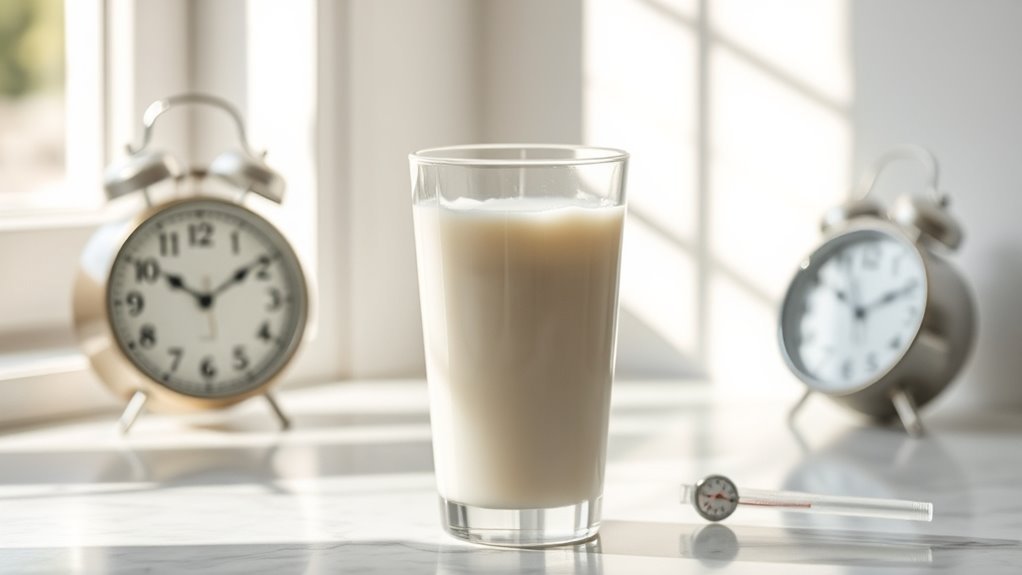
Although it’s tempting to leave milk out while you finish your meal, you shouldn’t let it sit at room temperature for more than 2 hours. Milk’s shelf life shortens quickly once removed from the refrigerator due to the rapid growth of bacteria.
This bacterial growth accelerates spoilage and raises the risk of foodborne illness, compromising food safety. If the ambient temperature exceeds 90°F, that safe window shrinks to just 1 hour.
Proper storage means promptly returning milk to the fridge after use to prevent expiration and contamination. Even brief exposure to room temperature can affect milk’s quality and safety.
Factors That Influence Milk Spoilage

Milk spoils faster when certain factors come into play, making it important to recognize what affects its freshness once it’s out of the fridge. Bacterial growth accelerates with higher temperature, while spoilage bacteria and spores in milk activate quickly without cold storage.
Exposure to air and light worsens milk spoilage by increasing oxidation and contamination. The container’s size and initial temperature also influence how fast milk warms and spoils. Always check the expiration date and store milk properly to avoid food poisoning from spoiled perishable foods.
| Factor | Effect on Milk Spoilage | Prevention Tip |
|---|---|---|
| Temperature | Increases bacterial growth | Keep refrigerated |
| Exposure to air | Boosts contamination | Seal container tightly |
| Light exposure | Causes oxidation | Store in opaque containers |
| Container size | Affects warming rate | Use smaller portions |
| Initial temp | Influences spoilage speed | Cool milk immediately |
Temperature’s Role in Milk Safety

When temperatures rise above 40°F, bacteria in milk start multiplying rapidly, putting its safety at risk. This range between 40°F and 140°F is called the danger zone, where bacterial growth accelerates and spoilage happens quickly.
Each 10°F increase within this zone doubles the rate of bacterial growth, so warm temperatures considerably shorten milk’s safe storage time.
To maintain milk safety, refrigeration at or below 40°F is essential; it slows bacterial growth and extends how long milk stays fresh.
If milk is left out above 90°F, you shouldn’t keep it out for more than one hour to avoid the risk of foodborne illness.
Being mindful of temperature is the key to preventing spoilage and protecting your health.
Signs That Milk Has Gone Bad
If you notice a sour smell or a lumpy texture, these are clear signs that your milk has spoiled. Spoiled milk often gives off a strong sour odor, much different from fresh milk.
Look for curdling or clumping, texture changes that signal bacterial growth.
An off-taste, like sour or rancid flavors, confirms milk spoilage. Even if the milk seems fine, ignoring milk expiration dates and leaving it out of refrigeration can risk dairy safety.
Unusual thickness or a slimy film on the surface also indicates spoilage.
Paying attention to these signs of spoilage helps you avoid consuming bad milk and protects your health. Proper refrigeration is key to extending milk’s freshness and preventing bacterial growth.
Differences Between Pasteurized and Raw Milk Storage
Because pasteurized milk undergoes heat treatment to kill most harmful bacteria, it lasts longer and stays safer than raw milk when stored properly. Pasteurized milk’s shelf life extends considerably under refrigeration, reducing microbial growth and spoilage.
In contrast, raw milk contains natural bacteria that multiply quickly at room temperature, shortening its storage time and increasing risk of harmful bacteria growth. Leaving raw milk out accelerates spoilage and compromises food safety, while pasteurized milk can tolerate brief periods at room temperature with less risk.
To maintain freshness and prevent microbial growth, you should refrigerate both types promptly. Understanding these differences helps you handle each milk type safely, minimizing spoilage and protecting your health. Always keep raw milk chilled to limit harmful bacteria, as its food safety depends heavily on careful storage.
How Container Type and Size Affect Milk Freshness
Understanding how long milk stays fresh outside the fridge also depends on the container you use. Smaller containers heat up faster, increasing bacterial growth and reducing safe out-of-fridge time.
Larger containers warm more slowly, preserving milk freshness longer. Airtight containers, especially original ones, slow milk spoilage by limiting exposure to air, unlike open milk in unsealed vessels.
Container material also matters. Glass tends to keep milk cooler longer than plastic, supporting better milk storage.
| Container Type | Container Size | Impact on Milk Freshness |
|---|---|---|
| Airtight Glass | Large | Extended freshness, slower spoilage |
| Airtight Plastic | Small | Faster warming, quicker spoilage |
| Open Container | Any Size | Rapid bacterial growth, quick spoilage |
Choose your container wisely to maximize milk’s safe out-of-fridge time.
Storage Tips to Extend Milk’s Shelf Life
When you store milk, placing it in the back of the fridge where temperatures stay steady between 36-38°F helps keep it fresh longer. Proper milk storage is key to preventing spoilage and extending shelf life by maintaining temperature control.
Storing milk in the fridge’s back at 36-38°F keeps it fresh and prevents spoilage.
To guarantee dairy safety and reduce the risk of contamination, keep milk in its original sealed container and minimize out-of-fridge time. Regularly check the expiration date to avoid consuming spoiled milk.
Consider these spoilage prevention tips:
- Store milk away from the door to avoid temperature fluctuations
- Refrigerate milk immediately after purchase
- Limit milk’s exposure to warm environments during transport
- Discard milk left out over 2 hours (or 1 hour above 90°F)
Understanding dairy microbiology helps you manage spoilage and keep milk safe.

Handling Alternative Milks Outside the Fridge
Although many plant-based milks are shelf-stable before opening, you should refrigerate them promptly once opened to keep them fresh. Unopened cartons of alternative milks like almond, soy, or oat milk can last 3 to 6 months at room temperature, depending on their shelf life.
However, once you open the milk, refrigeration is essential to prevent spoilage. Keep open milk sealed tightly and consume it within 7 to 10 days.
Leaving alternative milks out beyond two hours increases the risk of spoilage and bacterial growth, jeopardizing food safety. Always check for spoilage signs such as off-odor, curdling, or texture changes before use.
Proper storage and timely refrigeration guarantee you safely enjoy your alternative milks without compromising taste or health.
Frequently Asked Questions
Can I Drink Milk Left Out for 4 Hours?
You shouldn’t drink milk left out for 4 hours because bacteria can multiply rapidly, making it unsafe.
If the temperature was above 90°F, it’s even riskier. Always refrigerate milk promptly to stay safe.
How Long Can Milk Be Unrefrigerated and Still Be Good?
Milk can only stay out like a melting ice sculpture for about two hours before it sours. If it’s hotter than 90°F, you’ve got just one hour to refrigerate it, or it’ll spoil fast.
How Long Is Breastmilk Good After Being Taken Out of the Fridge?
You can keep breast milk out of the fridge for up to 4 hours safely. If the room is warm, try not to exceed 2 hours to avoid spoilage and maintain its quality for your baby.
How Do the Amish Keep Their Milk Cold?
You keep Amish milk cold by storing it in cool cellars, springhouses, or underground tanks. You use natural methods like running spring water and shaded areas, plus insulated containers, to maintain freshness without modern refrigeration.
Conclusion
Think of milk like a delicate traveler crossing a hot desert—you wouldn’t leave it stranded too long, or it’ll spoil on the journey. Just like you wouldn’t risk that traveler’s health, don’t let milk linger outside the fridge past its safe time.
By keeping it cool and watching for warning signs, you’re ensuring milk arrives fresh and safe, ready to nourish you. Treat it with care, and it’ll repay you with quality every time. Remember, understanding how long milk can last out of the fridge safely is key to preventing spoilage and maintaining freshness.