How Long Does Coconut Milk Last in the Fridge
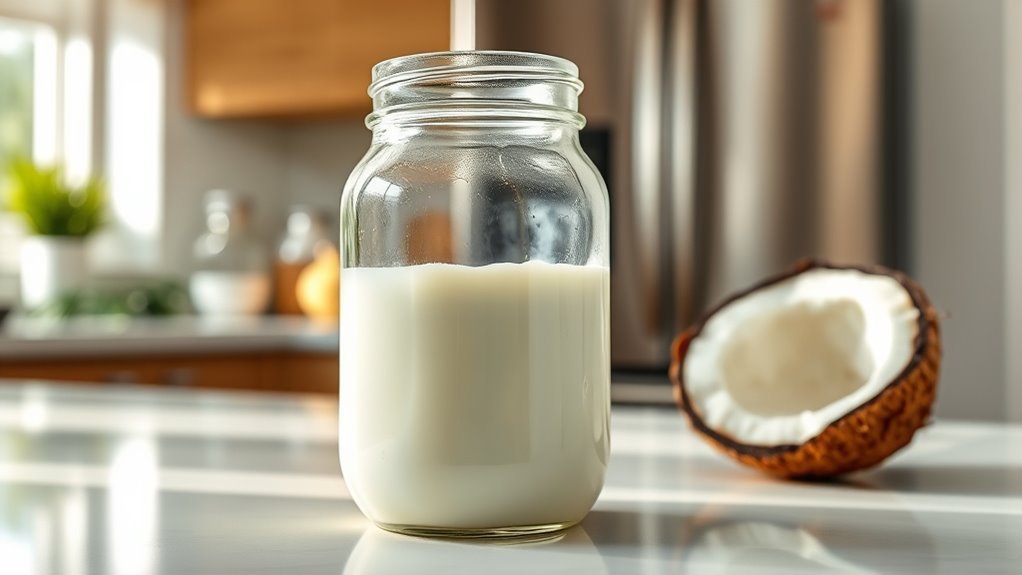
You can keep opened coconut milk in your fridge for about 4 to 7 days if you store it properly. Proper storage of coconut milk is essential to maintain its freshness and flavor. Make sure to transfer it into an airtight container and keep it in the coldest part of the fridge.
Shake or stir it well before each use, and always check for sour smells, curdling, or discoloration. These signs mean it’s time to toss it. If you want to learn more about storage tips and signs of spoilage, there’s more to discover.
Understanding the Shelf Life of Coconut Milk

Although coconut milk is a versatile ingredient, knowing how long it endures is essential to avoid waste and ensure safety. Typically, unopened canned or boxed coconut milk lasts between 1 to 2 years when stored in a cool, dry place.
Once opened, you should refrigerate it and use it within 4 to 7 days. If you’re dealing with homemade coconut milk, it’s best to consume it within 2 to 3 days because it lacks preservatives.
You’ll notice changes in texture, smell, or taste as signs it’s gone bad. Trust your senses. If it looks curdled or smells sour, it’s time to toss it.
Factors That Influence Coconut Milk Freshness

Since coconut milk comes in various forms and packaging, several factors influence how long it stays fresh. The type you choose, canned, carton, or fresh, affects its shelf life. Canned coconut milk generally lasts longer unopened, while carton milk is often pasteurized and may spoil faster once opened.
Storage conditions matter too; keeping it consistently refrigerated slows down spoilage. Exposure to air after opening accelerates freshness loss, so resealing tightly is essential.
Additionally, additives or preservatives in some brands can extend shelf life, whereas pure coconut milk without preservatives tends to spoil quicker.
Finally, the temperature fluctuations in your fridge can impact freshness, so store it away from the door or warmer spots. Being mindful of these factors helps you get the most out of your coconut milk.
How to Tell if Coconut Milk Has Gone Bad

Knowing the factors that affect coconut milk’s freshness can help you spot when it’s no longer good to use. Trust your senses: look for changes in color, texture, and smell.
If the milk smells sour or off, or if it has a curdled or separated texture that doesn’t blend back smoothly, it’s best to discard it.
| Sign | What It Means |
|---|---|
| Sour smell | Spoiled and unsafe to consume |
| Curdled texture | Milk has separated, likely bad |
| Off color (gray/yellow) | Indicates spoilage |
| Mold spots | Definitely discard immediately |
| Unusual taste | Do not consume, could cause illness |
If you notice any of these signs, don’t risk it. Throw the coconut milk away.
Differences Between Canned and Carton Coconut Milk
When you choose between canned and carton coconut milk, you’re picking products that serve different purposes and have distinct qualities.
Canned coconut milk typically contains a higher fat content, making it richer and creamier, ideal for cooking curries, desserts, or anything needing a thick texture.
Carton coconut milk, on the other hand, usually has a thinner consistency and lower fat content, designed more for drinking, smoothies, or cereal.
You’ll also notice canned coconut milk often separates into cream and water, which you can stir back together, while carton versions stay more uniform.
Additionally, canned coconut milk usually has a longer shelf life unopened, whereas carton coconut milk is fresher but spoils faster once opened.
Knowing these differences helps you pick the best type for your recipe and storage needs.
Proper Storage Techniques for Coconut Milk
Although coconut milk can last a while unopened, you’ll need to store it properly once opened to keep it fresh and safe to use. First, transfer any leftover coconut milk from its original container into an airtight container. This prevents it from absorbing fridge odors and keeps contaminants out.
Always refrigerate your coconut milk immediately after opening. Keep the temperature consistent, ideally below 40°F (4°C). Avoid leaving it out on the counter for extended periods.
For canned coconut milk, stir well before transferring since it tends to separate. Label the container with the date you opened it, so you can track freshness easily.
Using Leftover Coconut Milk Safely
If you want to make the most of your leftover coconut milk, you need to handle it carefully to avoid spoilage and foodborne illness. Always transfer the leftover milk into a clean, airtight container immediately after opening the original packaging. Store it in the coldest part of your fridge, ideally below 40°F (4°C), and use it within 4 to 7 days.
Transfer leftover coconut milk to an airtight container and refrigerate below 40°F, using within 4 to 7 days.
Avoid leaving coconut milk out at room temperature for long periods, as this speeds up bacterial growth.
When using leftover milk, stir or shake it well to recombine any separated solids. Always use a clean spoon or utensil to scoop out what you need, preventing contamination.
If you’re unsure about its freshness, it’s safer to discard it than risk your health.
Signs of Spoiled Coconut Milk to Watch For
You’ll know coconut milk has gone bad by paying attention to a few key signs. Spoiled coconut milk often smells sour or off, and its texture changes from smooth to lumpy or curdled.
If you notice any discoloration or mold, it’s a clear indication to toss it. Taste is another clue—if it tastes sour or unusual, don’t use it.
| Sign | What to Look For |
|---|---|
| Smell | Sour, rancid, or off odor |
| Texture | Lumpy, curdled, or separated |
| Appearance | Discoloration or mold growth |
Always trust your senses; if something feels off, it’s safer to discard the coconut milk.
Tips to Extend the Shelf Life of Coconut Milk
To keep your coconut milk fresh longer, store it in an airtight container and refrigerate it immediately after opening. Avoid leaving it out at room temperature for extended periods, as this speeds up spoilage.
Store coconut milk in an airtight container and refrigerate immediately to keep it fresh longer.
If you buy canned coconut milk, transfer any leftovers to a glass container rather than keeping it in the can. Freezing coconut milk in ice cube trays is another great option; just thaw cubes as needed to prevent waste.
Shake the container well before each use to keep the consistency smooth and prevent separation.
Finally, always check the expiration date before purchasing and try to use coconut milk within 5 to 7 days after opening.
These simple steps will help you enjoy fresh coconut milk longer and reduce the chance of spoilage.
Frequently Asked Questions
Can Coconut Milk Be Frozen and Thawed Without Losing Quality?
Yes, you can freeze coconut milk, but it may separate and change texture when thawed. You’ll want to shake or blend it well before using to restore consistency, especially for cooking or smoothies.
Is Coconut Milk Safe to Consume Past the Expiration Date if Unopened?
You see a can, you check the date, you wonder if it’s safe. If unopened, you can usually consume coconut milk shortly past expiration, but trust your senses. Look, smell, and taste before using it.
How Does Homemade Coconut Milk Shelf Life Compare to Store-Bought?
Homemade coconut milk lasts about 2-3 days in your fridge, while store-bought can last up to 7 days once opened. You’ll want to use homemade quickly since it lacks preservatives and spoils faster.
Can Coconut Milk Be Used as a Substitute for Dairy Milk in Recipes?
You’d think coconut milk could replace dairy milk in every recipe. It’s that versatile! You can use it in baking, cooking, and smoothies, but remember, its flavor and texture might change your dish slightly.
Does Adding Preservatives Affect the Shelf Life of Coconut Milk?
Yes, adding preservatives extends coconut milk’s shelf life by slowing spoilage. You’ll notice it stays fresh longer in the fridge, so you can use it over more days without worrying about it going bad quickly.
Conclusion
Now that you know how to navigate coconut milk’s nuances, you can confidently keep it fresh and flavorful. By spotting signs of spoilage, storing it smartly, and savoring leftovers safely, you’ll stretch its shelf life and save your snacks.
Remember, whether canned or carton, proper preservation prevents pesky problems. So, stay savvy, store smart, and sip smoothly—your coconut milk will stay sensationally safe and scrumptious every time!
By following these tips, you ensure your coconut milk lasts longer in the fridge, maintaining its rich taste and creamy texture. This way, you enjoy every drop without worry.