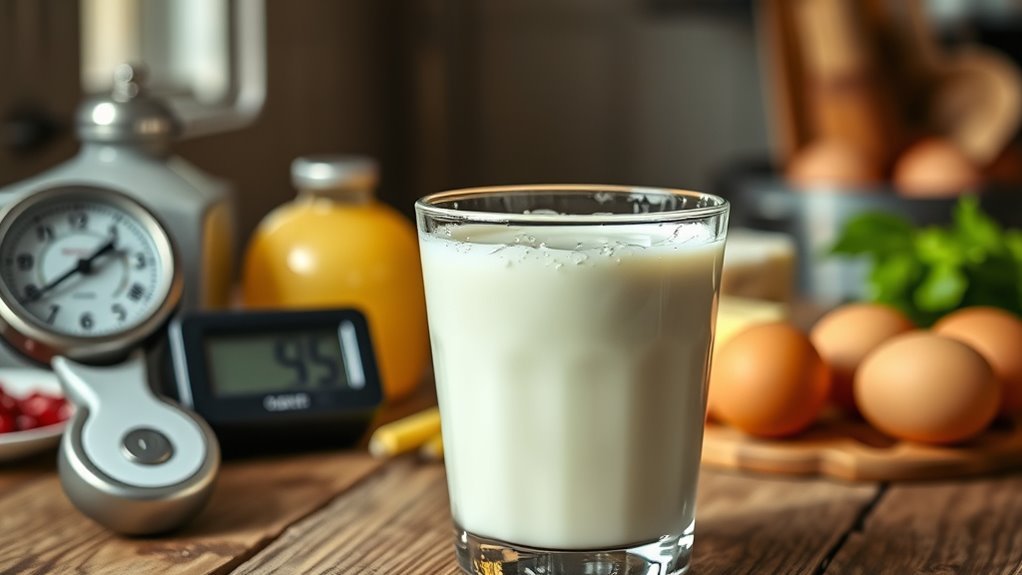
How Long Does Milk Last Out of the Fridge? Safety & Storage Guide
You might not realize how quickly milk can spoil once it’s left out of the fridge. Milk storage and safety are important to understand if you want to avoid wasting this staple. If you’ve ever wondered how long milk lasts out of the fridge, you’re not alone.
Knowing the right time limits and what signs to watch for can save you from wasting milk—or worse, risking your health. But what exactly affects milk’s shelf life once it’s out of the cold? Understanding these factors is key to keeping your milk fresh and safe to consume.
Recommended Time Limits for Leaving Milk Out

Although it might be tempting to leave milk out during meals, you shouldn’t keep it at room temperature for more than 2 hours. This two-hour rule is vital for food safety because dairy foods like milk spoil faster when left unrefrigerated.
Beyond two hours, bacteria growth accelerates, increasing the risk of foodborne illness. If the room temperature exceeds 90°F, you should refrigerate milk within one hour to prevent spoilage.
Milk left out over two hours—or one hour in hot conditions—can quickly become unsafe.
Always check the expiration date before using milk, but remember that even before that date, improper handling can cause spoilage. To keep milk safe, refrigerate it immediately after purchase and return it promptly after use.
Ignoring these guidelines invites bacteria to thrive, leading to spoilage and potential health risks.
Factors That Influence Milk Spoilage

Understanding how long milk lasts also means recognizing the factors that speed up its spoilage. Temperature plays a vital role in bacterial growth and bacteria multiplication, with higher ambient temperatures accelerating the process. Smaller milk containers warm faster, increasing the risk of spoilage bacteria thriving.
Exposure to light can cause oxidation, affecting milk’s shelf life and flavor.
Since milk is one of the most perishable foods, improper storage conditions like leaving it unrefrigerated or unsealed allow spoilage bacteria and pathogens to multiply rapidly, raising the chance of food poisoning.
Proper refrigeration and sealing slow microbial activity, preserving freshness and extending shelf life.
Being mindful of these factors helps you maintain milk quality and avoid milk spoilage signs that could compromise safety.
Signs to Identify Spoiled Milk

When milk starts to spoil, you’ll notice distinct signs that help you decide whether it’s safe to use. Key spoilage signs include a sour odor, curdling, thickened texture, and off-taste.
Color change to a greenish or yellowish tint also indicates bacteria growth. Mold presence is a clear signal to discard the milk immediately, regardless of the expiration date or refrigerator storage history.
| Spoilage Sign | What It Means |
|---|---|
| Sour odor | Bacteria growth producing rancid smell |
| Curdling | Milk proteins clumping due to spoilage |
| Off-taste | Sour or bitter, unsafe to consume |
| Color change | Indicates bacterial contamination |
| Mold | Visible fungi; milk must be thrown out |
Watch for these signs to avoid consuming spoiled milk.
Safe Storage Practices to Extend Milk Freshness
To keep your milk fresh longer, store it in the coldest part of your fridge, typically the back, where temperatures stay steady between 36-38°F. Effective milk storage is vital for slowing bacterial growth and extending shelf life.
Here’s how to improve your dairy preservation:
- Always keep milk in its original container with proper sealing to prevent contamination and exposure to light.
- Avoid storing milk in the refrigerator door to maintain consistent temperature control.
- Refrigerate milk promptly after each use and consume it before the expiration date to guarantee food safety.
- Watch for spoilage signs and discard milk if any irregularities appear, even if it’s before the expiration date.
Following these tips helps you manage refrigeration effectively, keeping milk fresh while minimizing spoilage risks.
Risks of Consuming Spoiled Milk
Although spoiled milk might seem harmless, consuming it can lead to serious health issues like nausea, vomiting, and stomach cramps.
Spoiled milk often contains harmful bacteria such as Salmonella, E. coli, and Listeria, which cause food poisoning and severe health risks.
Even if milk looks or smells fine, bacterial growth can occur after the expiration date or if left out too long, increasing your risk.
The FDA recommends discarding milk left out over 2 hours to prevent these dangers.
Paying attention to spoilage signs is vital because pathogens may not always be detectable by taste or smell.
Consuming even small amounts of spoiled milk can be especially risky for children, pregnant women, and the elderly, so it’s best to err on the side of caution to protect your health.

Frequently Asked Questions
How Long Can Milk Be Left Unrefrigerated?
You shouldn’t leave milk unrefrigerated for over 2 hours, or just 1 hour if it’s above 90°F. After that, bacteria grow quickly, so it’s safer to toss it to avoid getting sick.
How Long Is Breastmilk Good After Being Taken Out of the Fridge?
Once breastmilk leaves the fridge, it’s like a sandcastle against the tide. You’ve got about 2 hours before it starts to melt away. Use it quickly to keep your baby’s meal fresh and safe.
How Do the Amish Keep Their Milk Cold?
The Amish keep their milk cold by storing it in cool underground cellars, springhouses, or natural streams. They also use icehouses and clay vessels for insulation, chilling milk immediately after milking to prevent spoilage.
How Long Will Milk Stay Fresh at Room Temperature?
You shouldn’t leave milk out at room temperature for more than two hours.
If it’s hotter than 90°F, keep it refrigerated within an hour to prevent spoilage and harmful bacteria growth.
Conclusion
You might think leaving milk out for a bit won’t hurt—but imagine it quietly turning sour, bacteria multiplying unseen as the clock ticks past two hours. At room temperature, the danger grows fast, and above 90°F, that safe window shrinks to just one hour.
Don’t wait for that off smell or curdled texture to appear—act fast. Keep your milk chilled, sealed, and tucked away in the coldest part of your fridge.
Your health depends on it. Remember, how long milk lasts out of the fridge is limited, so proper storage is key to safety.