How Long Can Milk Stay Out Safely? Food Safety Guidelines
You might think leaving milk out for a while is harmless, but it can quickly become unsafe if you’re not careful. How long milk can stay out safely depends on several factors, including temperature and the type of milk. Knowing these details is essential to prevent spoilage and foodborne illness.
If you’re unsure when milk is still good or when it’s time to toss it, understanding the safe time limits can save you from unpleasant surprises. Always consider the environment where the milk is left and the packaging used. Proper storage is key to maintaining milk’s freshness and safety.
Recommended Time Limits for Leaving Milk Out

Although it might seem harmless to leave milk out during meals, you shouldn’t let it sit at room temperature for more than 2 hours. Beyond this, bacteria can multiply rapidly, increasing the risk of spoilage and food poisoning.
Never leave milk out over 2 hours to prevent rapid bacterial growth and foodborne illness.
If the temperature climbs above 90°F, you should discard milk after just 1 hour to ensure food safety.
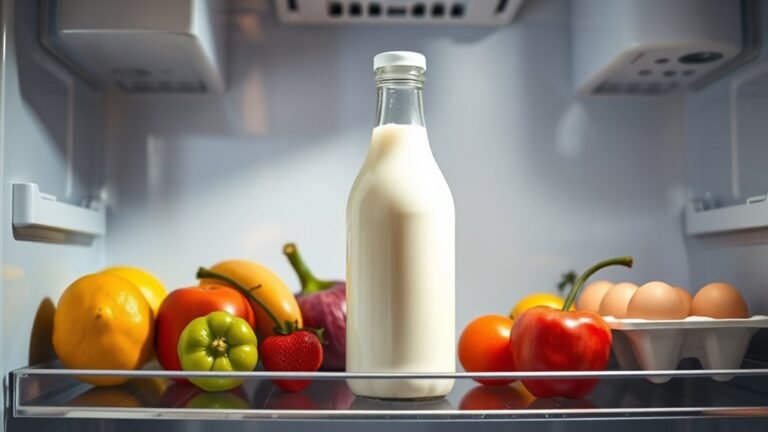
Proper refrigeration at 36-38°F is essential to extend milk’s shelf life and prevent early expiration.
When you return milk promptly to the fridge, you maintain safe storage conditions that slow bacterial growth.
Remember, keeping milk out too long compromises its quality and safety.
To avoid food poisoning, always monitor how long milk stays out and prioritize refrigeration to protect both its freshness and your health.
Factors That Affect Milk Spoilage

When you leave milk out, several factors influence how quickly it spoils. Temperature plays a vital role; milk spoilage accelerates as bacterial growth doubles every 20 minutes in the danger zone between 40°F and 140°F.
Refrigeration slows this process, keeping spoilage bacteria at bay.
Once milk is opened, it becomes more vulnerable to contamination from the environment, utensils, or the container itself.
Pasteurized milk typically lasts longer, but exposure to light can cause oxidation, affecting taste even if bacterial growth is minimal.
Smaller containers warm faster, increasing the risk of spoilage.
Always check the expiration date to guarantee food safety.
Understanding these factors helps you prevent milk from spoiling prematurely and keeps your milk fresh longer when stored properly.
Signs That Milk Has Gone Bad

How can you tell if your milk has gone bad? Spoiled milk usually shows clear signs of spoilage like a sour smell and off-taste. You might also notice curdling or other visible changes.
Sometimes, bacteria growth causes the carton to bulge. Remember, milk can be unsafe even if it looks or smells fine after expiration or improper refrigeration.
When in doubt, prioritize safety and discard the milk.
| Signs of Spoilage | Description | What It Means |
|---|---|---|
| Sour Smell | Pungent, acidic odor | Bacteria growth |
| Visible Changes | Curdling, clumps, white specks | Spoiled milk |
| Bulging Carton | Inflated packaging | Gas from fermentation |
Differences Between Dairy and Plant-Based Milks
While both dairy and plant-based milks serve as common beverage choices, they differ markedly in storage requirements and spoilage timelines. Understanding these differences helps you handle each safely.
Dairy and plant-based milks vary greatly in how they should be stored and how quickly they spoil.
- Dairy milk contains naturally occurring bacteria and must be refrigerated. It stays safe at room temperature for up to 2 hours, or 1 hour above 90°F.
- Plant-based milks often have fewer bacteria but can spoil faster once opened, typically within 4 to 7 days in the fridge.
- Shelf-stable plant-based milks undergo ultra-high temperature pasteurization, allowing unopened storage at room temperature but require refrigeration after opening.
- Signs of spoilage like sour smell or curdling appear in both, though plant-based milks’ spoilage cues can be less obvious.
Keep these factors in mind to avoid spoilage and ensure freshness.
Best Practices for Storing Milk Safely
Understanding the differences between dairy and plant-based milks sets the stage for proper storage techniques. To prevent milk spoilage and bacteria growth, always follow milk storage guidelines.
Keep milk in the back of the refrigerator at a safe temperature of 36-38°F. Avoid storing it on the door, where temperature fluctuates. The two-hour rule is essential: don’t leave milk out at room temperature longer than two hours, or one hour if it’s above 90°F.
Proper handling, like purchasing dairy foods last and refrigerating immediately, minimizes risks. Here’s a quick guide:
| Practice | Recommendation |
|---|---|
| Refrigerator Temp | 36-38°F (2-3°C) |
| Storage Location | Back of fridge |
| Time Out at Room Temp | Max 2 hours (1 hour if >90°F) |
| After Opening | Consume within 5-7 days |
| Handling | Buy last, refrigerate promptly |
Following these steps limits spoiled milk and supports safe dairy foods microbiology.
Health Risks of Consuming Spoiled Milk
If you consume spoiled milk, you risk food poisoning that can cause nausea, vomiting, diarrhea, and stomach cramps. Spoiled milk often contains harmful bacteria like Salmonella, E. coli, and Listeria, which lead to serious foodborne illness.
Even milk with a slight sour smell or curdled texture can harbor dangerous bacteria. The risk increases when milk is left out at unsafe temperatures beyond recommended storage time, bypassing pasteurization protection.
To understand the health risks, consider these points:
- Spoilage signals bacterial growth, making sour milk unsafe to drink.
- Food poisoning symptoms can appear quickly after ingestion.
- Vulnerable groups face higher risks from contaminated milk.
- Proper temperature control and storage time prevent bacterial contamination. Always discard milk showing signs of spoilage to avoid health complications.
Frequently Asked Questions
Can I Drink Milk Left Out for 4 Hours?
You shouldn’t drink milk left out for 4 hours because bacteria multiply quickly, increasing spoilage and health risks.
To stay safe, discard milk left unrefrigerated that long, especially in warm environments above 90°F.
How Long Can Milk Be Unrefrigerated and Still Be Good?
Think of milk like a delicate flower wilting in the sun. You’ve got about 2 hours at room temperature before it sours. If it’s hotter than 90°F, that time shrinks to just 1 hour.
How Do the Amish Keep Their Milk Cold?
You keep milk cold by using natural methods like storing it in spring houses, underground cellars, or ice houses. You might also place milk containers in cool spring water or use manual ice-based refrigeration systems.
How Long Is Breastmilk Good After Being Taken Out of the Fridge?
Like a melting snowflake, breastmilk stays fresh for about 4 hours after fridge removal at room temperature.
If it’s warmer, you’ve got just 2 hours before it’s time to chill or toss it.
Conclusion
Think of milk like a delicate flower—it wilts quickly if left in the sun. You shouldn’t leave it out for more than two hours, or just one hour when it’s hot outside.
Always pop it back in the fridge at 36-38°F to keep it fresh and safe. By following these simple steps, you’ll protect yourself from spoilage and health risks, ensuring every glass you pour is fresh and enjoyable.
Remember, understanding how long milk can stay out safely is key to maintaining its quality and preventing foodborne illness. Keep milk refrigerated and handle it properly to enjoy its best taste and safety.