3 Key Facts About How Many Calories Are in a Glass of Milk
You get about 150 calories in a cup of whole milk, while skim milk cuts that nearly in half with around 80 calories.
Reduced-fat milks sit between 100 and 120 calories, balancing taste and calories.
Plant-based milks vary, usually ranging from 60 to 100 calories depending on added ingredients.
Factors like flavorings and processing can also boost calories, so picking the right milk helps you meet your personal calorie goals.
There’s more to explore about these choices. Understanding how many calories are in a glass of milk can really help you make smarter decisions for your diet and lifestyle.
Key Takeaways
- Whole milk contains about 150 calories per cup, making it the highest calorie option among common milk types.
- Skim milk has approximately 80 calories per cup, offering the lowest calorie count with minimal fat.
- Reduced-fat milks (1% or 2%) provide a moderate calorie range of 100-120 calories per cup.
- Plant-based milks generally range from 60 to 100 calories per cup, varying with added ingredients and flavors.
- Added flavors like chocolate or vanilla significantly increase calorie content due to extra sugars and ingredients.
So, if you’re watching your calorie intake, it’s good to keep these differences in mind. Each type of milk can fit into your diet differently depending on what you need or prefer.
How Many Calories Are in Different Milks?
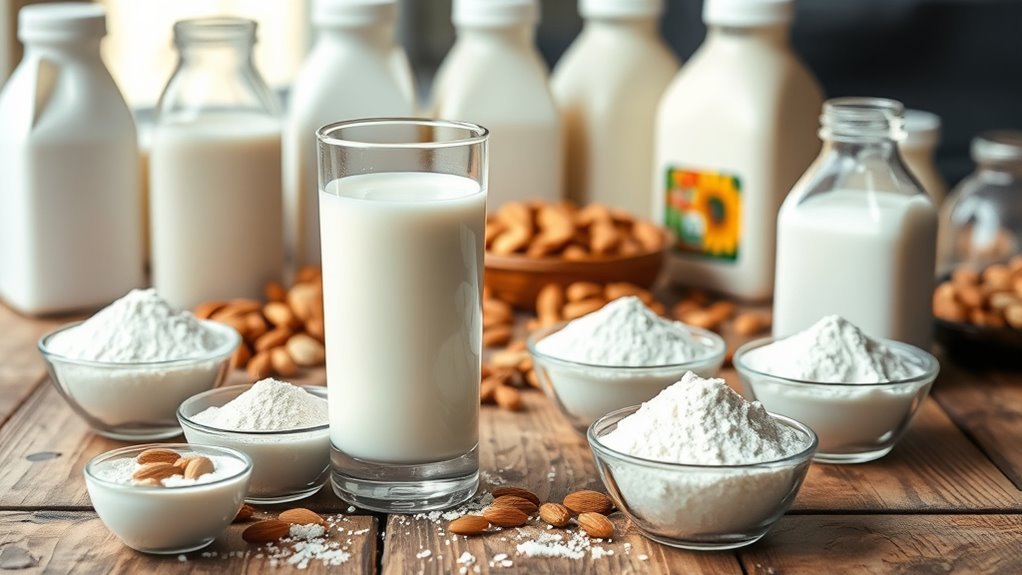
When you choose milk, the calorie content varies considerably depending on the type. Whole milk packs about 150 calories per cup, with most calories coming from fat and lactose.
If you want fewer calories, skim milk offers around 80 per cup, cutting fat but keeping protein and calcium intact. Reduced-fat options like 1% and 2% milk balance fat content and nutrient retention, ranging from 100 to 120 calories.
Plant-based milks such as almond and soy usually fall between 60 and 100 calories, depending on additives and processing. Fortified milk, including lactose-free varieties, generally matches the calorie count of regular milk, so you don’t lose out on nutrients like protein and calcium while accommodating dietary needs.
What Affects Calories in Milk?

How do different factors influence the calories in your glass of milk? The calorie content largely depends on the type of milk you choose. Whole milk has higher fat content, roughly 150 calories per cup, while skim milk contains about 80 calories.
Calorie content in milk varies mainly by type—whole milk has about 150 calories, skim milk around 80.
Serving size also matters—a larger glass means more calories. Processing methods like homogenization and fortification can tweak the nutritional profile and slightly alter calories per cup.
Added flavors such as chocolate or vanilla boost calories due to sugars and extra ingredients. If you prefer plant-based alternatives, know that options like almond or soy milk usually have fewer calories, but this can change with added ingredients.
Understanding these factors helps you manage your calorie intake effectively when enjoying milk. So, it’s good to keep these little details in mind next time you pour a glass!
Which Milk Should You Pick for Your Calories?
Since your calorie goals vary, picking the right milk can make a big difference in your diet. Each milk option has a unique calorie content and fat content to take into account. Here’s how to choose:
Whole milk has about 150 calories per cup, offering rich flavor but higher calorie intake. Skim milk is a low-calorie milk choice with roughly 80 calories and minimal fat.
Reduced-fat (1%) and low-fat milk fall in the middle, providing 100-120 calories per cup for balanced taste and calories. Plant-based milks like almond or soy vary but often range from 60-100 calories, sometimes with added sugars.
Evaluate your calorie goals, then pick a milk that fits your desired calorie intake and fat content. It’s all about finding what works best for you!
Frequently Asked Questions
What Are the Nutritional Facts for a Glass of Milk?
You get about 8 grams of protein, 12 grams of sugar, and essential minerals like calcium and potassium in a glass of milk. The calorie count depends on the type, ranging from 80 to 150 calories.
How Much Milk Is 500 Calories?
You’d need about 3.3 cups of whole milk to get 500 calories. If you prefer skim milk, you’d have to drink over 6 cups to reach the same calorie amount.
Is 1 Glass of Milk per Day Healthy?
Think of one glass of milk as a daily vitamin boost. Yes, it’s healthy for you, providing essential nutrients that support your bones and overall wellness—just watch out if you’re lactose intolerant or allergic.
Why Is Milk so High in Calories?
Milk’s high calories come from its fat and natural sugars. When you drink whole milk, you’re getting lots of fat, which packs more calories, making it richer and more energy-dense than lower-fat options.
Conclusion
So, when choosing your milk, remember: calories aren’t just numbers—they’re the fuel for your body’s story. Whether you pick whole, skim, or plant-based milk, you’re shaping your energy and nutrition.
Don’t let calories scare you; instead, let them guide you to the best choice for your lifestyle. After all, every glass you drink is a small step toward your health goals.
Make it count, and savor the journey. Understanding how many calories are in a glass of milk helps you make smart choices that fit your daily needs and preferences. Whether it’s a creamy whole milk or a lighter skim option, the calories you consume provide energy and nutrients to keep you going strong. So, keep those calories in mind and enjoy your milk with confidence—it’s all about fueling your body the right way!