
Is Cow Milk Bad for Dogs and How to Introduce It Safely?
Cow milk isn’t always safe for dogs because many can’t digest lactose properly. This can lead to uncomfortable issues like diarrhea, vomiting, or gas.
So, if you’re wondering whether cow milk is bad for dogs, the answer is—it depends on your dog’s tolerance.
If you want to give your dog milk, start with tiny amounts, like a teaspoon of plain, unsweetened milk. Watch closely for any digestive issues.
Always introduce it slowly to avoid upsetting their stomach.
And hey, before making milk a regular treat, it’s best to check with your vet. Keep an eye on how your dog reacts to prevent any health problems.
There’s actually more to consider when feeding milk safely, so take it step by step!
Key Takeaways
- Many dogs are lactose intolerant, which means cow milk can cause diarrhea, vomiting, and gas.
- However, small amounts of plain, unsweetened milk might be safe if you introduce it gradually and watch your dog closely.
- Start with just a teaspoon or tablespoon to see how your dog’s digestive system handles it before giving more.
- Keep an eye out for any signs like vomiting, bloating, or loose stools to figure out if milk agrees with your dog.
- And remember, it’s always best to check with your vet before regularly giving your dog cow milk to make sure it’s a good fit for their health.
Is Cow Milk Safe for Dogs? Understanding the Risks
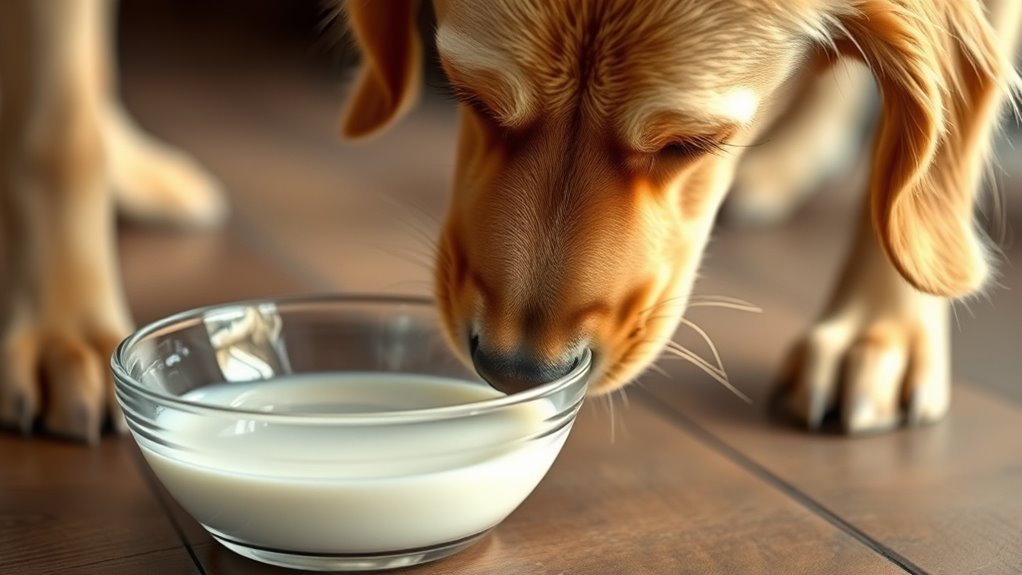
Although cow’s milk might seem like a harmless treat, you should be cautious since many dogs can’t digest lactose properly. Lactose intolerance is pretty common in dogs because their digestive systems often lack the enzyme needed to break down lactose found in cow’s milk.
Feeding dairy products to your dog can lead to digestive issues like diarrhea, vomiting, and gas—typical symptoms of lactose intolerance. Plus, cow’s milk has a high fat content, which can contribute to obesity and even pancreatitis if given too much.
Dairy can cause diarrhea, vomiting, and gas in dogs, plus high fat may lead to obesity and pancreatitis.
While small amounts might be safe for some dogs, it’s really important to check with your vet before giving milk. That way, you can make sure it’s safe for your pup individually.
Understanding these risks helps you make better choices for your furry friend’s health. It’s always better to be safe than sorry!
How to Give Your Dog Cow Milk Without Upsetting Their Stomach

If you want to give your dog cow milk without causing stomach upset, start by introducing it gradually in very small amounts. Begin with a small amount of milk, like a teaspoon or tablespoon of plain cow milk, to test your dog’s milk tolerance.
Since many dogs have lactose intolerance, it’s vital to watch for signs of lactose intolerance such as vomiting, gas, or loose stools. Always feed dairy in moderation and monitor reactions carefully to avoid gastrointestinal issues.
Avoid flavored or sweetened milk to keep feeding your dog safe. Before regularly including cow milk in your pet’s diet, seek veterinarian advice to confirm it’s safe to feed given your dog’s specific health needs.
This cautious approach helps prevent upset stomachs while allowing you to enjoy dairy safely with your pet.
Frequently Asked Questions
What Kind of Milk Is Safe for Dogs?
You should give your dog lactose-free or goat’s milk, as they’re easier to digest. Plant-based milks without additives can work too, but always check with your vet before introducing any new milk to your dog’s diet.
What Are the Three Meats You Should Never Feed a Dog?
You should never feed your dog cooked or raw pork, beef bones, or processed meats like sausages. These can cause parasites, internal injuries, or digestive issues. Always choose safe, lean meats instead to keep your dog healthy.
Can I Give Cow Milk to Baby Dogs?
You shouldn’t give cow milk to baby dogs because it can upset their digestion. Instead, use specially formulated puppy milk replacers. Always consult your vet before introducing any milk to guarantee your puppy stays healthy.
Is Cow Milk Toxic for Dogs?
Cow milk isn’t toxic for dogs, but it can upset their stomachs if they’re lactose intolerant. You should introduce it slowly, watch for reactions, and avoid giving too much to keep your dog healthy and happy.
Conclusion
While cow milk isn’t exactly a miracle treat for your dog, it can still be a gentle indulgence when introduced carefully. You don’t want to invite tummy troubles, so start small and watch for any signs of discomfort.
Remember, a cautious approach keeps their tail wagging and their belly happy. If you notice any unease, it’s best to skip the milk and stick to safer options.
Introducing cow milk to your dog requires patience and attention to how they react. Some dogs are lactose intolerant, so it’s important to monitor them closely. If you’re unsure, consult your vet before adding milk to your dog’s diet.
In conclusion, cow milk can be safe for dogs if given in moderation and introduced gradually. Always keep an eye out for digestive issues like diarrhea or vomiting. Prioritizing your dog’s health means choosing safer treats when in doubt. Your furry friend will thank you for the care and thoughtfulness you put into their diet!