
When Can Infants Drink Cow Milk
You should wait until your baby is 1 year old before offering cow’s milk as the main drink.
Introducing cow’s milk too early can cause nutritional issues like iron deficiency and intestinal bleeding. It’s important to hold off to keep your little one safe and healthy.
When you start, offer small sips in a cup. Gradually replace formula or breast milk while keeping an eye out for allergies or any digestive discomfort.
This way, your baby can adjust smoothly.
Use whole milk until your child turns 2 years old. This helps ensure they get enough fat for proper growth and development.
Knowing how and when to introduce cow’s milk will make the transition easier for both of you!
Key Takeaways
- Infants should not drink cow’s milk as a main drink before 12 months of age. It’s best to wait until after their first birthday.
- When you do introduce cow’s milk, do it gradually. This helps their tummies get used to it and makes it easier for them to accept.
- Make sure to use whole cow’s milk until your child is 2 years old. They need the extra fat for healthy growth and development.
- Start with just small sips from a cup. Keep an eye out for any allergic reactions or tummy troubles.
- And if you notice anything unusual or concerning, definitely check in with your healthcare provider. They can guide you through the process.
When To Start Giving Infants Cow’s Milk
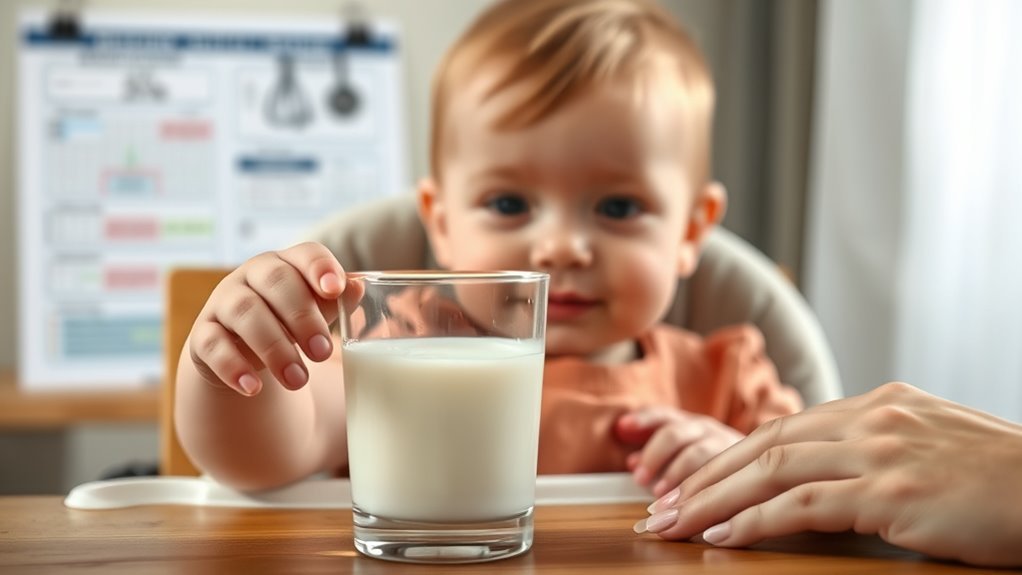
Although you might be enthusiastic to introduce cow’s milk earlier, it’s best to wait until your baby turns one year old before making it their primary drink. Introducing cow’s milk too soon can lead to nutritional concerns, including iron deficiency and intestinal bleeding.
The recommended age of introduction is around the first birthday, especially after exclusive breastfeeding or formula feeding. When shifting from formula to cow’s milk, aim for a gradual transition by offering small sips in a cup to help your infant adjust and promote dental health.
Early introduction isn’t advisable, as cow’s milk lacks essential nutrients found in breast milk or formula. So, keeping infant feeding focused on appropriate timing ensures your baby’s nutritional needs are met safely and effectively.
How To Introduce And Manage Cow’s Milk Safely In Your Child’s Diet

When you start introducing cow’s milk to your child after their first birthday, doing it gradually helps their digestive system adjust smoothly. Transition from formula or breast milk by mixing small amounts of whole cow’s milk with their usual feed or alongside solid foods.
Here’s how to manage the introduction safely:
- Begin with small sips in a cup to encourage good drinking habits and protect dental health.
- Watch closely for any signs of allergy or digestive discomfort such as rash, vomiting, or diarrhea.
- Stick to whole cow’s milk until age 2, then consider milk alternatives or lower-fat dairy based on health and growth.
If you notice any adverse reactions, consult your healthcare provider promptly to ensure your infant’s health stays on track. It’s always better to be safe and get expert advice if you’re unsure.
Frequently Asked Questions
Can I Give My 9 Month Old Milk Instead of Formula?
You shouldn’t give your 9-month-old cow’s milk instead of formula yet. Stick with breast milk or formula to guarantee they get essential nutrients and avoid digestive issues. Cow’s milk is better after their first birthday.
Can I Give My 4 Month Old Baby Cow Milk?
You shouldn’t give your 4-month-old cow’s milk—it can harm their tiny kidneys and cause bleeding. Instead, stick to breast milk or formula to keep your baby safe and healthy during these vital early months.
Can I Start My Baby on Whole Milk at 10 Months?
You shouldn’t start whole milk at 10 months because it can harm your baby’s kidneys and cause intestinal bleeding. Wait until after their first birthday, and continue with breast milk or formula to guarantee proper nutrition and iron absorption.
Is It Safe to Give Baby Cow’s Milk Too Early?
No, it’s not safe to give your baby cow’s milk too early. It can cause intestinal bleeding, harm kidneys, and interfere with iron absorption. Wait until after their first birthday to introduce it safely.
Conclusion
You should wait until your little one turns one before introducing cow’s milk, as their tiny tummy needs gentle care. Think of cow’s milk as a new chapter in their food story—start slow and watch closely for any signs of discomfort.
By introducing it carefully and keeping a balanced diet, you’ll help your child grow strong and healthy. Remember, patience is the secret ingredient to making this shift smooth and safe.
When your infant is ready for cow milk, gradual introduction is key. This approach supports good digestion and reduces the risk of allergies or tummy troubles. Always keep an eye on how your baby responds, and consult your pediatrician if you have any concerns.
In summary, waiting until your baby is one year old before giving cow’s milk helps protect their delicate digestive system. Introducing cow’s milk slowly and alongside a balanced diet ensures your infant’s nutritional needs are met safely. Patience and careful monitoring during this transition are essential for your baby’s health and growth.