How Long Is Frozen Breast Milk Good and How to Store It Safely
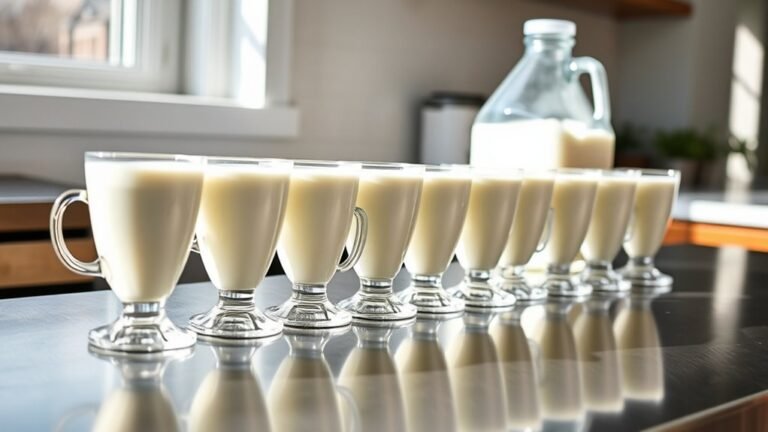
Imagine you’ve just pumped a full stash of breast milk and want to freeze it to use later. You might wonder how long frozen breast milk is good and how to store it safely without losing its benefits or risking safety.
Proper storage plays a vital role in maintaining its quality, but not everyone knows the best containers to use or how to thaw it correctly.
Understanding these details can make a big difference for you and your baby.
Recommended Containers for Storing Breast Milk

When storing breast milk, you should use clean, BPA-free glass or hard plastic containers with tight-fitting lids to keep it safe. These storage containers help prevent contamination and maintain milk quality.
Use clean, BPA-free glass or hard plastic containers with tight lids to ensure breast milk safety and quality.
Glass containers are durable and freezer-safe, while BPA-free plastic containers offer a lightweight option. Specially designed breast milk storage bags are pre-sterilized and space-efficient, making them ideal for freezing.
Avoid household plastic bags or disposable bottle liners, as they aren’t intended for long-term storage. Always verify containers and storage bags are thoroughly washed, dried, or pre-sterilized before use.
Remember to leave about an inch of space at the top to allow for milk expansion during freezing. Using airtight lids helps lock in freshness and protect the milk from freezer odors.
Best Practices for Freezing Breast Milk

Although freezing breast milk preserves its nutrients, you should freeze it in small batches of 2 to 4 ounces to minimize waste and make thawing easier.
When freezing breast milk, always follow proper storage guidelines by using pre-sterilized storage containers like BPA-free bottles or storage bags designed for freezing.
Leave about an inch of space at the top of each container to accommodate the milk expanding as it freezes.
Store breast milk in the back of the freezer, ideally in a dedicated freezer compartment, where the temperature stays consistently at 0°F (-18°C) or below.
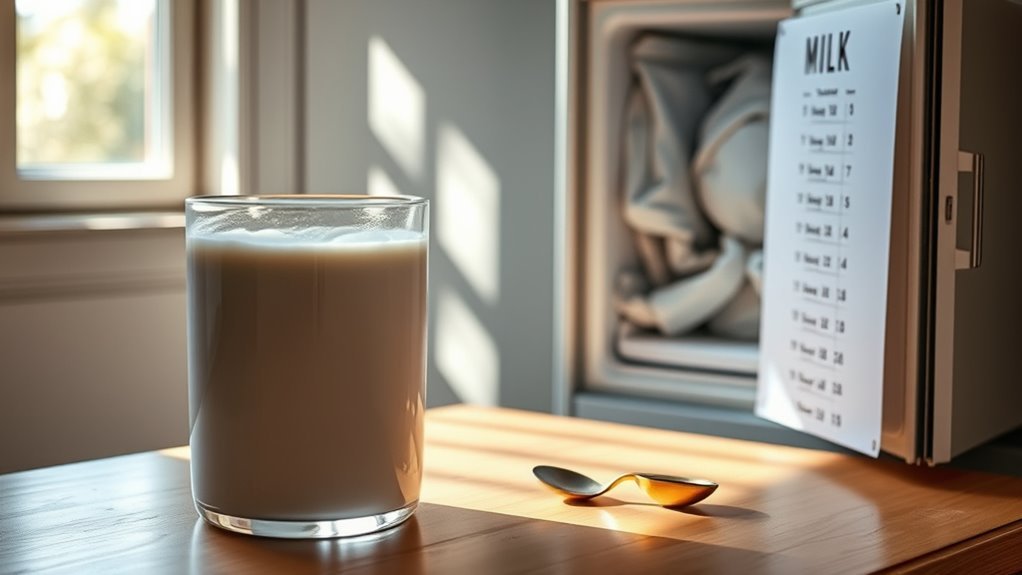
Don’t forget to label milk with the date of expression to manage storage time effectively, using the oldest milk first.
These best practices ensure safe freezing and easier thawing breast milk when your baby needs it.
Guidelines for Freezer Storage Duration

Because frozen breast milk can lose quality over time, you should use it within recommended storage durations to preserve its nutrients and antibodies.
Frozen breast milk should be used within recommended times to maintain its nutrients and protective antibodies.
For maximum quality, store frozen breast milk in a standard home freezer (separate door) and use it within six months.
If you have a deep freezer set at 0°F (−18°C), the milk can be safely stored up to 12 months, but expect some quality decline after six months.
Always label containers with the date expressed to follow storage guidelines and rotate your milk properly.
Keep milk at a consistent storage temperature by placing containers in the back of the freezer, away from the door.
Following these storage times and guidelines helps you maintain the milk’s nutritional value and safety until you’re ready to use it.
Proper Thawing Techniques for Frozen Breast Milk
Storing frozen breast milk properly is only part of the process; knowing how to thaw it safely guarantees your baby gets the full benefit of its nutrients. To thaw frozen breast milk, place it in the refrigerator overnight or submerge the container in warm water.
Avoid microwaving, as it creates hot spots and damages nutrients. After thawing, use the milk within 24 hours and never refreeze. Gently swirl the milk to mix separated fat for proper handling.
| Thawing Technique | Notes |
|---|---|
| Refrigerator | Overnight thawing, slow |
| Warm Water | Quick thaw, keep sealed |
| Avoid Microwave | Destroys nutrients |
| Use within 24 hrs | After thawing, refrigerate |
| Swirl Gently | Recombine fat, don’t shake |
Handling and Using Thawed Breast Milk
When you thaw breast milk, it’s important to use it within 24 hours if kept in the refrigerator, or up to 48 to 72 hours if it’s continuously kept cold.
For safe storage and milk safety:
- Store thawed breast milk in the refrigerator and never refreeze it.
- Warm breast milk gently by placing the container in warm water; avoid microwave heating.
- Gently mix by swirling or inverting to blend separated fat. Don’t shake vigorously.
Always check the milk smell and appearance; thawed milk may look or smell different but remains safe if stored properly.
After feeding, discard unused milk to prevent contamination.
Following these steps ensures you handle and use thawed breast milk safely, preserving its nutrients and protecting your baby’s health.
Tips for Labeling and Organizing Frozen Milk
To keep your frozen breast milk fresh and easy to manage, you’ll want to label each container clearly with the date of expression, the baby’s name if needed, and the volume in ounces. Proper labeling helps you track the expiration date and guarantees safe storage.
Clearly label frozen breast milk with date, baby’s name, and volume to ensure freshness and safe storage.
Use storage containers or bags designed for freezing, and write directly on them with waterproof markers or use pre-printed labels.
For better freezer organization, store milk flat in horizontal layers to save space and speed up thawing.
Utilize freezer organizers or bins to keep everything neat and accessible. Follow the first-in first-out (FIFO) method by using the oldest milk first, reducing waste and maintaining freshness.
These storage tips make handling frozen breast milk simple and safe.
Frequently Asked Questions
How Long Is Breastmilk Good After You Freeze It?
You can safely use frozen breast milk within 6 months in a standard freezer and up to 12 months in a deep freezer.
Always label and store it properly to maintain its quality and nutritional value.
What Is the 4 4 4 Rule for Breast Milk?
Think of the 4-4-4 rule as your breast milk’s safety compass: you can keep it 4 hours at room temp, 4 days in the fridge, and 4 to 6 months frozen, ensuring your baby’s nourishment stays fresh and safe.
What Is the 3-3-3 Rule for Breast Milk?
The 3-3-3 rule means you can keep breast milk at room temperature for 3 hours, in the fridge for 3 days, and freeze it for up to 3 months.
Stick to this to keep milk safe for baby.
How to Know if Frozen Breast Milk Is Still Good?
You’ll know frozen breast milk is good if it smells fresh and looks normal after thawing, with no sour odor or discoloration. Even with ice crystals, it’s safe; just mix gently before feeding your baby.
Conclusion
You might worry that freezing breast milk reduces its quality, but when stored properly, it stays safe and nutritious for months. Just use clean, BPA-free containers, label them with the date, and keep milk at the back of your freezer.
Thaw it gently in the fridge or warm water, never the microwave, and use within 24 hours. By following these simple steps, you’ll confidently provide your baby with the best nutrition, even when using frozen milk.
Knowing how long frozen breast milk is good and how to store it safely ensures your baby receives optimal nourishment every time. Proper storage and handling are key to maintaining quality and safety for your little one.