How Many Oz Are in a Gallon of Milk?
If you’re measuring a gallon of milk, know that in the US it contains exactly 128 fluid ounces, while in the UK, a gallon holds 160 fluid ounces. These differences matter when cooking or converting recipes because US and UK gallons aren’t the same volume.
Make sure you don’t confuse fluid ounces with weight ounces either. Keeping these details in mind helps you avoid mistakes and get perfect results.
There’s more to uncover about these measurement quirks and how they affect your kitchen tasks. Understanding the difference in gallon sizes is key for accurate measurements in cooking and baking.
Understanding Gallons and Ounces

Before you measure milk, it’s important to understand gallons and ounces. A gallon is a unit of volume used to measure large quantities of liquid, while an ounce is a smaller unit for more precise measurements.
When you’re dealing with milk, knowing how many ounces are in a gallon helps you convert between quantities easily. One gallon contains 128 fluid ounces, so if you need to measure out a specific amount, you can quickly calculate it.
For example, half a gallon equals 64 ounces, and a quarter gallon equals 32 ounces. Understanding these basic conversions makes cooking, baking, or even shopping for milk more straightforward.
You’ll save time and avoid mistakes when you know exactly how these units relate.
The US Gallon Vs the UK Gallon

Although both the US and the UK use gallons to measure liquid volume, the size of a gallon differs considerably between the two countries. When you’re comparing gallons, it’s important to know which system you’re dealing with because the US gallon and the UK (imperial) gallon aren’t the same.
This difference can affect recipes, purchases, and measurements you rely on daily.
Here’s what you should keep in mind:
- The US gallon equals 128 fluid ounces.
- The UK gallon is larger, measuring 160 fluid ounces.
- The UK gallon is based on the imperial system, while the US gallon follows the customary system.
Understanding these distinctions helps you avoid confusion when measuring liquids across borders.
How Many Ounces Are in a US Gallon of Milk?

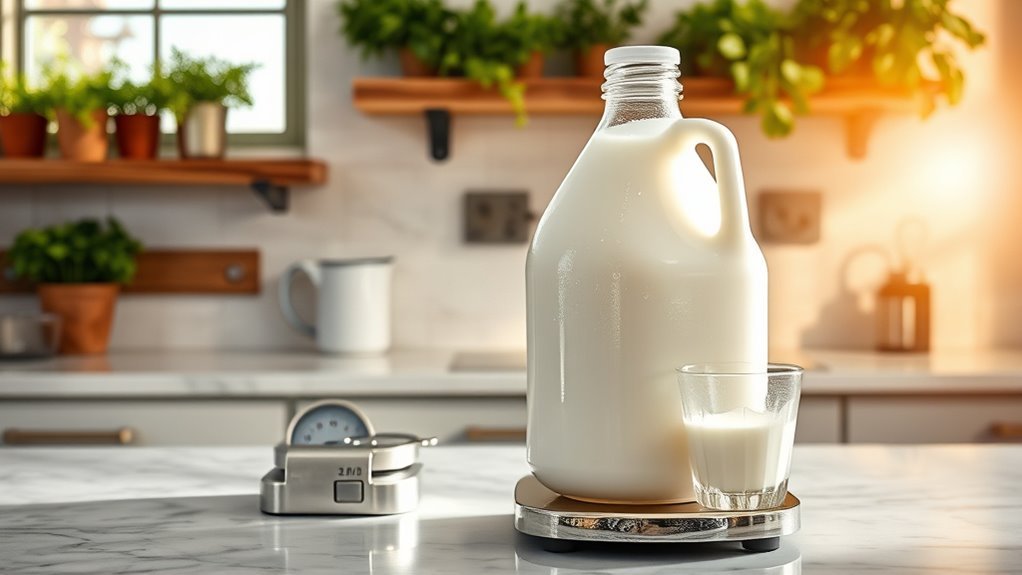
Knowing the difference between the US and UK gallon sets the stage for understanding measurements in everyday items like milk. When you buy a gallon of milk in the US, it contains exactly 128 fluid ounces.
This measurement is based on the US liquid gallon, which is defined as 231 cubic inches. So, whenever you see a gallon container in American stores, you can confidently expect it to hold 128 ounces of milk.
This standard helps you compare quantities easily, whether you’re cooking, baking, or tracking your daily intake. Remember, this applies specifically to fluid ounces, which measure volume, not weight.
Understanding this will make it easier for you to navigate recipes and shopping lists without confusion.
How Many Ounces Are in a UK Gallon of Milk?
Since the UK gallon differs from the US gallon, you might wonder how many ounces it holds when measuring milk. A UK gallon, also called an imperial gallon, contains 160 UK fluid ounces, which is more than the 128 US fluid ounces in a US gallon.
This means when you buy a gallon of milk in the UK, you’re getting a larger volume than in the US.
Keep in mind:
- A UK fluid ounce is slightly larger than a US fluid ounce (about 28.41 ml vs. 29.57 ml).
- The imperial gallon measures 4.546 liters compared to the US gallon’s 3.785 liters.
- This difference affects how you interpret recipes or compare milk prices internationally.
Understanding these can help you navigate measurements more accurately.
Why Measurement Differences Matter in Cooking
Why do measurement differences matter so much when you’re cooking? Because even small variations can change the outcome of your recipe. If you use the wrong measurement, like confusing a US gallon with a UK gallon, you might add too much or too little milk, affecting texture and taste.
Precision guarantees your dish turns out just right every time. You rely on accurate measurements to balance flavors and maintain consistency, especially in baking, where proportions are vital.
Misunderstanding these differences can lead to wasted ingredients and disappointing results.
Converting Gallons to Ounces Quickly
Getting the measurement right means you’ll often need to convert gallons to ounces quickly, especially when recipes call for precise amounts.
Since one gallon equals 128 fluid ounces, you can multiply the number of gallons by 128 to get the total ounces.
For example, 0.5 gallons is 64 ounces.
To speed up conversions, remember these tips:
- Use mental math shortcuts, like multiplying by 100 then adjusting for the extra 28 ounces.
- Keep a conversion chart handy for common gallon amounts.
- Use apps or voice assistants to get instant conversions when you’re busy cooking.
Practical Tips for Measuring Milk Accurately
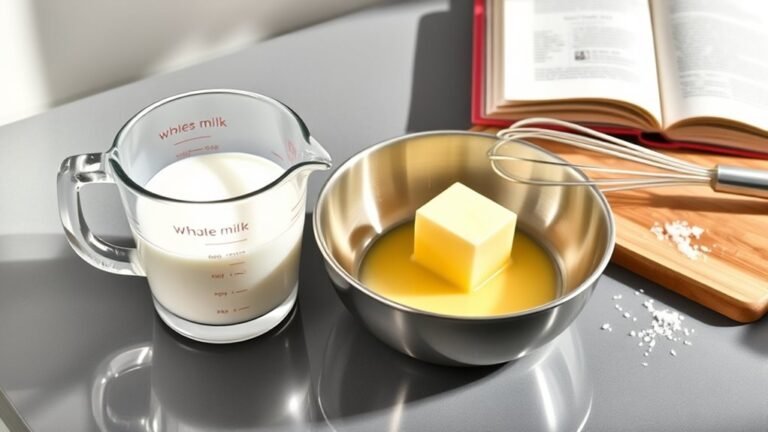
Although measuring milk might seem straightforward, using the right tools and techniques guarantees accuracy every time. Start by choosing a clear measuring cup marked with ounces to see exactly how much milk you’re pouring.
Pour slowly and place the cup on a flat surface to avoid misreading the level. Check the measurement at eye level to ensure precision.
When dealing with larger quantities, like gallons, consider using a kitchen scale for weighing milk if your recipe allows, as it reduces spillage and guesswork.
Always measure milk at room temperature if possible, since volume can slightly change with temperature variations.
With these practical tips, you’ll get accurate measurements, helping your recipes turn out perfectly every time.
Common Mistakes When Converting Gallons to Ounces
Even with the right tools and techniques, you can still slip up when converting gallons to ounces. These mistakes often stem from simple oversights or misunderstandings.
To avoid errors, watch out for these common pitfalls:
- Confusing fluid ounces with weight ounces, since fluid ounces measure volume and weight ounces measure mass.
- Forgetting that one gallon equals 128 fluid ounces, leading to incorrect calculations.
- Mixing up US gallons with UK gallons, as UK gallons contain 160 fluid ounces, which can cause significant errors.
Frequently Asked Questions
Does Milk Fat Content Affect Its Volume Measurement?
No, milk fat content doesn’t affect its volume measurement. You’ll still have the same number of ounces in a gallon regardless of fat levels.
This is because volume measures space, not fat concentration or density differences in milk.
How Should Milk Be Stored to Maintain Freshness?
Want your milk fresh longer? You should store it in the coldest part of your fridge, not the door.
Keep the container tightly closed, and avoid leaving it out too long to prevent spoilage.
Can Milk Measurements Vary by Temperature?
Yes, milk measurements can vary slightly with temperature because liquids expand when warm and contract when cold.
What Is the Nutritional Difference Between a Pint and a Gallon of Milk?
You’re getting a gentle boost in nutrients with a gallon compared to a pint, including more calcium, protein, and vitamins.
Are There Eco-Friendly Packaging Options for Gallon Milk Containers?
Yes, you can choose eco-friendly gallon milk containers like those made from recycled plastic, biodegradable materials, or even reusable glass bottles. These options help reduce waste and environmental impact while keeping your milk fresh.
Conclusion
Now that you know a US gallon holds 128 ounces and a UK gallon holds 160 ounces, measuring milk gets easier. You might think these differences won’t matter in everyday cooking, but they can really affect your recipe’s outcome.
So, always double-check which gallon you’re using, especially if your recipe comes from another country. Taking this small step will save you from unexpected results and make sure your dishes turn out just right every time.
Being aware of how many ounces are in a gallon of milk is essential for accurate measurements. This knowledge helps ensure your recipes are consistent and delicious.