How Long Can Breast Milk Sit Out Safely
Just like perishable groceries left on your kitchen counter, breast milk has its own safe window when left out. Knowing how long breast milk can sit out safely is crucial for keeping it fresh and safe for your baby. You might think it’s okay to leave it at room temperature for a while, but the truth depends on several factors you might not have contemplated.
If you want to ensure your baby’s milk stays fresh and safe, it’s important to understand how time and temperature play a role in proper storage. Proper handling and storage guidelines will help prevent spoilage and protect your little one’s health.
Understanding Room Temperature Limits for Breast Milk

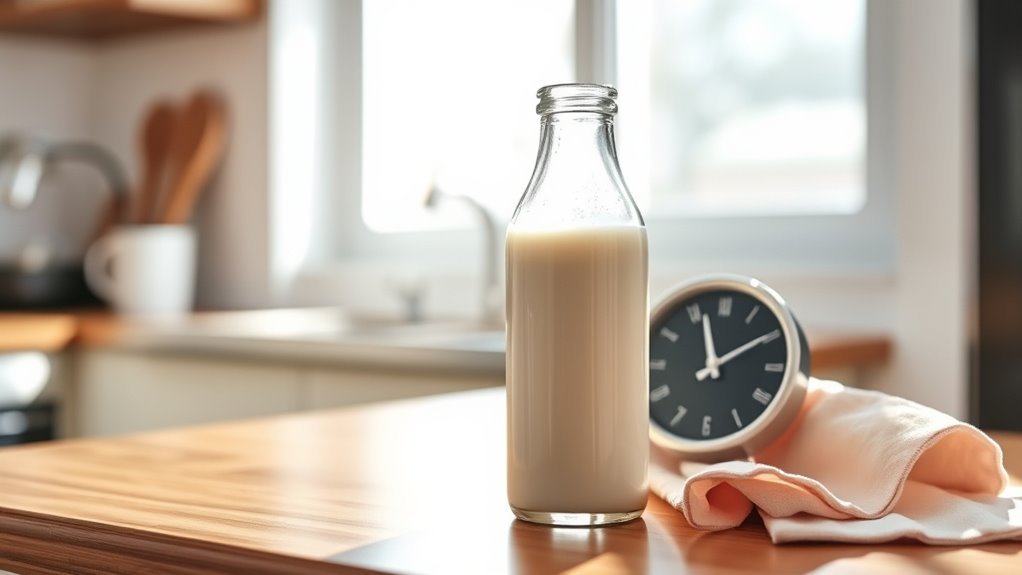
How long can you leave breast milk out safely? Freshly expressed breast milk can sit at room temperature, ideally below 77°F (25°C), for up to 4 hours without risking bacterial contamination. This room temperature guideline helps maintain milk safety by limiting bacterial growth.
Fresh breast milk is safe at room temperature (under 77°F) for up to 4 hours.
If the ambient temperature rises above this temperature limit, the safe storage duration shortens, increasing the risk of bacterial contamination.
Thawed breast milk is even more sensitive and shouldn’t be left out for more than 1 to 2 hours.
To guarantee milk safety, always consider the ambient temperature when deciding how long breast milk can stay out. Once breast milk exceeds 4 hours at room temperature, discard it to prevent bacterial growth and ensure your baby’s health.
Factors Influencing Breast Milk Storage Duration

Knowing the recommended time for leaving breast milk at room temperature is just one part of ensuring its safety. Several factors influence the storage duration, including ambient conditions and temperature.
Higher room temperature speeds up bacterial growth, reducing how long breast milk stays safe.
Using clean storage containers and practicing good hygiene during collection also helps maintain breast milk safety.
When thawing breast milk, follow thawing guidelines carefully; once thawed and refrigerated, use it within 24 hours.
Storing breast milk in a consistent cold environment, like the back of the refrigerator or freezer, preserves its quality and extends safe storage duration.
Understanding these factors lets you manage storing breast milk effectively, ensuring your baby gets safe, nutritious milk every time.
Proper Handling and Storage Techniques

Before you start expressing or handling breast milk, always wash your hands thoroughly and use clean, sterilized containers to keep the milk safe and free from contaminants.
For proper breast milk storage, label each container with the date and your baby’s name to track storage duration accurately.
Store milk in small portions (2-4 ounces) to simplify thawing milk and reduce waste.
Always practice temperature control by placing containers at the back of the refrigerator or freezer, avoiding temperature fluctuations.
Freshly expressed milk can stay safely at room temperature for up to 4 hours; beyond that, discard spoiled milk to prevent bacterial growth.
Following these storage guidelines ensures safe storage, maintains milk quality, and supports your baby’s health through effective handling breast milk practices.
Safe Practices for Thawed and Leftover Breast Milk
While thawed breast milk remains safe to use for a short period at room temperature, you should refrigerate it within 1 to 2 hours if not feeding your baby immediately.
Once refrigerated, use thawed breast milk within 24 hours and never refreeze it.
Use thawed breast milk within 24 hours of refrigeration and do not refreeze it.
After warming, feed your baby promptly and discard any leftover milk within 1 hour to prevent bacterial growth.
Leftovers in a bottle after feeding should be discarded after 2 hours at room temperature to maintain milk safety.
Following these feeding guidelines ensures safe storage and minimizes contamination risks.
Avoid leaving breast milk unrefrigerated beyond recommended times, as this compromises milk safety.
Impact of Temperature on Milk Quality and Safety
Because temperature directly affects bacterial growth, it plays a crucial role in maintaining breast milk’s quality and safety.
At room temperature (77°F/25°C), breast milk can sit safely for up to 4 hours before bacterial growth risks spoilage and nutrient degradation.
If you’re handling thawed milk, use it within 1 to 2 hours when left out, as its safe duration is shorter due to increased vulnerability.
Warm temperatures speed up bacterial proliferation, reducing the milk’s shelf life and safety window.
Refrigeration helps preserve breast milk for up to 4 days, but exposure to warm temperatures during storage can markedly decrease this shelf life.
To protect your baby, always consider how temperature impacts milk quality and avoid leaving milk out longer than recommended.
Recommendations for Storing Breast Milk During Travel and Work
When you travel or go to work, storing breast milk safely requires careful attention to temperature and timing.
For breast milk storage during travel, use an insulated cooler bag with ice packs to keep milk below 77°F (25°C), ensuring a safe duration of up to 24 hours.
Avoid leaving milk at room temperature for more than 4 hours to prevent bacterial growth.
At work, express milk promptly and refrigerate it within 4 hours.
Use pre-chilled containers to maintain temperature control during transport.
Always label milk with the date and time of expression to follow proper storage guidelines.
Following these steps helps preserve milk quality and safety, reducing the risk of contamination during travel or work.
Frequently Asked Questions
What Happens to Breast Milk After 4 Hours at Room Temperature?
After 4 hours at room temperature, breast milk starts growing harmful bacteria, and its nutrients decline.
You shouldn’t feed your baby with it, as it may smell off and pose health risks. Always discard it then.
What Is the 4 4 4 Rule for Breast Milk?
The 4-4-4 rule means you can keep freshly expressed breast milk at room temperature for 4 hours, refrigerate it for up to 4 days, and freeze it for 4 months to keep it safe and nutritious.
What Is the 3-3-3 Rule for Breast Milk?
The 3-3-3 rule means you can leave freshly expressed breast milk out for 3 hours, store it in the fridge for 3 days, and thawed milk can sit out for 1 to 2 hours before use or disposal.
What Is the 5 5 5 Rule for Breast Milk?
Think of the 5-5-5 rule as your milk’s gentle timekeeper: you can leave freshly expressed milk out for 5 hours, refrigerate it for 5 days, or freeze it for 5 months to keep it safe and nourishing.
Conclusion
You might be surprised to learn that breast milk can safely sit out at room temperature for up to 4 hours, as long as it’s below 77°F (25°C).
But remember, once milk is thawed, you’ve only got 1-2 hours before it should be used or discarded.
Following proper storage and handling guidelines helps keep your baby safe and healthy, especially when you’re on the go or returning to work.
Trust these tips to protect your little one and ensure breast milk safety by following recommended guidelines on how long breast milk can sit out safely.