How Long Can You Keep Breast Milk Fresh in the Fridge?
Imagine you just pumped a fresh bottle of breast milk and placed it in your fridge, wondering how long breast milk can stay fresh in the fridge. You want to avoid wasting precious milk but also ensure your little one’s health. Knowing the right breast milk storage duration and conditions can make all the difference.
Let’s explore some key guidelines to help you keep your breast milk fresh and ready when you need it most. Proper storage ensures the milk remains safe and nutritious for your baby. Understanding these tips will give you confidence in feeding your little one.
Recommended Storage Duration for Breast Milk in the Refrigerator

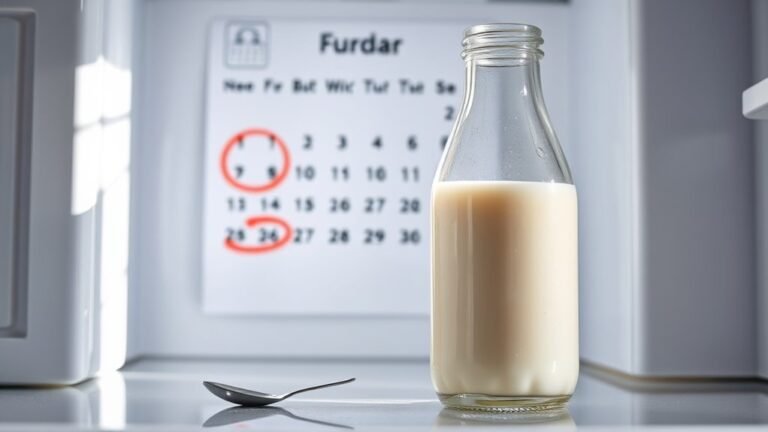
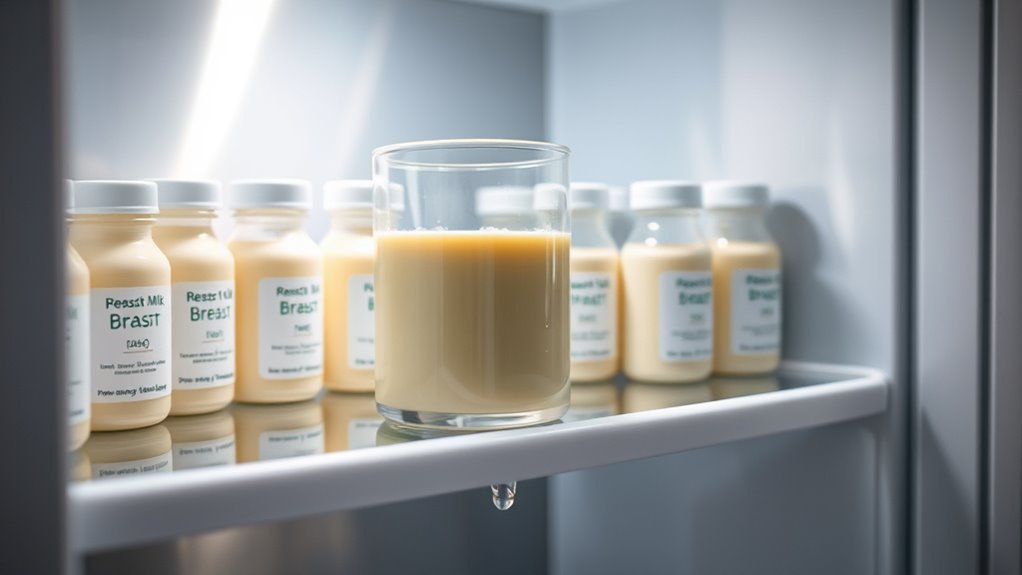
Although breast milk is naturally designed to nourish your baby, you should store it properly to keep it fresh. When storing breast milk in the refrigerator, follow storage guidelines carefully to guarantee safety. Fresh breast milk can be kept at a cool temperature of 40°F (4°C) for up to 4 days.
To maintain this cool temperature, place the milk toward the back of the refrigerator, where the temperature is most consistent. Always label each container with the date of expression to track storage duration accurately. Use the oldest milk first to prevent it from expiring.
If you notice any signs of spoilage, such as a sour smell or change in appearance, discard the milk immediately. Proper storage helps protect your baby from harmful bacteria and ensures they get the best nutrition possible.
Choosing the Right Containers for Breast Milk Storage

When storing breast milk, choosing the right containers plays a crucial role in keeping it safe and fresh. Opt for storage containers made of food-grade glass or BPA-free plastic containers with leak-proof lids to guarantee airtight storage.
Using small containers, typically 2-4 ounces, helps minimize waste and makes freezing and thawing easier. Always wash and use sterilized containers to prevent contamination.
When filling, leave about an inch of headspace to allow for milk expansion during freezing. Properly sealed containers maintain the milk’s quality and prevent leaks or spills.
Though labeling is important, it’s best discussed separately. By selecting the right containers and handling them carefully, you’ll keep your breast milk fresh and safe for your baby’s feeding needs.
Proper Labeling and Organization of Stored Milk

After selecting the right containers to keep your breast milk fresh, you’ll want to label and organize each storage unit properly. Use waterproof labels and ink to write the date of expression clearly on every container.
If you’re storing milk at a childcare facility, add your child’s name for easy identification.
Keep your storage containers neat by placing them in clear storage bins inside the refrigerator. This organization improves accessibility and helps you monitor your milk supply efficiently.
Arrange the milk with the oldest expiration date in front to ensure you use it in time, reducing waste.
Proper labeling and systematic organization not only keep your refrigerator tidy but also guarantee your baby gets fresh milk every time.
Best Location in the Refrigerator for Breast Milk
Since maintaining a consistent, cool temperature is key, you should store breast milk in the back of the refrigerator where it stays coldest. This area experiences the least temperature fluctuations, unlike the door, which opens frequently and exposes milk to warmth.
Avoid placing milk near heating elements or vents to prevent unwanted warming. Use a refrigerator thermometer to confirm the temperature stays at or below 40°F (4°C).
For the best storage location, place your milk on a shelf in the back rather than in the crisper drawer, ensuring a stable environment.
If you’re transporting milk, use an insulated cooler to maintain temperature.
Choosing the right spot in the refrigerator helps preserve freshness and safety, making sure your baby gets the best nutrition every time.
Effects of Room Temperature on Breast Milk Freshness
Although breast milk has natural antiviral and antibacterial properties, you should utilize or refrigerate it within 2 to 4 hours if left at room temperature up to 77°F to guarantee freshness and safety. Higher temperatures speed up bacterial growth, shortening safe storage time and increasing spoilage risk.
Follow storage guidelines carefully to maintain breast milk freshness and ensure optimal storage of freshly expressed milk.
| Room Temperature Range | Safe Storage Time |
|---|---|
| Up to 77°F | 2 to 4 hours (optimal 2) |
| Above 77°F | Use immediately or refrigerate |
| Over 4 hours at any temp | Risk of spoilage and bacterial growth increases |
Always refrigerate breast milk promptly to preserve freshness and minimize temperature impact on quality.
Safe Practices for Combining Fresh and Stored Milk
When you combine fresh breast milk with stored milk, make sure the freshly expressed milk has cooled to refrigerator temperature first to prevent bacterial growth.
Never add warm or hot milk directly to refrigerated or frozen milk, as this can cause partial thawing and compromise safety.
Follow proper handling and storage guidelines by combining cooled, freshly expressed milk with stored milk within 24 hours.
Always label containers with the date of expression and use the oldest milk first to maintain freshness.
If you’re dealing with thawed milk, use it within 24 hours and don’t mix it with freshly expressed milk stored longer than that.
Understanding Changes in Smell and Appearance of Stored Milk
You might notice that stored breast milk develops a sour smell or changes in appearance after a few days in the fridge. This change in odor can be a normal part of storage, often influenced by your diet or how long the milk’s been refrigerated.
Separation of cream or a slight discoloration is also normal and can be fixed by gently shaking the milk.
Cream separation or slight discoloration is normal and easily resolved by gently shaking the milk.
However, a rancid or foul smell is a clear sign of spoilage, and you should discard the milk immediately.
When in doubt about the smell or appearance, prioritize safety and throw the milk away to prevent health risks.
Understanding these signs helps you confidently manage breast milk storage without compromising your baby’s well-being.
Guidelines for Thawing Frozen Breast Milk Safely
Since thawed breast milk can spoil quickly, it’s important to handle it with care to keep your baby safe. Follow safe thawing methods by thawing breast milk gradually in the refrigerator or under cool running water.
Always store thawed milk at fridge temperature (40°F/4°C) and use within 24 hours. Labeling thawed milk with the thaw date helps you manage thawed milk storage. Never refreeze breast milk once thawed and discard leftover milk after 24 hours.
| Thawing Method | Max Time at Room Temp | Use Within |
|---|---|---|
| Refrigerator thawing | N/A | 24 hours |
| Cool running water | N/A | 24 hours |
| Room temperature | 1-2 hours | Immediately after |
Stick to these thawing guidelines to ensure your baby’s milk stays fresh and safe.
Handling Leftover Breast Milk After Feeding
Although leftover breast milk can be tempting to save, handling it properly after feeding is crucial to keep your baby safe. Once your baby feeds, you should use any leftover breast milk within 2 hours; after that, discard it to prevent bacterial growth.
Use leftover breast milk within 2 hours after feeding to ensure your baby’s safety and prevent bacteria.
For refrigerator storage, verify the milk stays at the correct storage temperature below 40°F. You can reuse leftover milk safely only if it’s kept at this temperature and used within 24 hours.
To maintain milk safety and freshness, always label milk with the date and time it was expressed. To minimize waste, offer small amounts initially and promptly store any feeding leftovers.
Following these steps helps you manage leftover breast milk effectively while protecting your baby’s health.

Monitoring Refrigerator Temperature for Optimal Milk Storage
Properly handling leftover breast milk includes keeping it at the right temperature, which directly impacts its safety and freshness. To guarantee breast milk safety, maintain your fridge temperature at or below 40°F (4°C).
Use a refrigerator thermometer for accurate temperature monitoring, since built-in thermostats can be unreliable. Store milk at the back of the fridge where temperature is most stable, avoiding the door to preserve the cold chain.
Proper refrigerator placement reduces bacterial growth and supports nutrient preservation. In case of a power outage, keep the door closed to maintain storage temperature as long as possible.
Consistent temperature monitoring is key to extending milk freshness and preventing spoilage, so check the refrigerator thermometer regularly to safeguard your stored breast milk.
Frequently Asked Questions
How Long Is Breastmilk Good for Once Refrigerated?
You can keep breast milk fresh in the fridge for up to 4 days. Make sure to store it at the back where it’s coolest.
Use the oldest milk first, and check for any signs of spoilage before feeding.
What Is the 4 4 4 Rule for Breast Milk?
Think of the 4-4-4 rule as your trusty map: you can keep breast milk 4 hours at room temp, 4 days in the fridge, and 4 to 6 months frozen.
It keeps your milk safe and fresh!
What Is the 6 6 6 Rule for Breast Milk?
The 6 6 6 rule means you can store breast milk up to 6 hours at room temperature, 6 days in the fridge, and 6 months in the freezer. You’ll keep it safe and fresh by following this guideline.
What Is the 3-3-3 Rule for Breast Milk?
The 3-3-3 rule means you can keep freshly expressed breast milk at room temperature for 3 hours, refrigerate it within 3 hours, and use it within 3 days.
Always label your milk for safety.
Conclusion
You might think storing breast milk in the fridge is simple, but a few careful steps make all the difference. While it stays fresh up to 4 days when refrigerated properly, neglecting storage location or labeling can spoil your efforts quickly.
By keeping milk at the back of the fridge, tracking dates, and watching for changes, you protect your baby’s nutrition and safety. Small details turn everyday storage into trusted care.
Proper storage techniques ensure your breast milk remains fresh and safe, helping you provide the best nutrition possible for your baby. Remember, how long you can keep breast milk fresh in the fridge depends on these important practices.