5 Things You Should Know Before You Substitute Evaporated Milk for Milk
Before substituting evaporated milk for regular milk, know you should dilute it with equal parts water to match regular milk’s consistency. This is important because evaporated milk is much thicker and creamier than regular milk. Using it straight can change the texture of your dish.
Avoid using it in recipes needing natural sweetness or a light, airy texture, as it’s thicker and less sweet. So, it’s not the best choice for baked goods that rely on that fluffiness.
It’s great for creamy soups and sauces if used undiluted, adding richness and depth. But keep in mind, it’s unsuitable for leavened baking where the milk’s properties affect rising.
Remember to refrigerate leftovers promptly to keep it fresh. If you want richer dishes without sacrificing texture, keep these tips in mind and explore more details ahead.
Key Takeaways
- Dilute evaporated milk with equal parts water to match regular milk’s consistency before substituting in recipes. This helps keep the texture just right.
- Avoid using evaporated milk in recipes needing natural sweetness or light, airy textures like certain baked goods. It just won’t give you the same result.
- Evaporated milk has a thicker texture and caramelized flavor, which can alter the taste and texture of dishes. So, keep that in mind when you’re cooking.
- Use undiluted evaporated milk for richer, creamier dishes, adjusting other liquids accordingly. It adds a nice depth of flavor.
- After opening, refrigerate evaporated milk in an airtight container and use within 4-5 days for best quality. That way, it stays fresh and tasty.
How to Substitute Evaporated Milk for Regular Milk
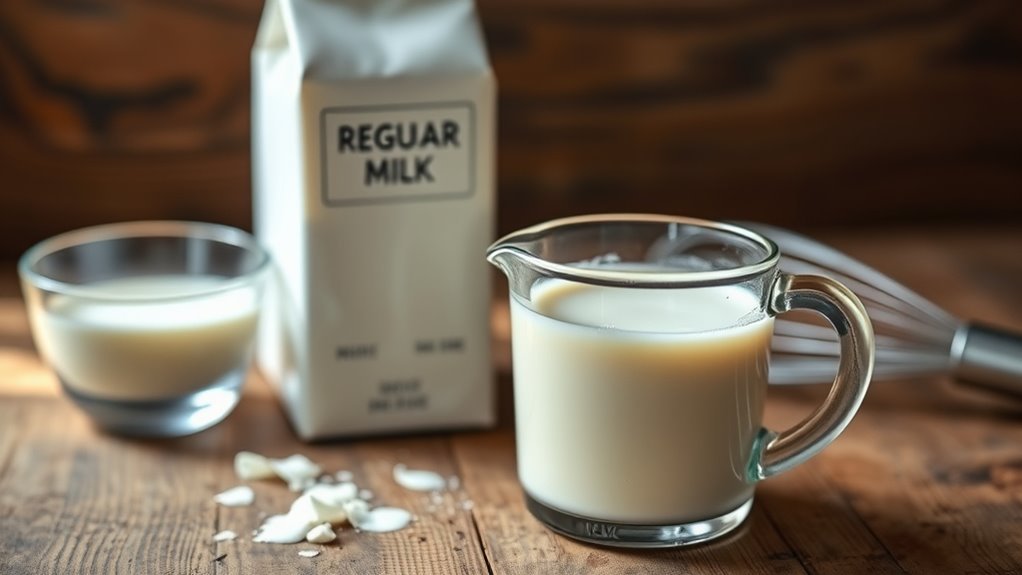
If you need to substitute evaporated milk for regular milk, simply dilute it with an equal part of water to match the consistency of fresh milk. For example, if your recipe calls for 1 cup of milk, mix 1/2 cup of evaporated milk with 1/2 cup of water to reconstitute it.
This method works well in cooking and baking, ensuring you maintain the right moisture and texture. Before using, shake or stir the evaporated milk thoroughly to evenly distribute the solids.
If you want a richer and creamier dish, you can use evaporated milk undiluted, but be sure to adjust other liquids in your recipe accordingly. This way, you’ll achieve the perfect balance without compromising consistency.
When Not to Use Evaporated Milk as a Substitute
Although evaporated milk works well in many recipes, you shouldn’t use it when a dish relies on the natural sweetness or light texture of regular milk. Evaporated milk is not suitable for every situation because it lacks the water content and subtle sweetness regular milk provides.
Here are four cases where you should avoid substituting it:
- Recipes needing natural sweetness—evaporated milk has no added sugar.
- Baking that requires a light, airy texture—its thicker consistency alters the outcome.
- Dishes or drinks dependent on moisture and water content—thicker evaporated milk changes texture.
- Baking involving leavening—reduced moisture can affect rising and final texture.
Knowing when not to use evaporated milk helps you keep your recipes tasting and looking just right. It’s all about choosing the right milk for the job!
How Evaporated Milk Differs From Regular Milk
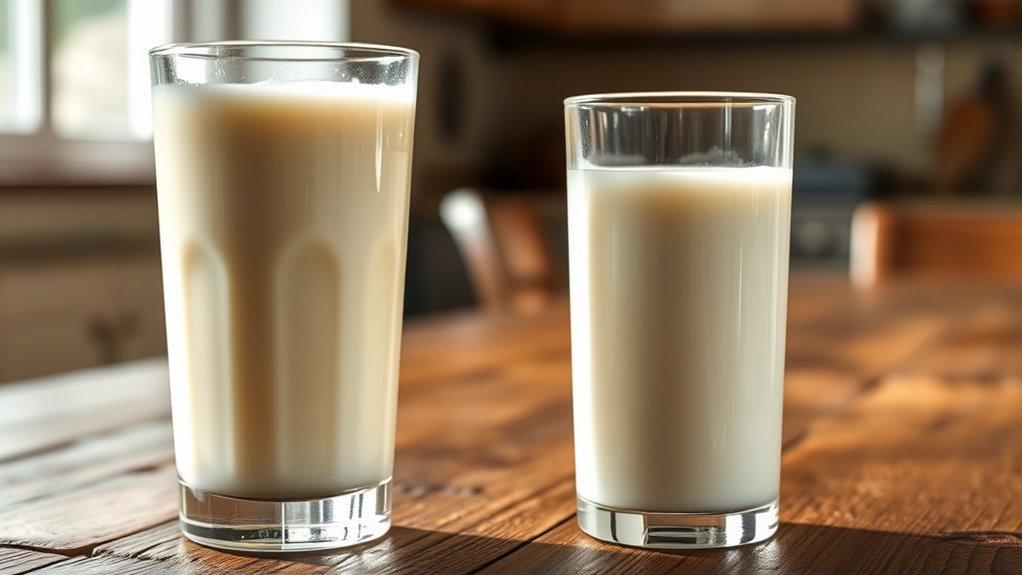
Knowing when not to use evaporated milk leads naturally to understanding how it differs from regular milk in composition and flavor. Evaporated milk has undergone sterilization and concentration, removing about 60% of water. This processing gives it a thicker texture, longer shelf life, and a subtle caramelized flavor.
In contrast, regular milk is fresh, sweeter, and requires refrigeration for storage. Nutritional content is also more concentrated in evaporated milk, offering more calories per volume.
| Aspect | Evaporated Milk | Regular Milk |
|---|---|---|
| Water Content | Reduced by 60% | Full water content |
| Flavor | Slight caramelized flavor | Fresh, sweet |
| Shelf Life | Long, shelf stable | Short, refrigerated |
| Texture | Thick and creamy | Thin and fluid |
Best Recipes for Using Evaporated Milk Instead of Milk
When you substitute evaporated milk for regular milk in your recipes, you’ll often get a richer, creamier result that enhances the dish’s texture and flavor.
Here are some top evaporated milk recipes to try:
- Creamy soups: Use undiluted evaporated milk to boost richness without watering down flavor.
- Sauces and custards: Baking with evaporated milk adds a velvety smoothness, perfect for quiches and bread puddings.
- Baking with evaporated milk: Replace milk 1:1 for moist cakes and desserts with a deeper taste.
- Reconstituting evaporated milk for beverages: Dilute with equal parts water to mimic regular milk’s consistency in coffee or hot chocolate.
When cooking with evaporated milk, you unlock a rich texture in recipes that often beats dairy-free alternatives in taste and creaminess.
It’s a simple swap that can really elevate your dishes!
Storage Tips After Opening Evaporated Milk
Once you open a can of evaporated milk, transferring it to an airtight container and refrigerating it is crucial to keep it fresh and safe to use. Proper refrigeration slows bacterial growth, extending the shelf life of your opened evaporated milk to about 4 to 5 days.
Avoid freezing it, as thawing can cause separation and harm texture stability. To prevent spoilage, store the container at a consistent, cool temperature and keep it away from light exposure, which can degrade quality.
Before each use, give the evaporated milk a good shake to recombine any separation that occurs during storage. Following these storage tips ensures you maintain the milk’s freshness and texture while preventing spoilage throughout the recommended storage duration.
Frequently Asked Questions
What Can I Use to Substitute Evaporated Milk for Milk?
You can dilute evaporated milk with an equal amount of water to replace regular milk. This keeps the consistency right, so your recipes still turn out creamy without losing flavor or texture.
What Are the Potential Downsides of Evaporated Milk?
Beware bitter, bulky blends; evaporated milk can change your dish’s delicate dynamics. It’s thicker, tangier, and might make meals too rich or dense. Plus, lactose levels linger, so it may upset sensitive stomachs, too.
How Much Evaporated Milk Equals 1 Cup Regular Milk?
You’ll need about ⅓ cup of evaporated milk mixed with ⅓ cup of water to equal 1 cup of regular milk. For a closer match, try combining ½ cup evaporated milk with ½ cup water.
Can I Use Regular Milk Instead of Evaporated Milk in Mac and Cheese?
Yes, you can use regular milk, but simmer it down to reduce water content and thicken it. This mimics evaporated milk’s creaminess, enhancing your mac and cheese’s texture and flavor without compromising quality.
Conclusion
Before you swap evaporated milk for regular milk, remember it’s not a one-size-fits-all fix. It’s like trading a gentle breeze for a strong gust—sometimes perfect, sometimes too much.
Use it wisely in recipes that call for a richer, creamier touch, but steer clear when you need that light, fresh finish. Keep it chilled and sealed tight, so it’s ready to pour magic into your next dish without missing a beat.
When substituting evaporated milk for milk, understanding its thicker texture and concentrated flavor is key. This makes it fantastic for creamy soups, sauces, and baked goods, but it might overwhelm recipes needing a lighter milk option. So, always consider the role milk plays in your dish before making the swap.
In short, evaporated milk can be a great substitute for milk if you’re aiming for richness and creaminess. Just remember to store it properly and choose your recipes wisely to get the best results.