How Many Calories Are in a Glass of Whole Milk?
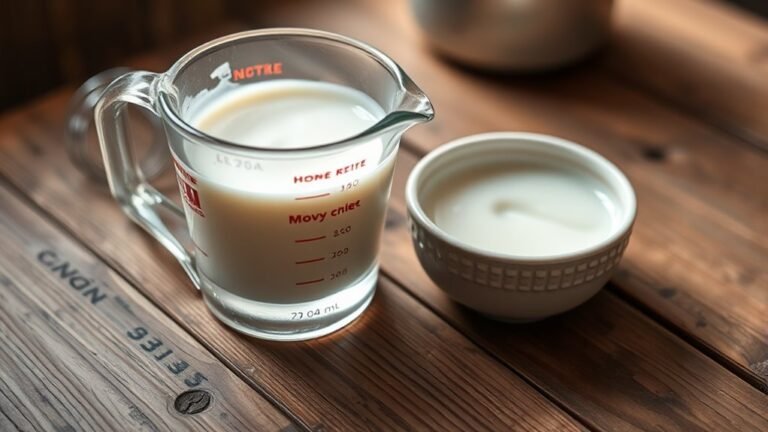
You’ll find about 150 calories in an 8-ounce glass of whole milk, mostly from its fat content.
Each glass has around 8 grams of fat, which contributes the most calories, along with 8 grams of protein and 12 grams of natural sugar (lactose).
This makes whole milk higher in calories than skim or low-fat versions.
If you want to understand how these nutrients impact your daily intake, there’s more to explore.
Key Takeaways
- An 8-ounce glass of whole milk contains approximately 150 calories. A 16-ounce glass has about 298 calories.
- Most of these calories come from the 8 grams of fat in an 8-ounce serving. Protein and natural sugar (lactose) add fewer calories compared to the fat.
- The fat content in whole milk is the main reason it has more calories than low-fat milk. So, if you’re watching your calorie intake, that’s something to keep in mind!
How Many Calories Are in a Glass of Whole Milk?
Wondering how many calories you’ll consume in a glass of whole milk? A standard 16-ounce glass of whole milk contains about 298 calories, while an 8-ounce cup has roughly 150 calories.
This calorie count is higher than skim or low-fat milk because of whole milk’s fat content. As a dairy source, whole milk provides nutrition not only through calories but also with high-quality protein and lactose, a natural carbohydrate.
Drinking a full glass of whole milk can contribute considerably to your daily calorie intake, sometimes providing nearly half of what some individuals need in a day.
A full glass of whole milk can significantly impact your daily calorie intake.
Understanding whole milk’s calorie content helps you manage your diet while benefiting from its balanced nutrition.
Which Nutrients in Whole Milk Add Calories?
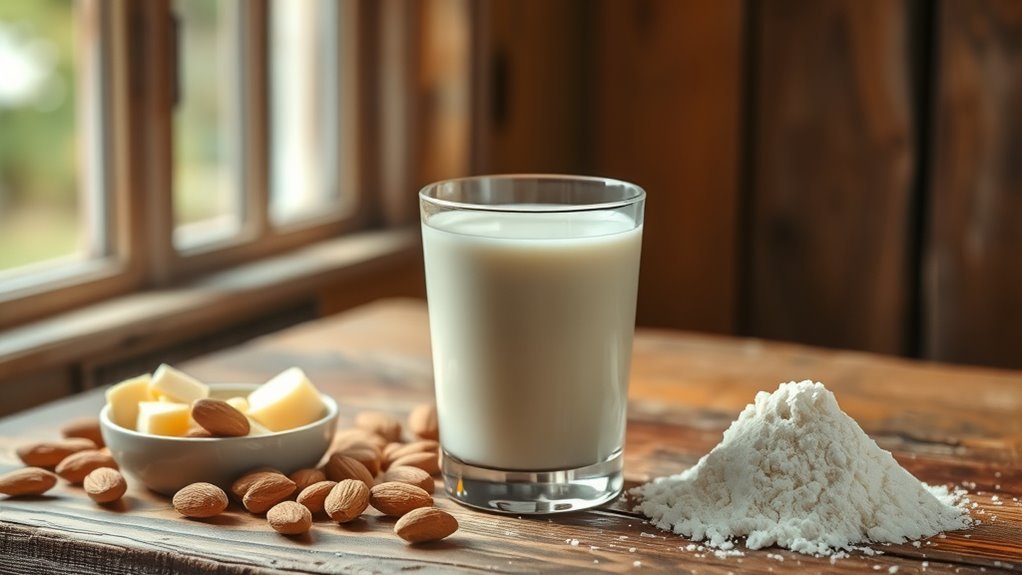
The calorie content in whole milk mainly comes from its fat, which makes up about 8 grams in an 8-ounce glass. Each gram of fat provides roughly 9 calories, so the fat content substantially boosts the total calorie content in whole milk.
Besides fat, whole milk contains 8 grams of protein and 12 grams of natural sugar (lactose), both adding smaller amounts of calories. While protein contributes 4 calories per gram, natural sugar adds similar calories per gram.
The fat-soluble vitamins A and D are present but don’t impact calorie content much. Overall, the fat content is the primary nutrient driving the higher calorie level in whole milk compared to lower-fat options.
Understanding these nutrients helps you grasp where whole milk’s calories come from. It’s mainly the fat doing the heavy lifting here!
Frequently Asked Questions
Is Whole Milk Ok When Losing Weight?
Whole milk can be okay when losing weight if you control portions. It’s higher in calories and saturated fat, so you might want to choose lower-fat options or drink it in moderation to stay on track with your goals.
Is It Healthy to Drink a Glass of Whole Milk a Day?
You can definitely enjoy a creamy boost daily; whole milk offers valuable nutrients supporting your bones and brain. Just keep an eye on portions and balance it with your overall diet to stay on the healthy track.
How Much Milk Is 500 Calories?
You’d need to drink about 3.3 cups, or roughly 26 ounces, of whole milk to reach 500 calories. Keep in mind, that’s quite a bit, so balance it with your daily calorie goals.
Is Whole Milk an Unhealthy Fat?
Whole milk isn’t inherently unhealthy, but its saturated fat can raise your LDL cholesterol. You should enjoy it in moderation and balance it with other healthy fats to support heart health and overall nutrition.
Conclusion
So, you want to know how many calories are in a glass of whole milk? Well, brace yourself—it’s about 150 calories of creamy goodness. Those calories come from fat, protein, and carbs, because milk isn’t just a drink; it’s a tiny calorie party in a glass.
Next time you pour yourself a tall one, remember: you’re not just hydrating, you’re enjoying a little dairy decadence. Whole milk packs a nutritional punch with its balanced calories, making it a satisfying choice for many.
In conclusion, a glass of whole milk has roughly 150 calories, coming from a blend of fat, protein, and carbohydrates. It’s more than just hydration—it’s a source of essential nutrients and energy. So, if you’re counting calories or just curious about what’s in your glass, whole milk offers creamy flavor and nutrition in every sip. Cheers to enjoying whole milk as part of a balanced diet!