How to Make Buttermilk From Whole Milk in 10 Easy Steps
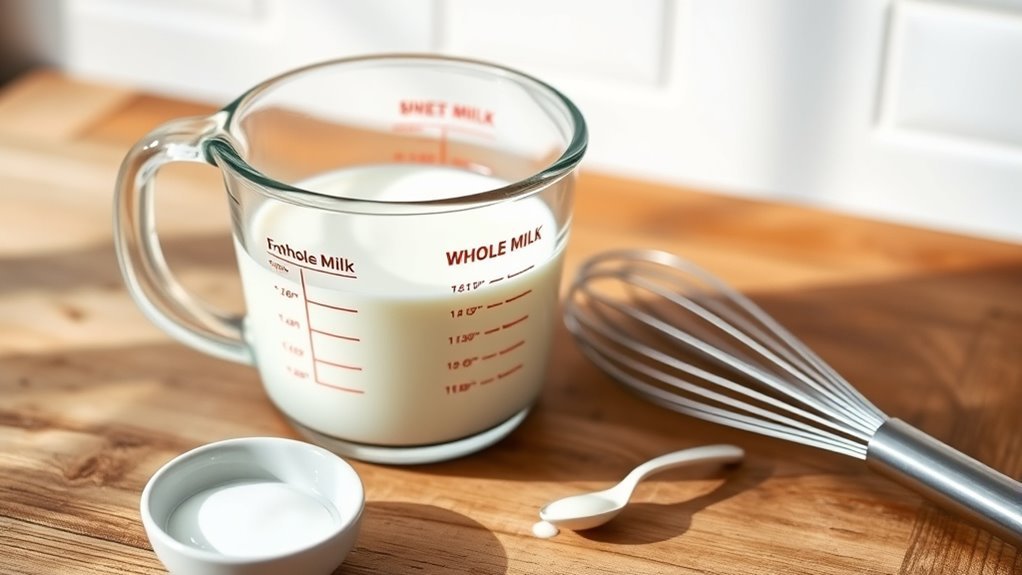
To make buttermilk from whole milk, start by measuring 1 cup of cold, fresh whole milk and pouring it into a clean container.
Then, add 1 tablespoon of lemon juice or vinegar and stir gently.
Let the mixture sit at room temperature for about 5 minutes until it thickens and curdles slightly. This simple process creates a tangy buttermilk substitute that works perfectly in recipes.
You can use this homemade buttermilk 1:1 in your baking or cooking for tender, flavorful results.
Keep reading to discover helpful tips on choosing the right milk, dairy-free alternatives, and smart storage tricks to keep your buttermilk fresh and tasty!
Key Takeaways
- Measure 1 cup of whole milk at room temperature using a liquid measuring cup for accuracy.
- Add 1 tablespoon of lemon juice or vinegar to the milk and stir gently to mix.
- Let the mixture sit undisturbed at room temperature for about 5 minutes to thicken and curdle.
- You’ll know it’s ready when small curds form and the mixture slightly thickens with a tangy flavor.
- Use it immediately as a 1:1 substitute for buttermilk in baking, cooking, or marinades. Easy, right?
Why Make Homemade Buttermilk?
Although you can buy buttermilk at the store, making it at home is quicker and cheaper. It also lets you control its freshness and acidity.
When you prepare homemade buttermilk, you mix milk with a small amount of acid, like lemon juice or vinegar, then let it sit for a few minutes. This simple process mimics traditional buttermilk by curdling the milk slightly.
Managing the acidity is key because it affects how your baked goods rise and taste. Using fresh homemade buttermilk ensures your pancakes, biscuits, and other recipes get that perfect tangy flavor and tender texture.
Plus, you avoid relying on store availability or less fresh options. Homemade buttermilk is a smart way to enhance your baking with minimal effort.
Essential Ingredients for Homemade Buttermilk
When you make homemade buttermilk, the essential ingredients are simple and easy to find: milk and an acid like white vinegar or lemon juice. You’ll need whole milk for the best results, as it creates a creamier, richer buttermilk substitute compared to lower-fat options.
Add about one tablespoon of white vinegar or lemon juice to one cup of whole milk. The acid reacts with the milk, causing it to curdle slightly and thicken, creating that tangy flavor you want.
This quick, effective combination is perfect for baking and cooking when you don’t have store-bought buttermilk on hand. With just these two ingredients—whole milk and your choice of white vinegar or lemon juice—you can easily whip up homemade buttermilk anytime.
Step 1: Measure 1 Cup of Whole Milk
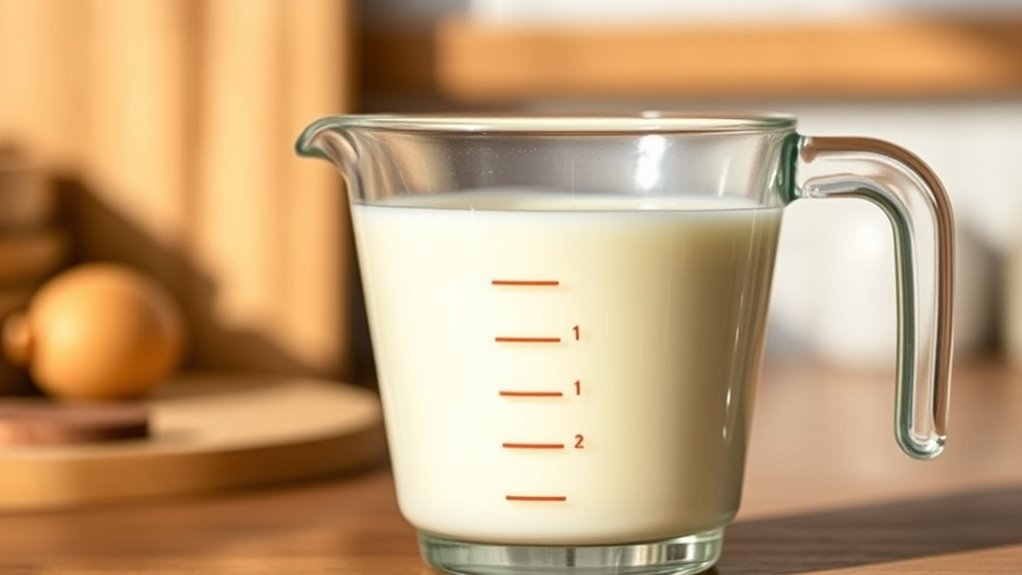
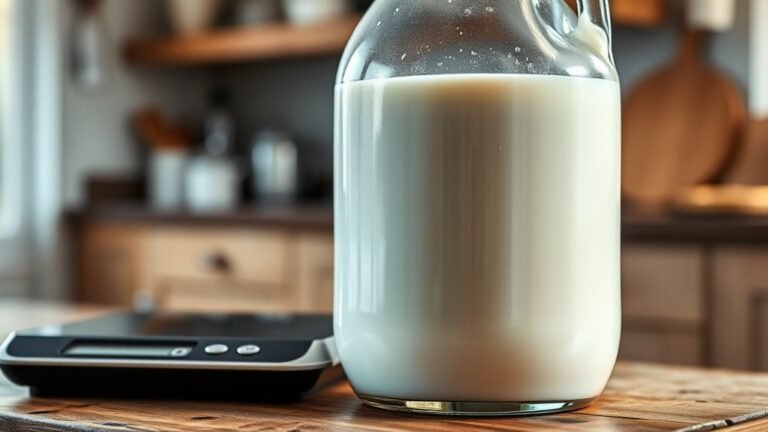
Start by choosing whole milk for the best texture and flavor. Measure exactly 1 cup using a liquid measuring cup to guarantee accuracy.
Make certain the milk is fresh and at room temperature before pouring it into a clean container for mixing. This way, you’ll get the best results every time.
Choosing Milk Type
Why choose whole milk to make your buttermilk? Whole milk offers a richer, creamier texture that lower-fat options just can’t match. Its natural fat content enhances the final taste and consistency, making it ideal for homemade buttermilk.
When selecting your milk, freshness is key—make sure it’s cold from the refrigerator to maintain quality. Accurate measurement matters too; use a liquid measuring cup to measure exactly 1 cup of whole milk.
This precise measurement ensures the right balance of acidity when you add your acid later, which is vital for achieving the perfect tang and thickness. If you can’t find whole milk, 2% or heavy cream can work, but be ready to adjust acidity since their fat content and flavor differ.
Accurate Measurement Tips
Selecting whole milk sets the foundation, but getting the measurement just right makes all the difference. Use a liquid measuring cup to guarantee an accurate measurement of 1 cup of whole milk.
Place the measuring cup on a flat surface and bring your eyes level with the markings to avoid misreading the amount. Make sure the milk reaches exactly the 1-cup line—too much or too little can affect your buttermilk’s texture and taste.
Always use fresh, cold whole milk for the best results. Before adding vinegar or lemon juice, double-check your measurement to maintain the correct proportions.
Taking these simple steps guarantees you start with the right amount, setting you up for perfect homemade buttermilk every time.
Milk Preparation Basics
Although measuring seems simple, getting exactly one cup of whole milk is essential for homemade buttermilk. Precise measurement guarantees the right balance of acid and dairy, which helps the milk curdle properly.
Start with fresh, high-quality whole milk at room temperature for the best results. Use a liquid measuring cup to avoid guesswork, and pour the milk into a clean container, ready for the acid addition.
Keep these tips in mind:
- Use a clear liquid measuring cup for accuracy
- Let the whole milk sit at room temperature
Avoid using cold milk directly from the fridge. Confirm the measurement is exact to maintain acidity.
Pour milk into a clean bowl or jar before adding acid. This careful preparation sets the foundation for perfect homemade buttermilk.
Step 2: Add 1 Tablespoon of Lemon Juice or Vinegar
Once you’ve measured 1 tablespoon of lemon juice or white vinegar, add it to a measuring cup before pouring in enough milk to reach the 1-cup line. This combination is essential because the acid in the lemon juice or vinegar will react with the milk, kicking off the process of turning it into buttermilk.
Make sure you use whole milk for the best texture and flavor. After adding the milk, gently stir the mixture to evenly distribute the lemon juice or vinegar throughout.
The acidity will start to cause slight curdling right away, so it’s normal to see some changes. This step sets the foundation for the tangy, thickened buttermilk you’ll create in the next stages.
Step 3: Stir and Let the Mixture Curdle
After you’ve gently stirred the acid into the milk, let the mixture sit undisturbed at room temperature for about 5 minutes. During this time, the acid reacts with the milk proteins, causing the milk to curdle and form small curds.
Don’t shake or stir vigorously after this step, as that can break down the curds you want to develop.
Keep these tips in mind:
- Stir gently when combining acid and milk.
- Allow the mixture to rest without disturbance.
- Watch for a slightly thickened texture and visible curds.
- Avoid shaking or vigorous stirring after curdling begins.
- Use the curdled mixture soon after resting for best results.
This process guarantees your homemade buttermilk substitute has the right consistency and tang.
When Is Your Buttermilk Substitute Ready to Use?
You’ll know your buttermilk substitute is ready to use when it has thickened slightly and shows small curds forming on the surface, usually after about 5 minutes of resting.
This curdled and thickened texture signals the acid has reacted with the milk, creating the tangy consistency you want. If you don’t see curds after 5 minutes, just stir briefly and wait another minute or two.
Using it right away guarantees maximum acidity and freshness for your recipes.
| Time Passed | Appearance |
|---|---|
| 0 minutes | Smooth, no curds |
| 2 minutes | Slight cloudiness |
| 5 minutes | Curds forming, thickened |
| 7 minutes | More curds, still good |
| 10 minutes | Ready to use, tangy |
How to Use Buttermilk Substitute in Your Recipes
Although traditional buttermilk isn’t always on hand, you can easily use a homemade substitute in your recipes to achieve the same tangy flavor and acidity needed for proper leavening and texture.
Simply mix 1 tablespoon of lemon juice or vinegar with 1 cup of milk, stir, and let it sit for 5 minutes until curdled. Use this buttermilk substitute in your batter or dough just as you would regular buttermilk.
Here’s how to use it effectively:
- Replace buttermilk 1:1 in baked goods for tender crumb and rise
- Add to marinades to tenderize meat with acidity
- Incorporate in dressings for tangy flavor
You can even use plant-based milk and vinegar for vegan recipes. Just prepare it fresh before use to mimic traditional buttermilk’s texture and acidity.
Picking the Best Milk for Your Buttermilk Substitute
When making a buttermilk substitute, the type of milk you choose plays a big role in the final outcome. Whole milk, with its higher fat content, creates a richer, creamier substitute that enhances both texture and flavor. This makes it ideal when you want your baked goods to have that authentic, indulgent feel.
If you prefer something lighter, 2% milk works well, though it won’t be as creamy. Keep in mind that the fat content can slightly affect acidity, which influences how well your substitute reacts with leavening agents like baking soda.
For an even thicker alternative, mixing heavy cream with acid boosts richness. So, choose your milk based on the recipe’s desired richness and how it interacts with your leavening agents for the best results.
Dairy-Free and Vegan Buttermilk Alternatives
If you need a dairy-free or vegan option, making buttermilk is simple by combining plant-based milk with an acid like vinegar or lemon juice. This creates vegan buttermilk that mimics the acidity and texture of traditional buttermilk. It’s perfect for baking.
Here’s how to make your own dairy-free buttermilk alternative:
- Mix 1 cup of plant-based milk (coconut, soy, or almond) with 1 tablespoon of vinegar or lemon juice.
- Let it sit for 5 minutes until it slightly curdles.
- Use immediately for the best tangy flavor and leavening effect.
The acidity activates baking soda in recipes, which helps your baked goods rise nicely. Coconut and soy milk work best for thickness and acidity, by the way.
This simple method delivers the acidity and consistency you need without dairy. Easy and effective!
Tips for Storing and Freezing Homemade Buttermilk
Because homemade buttermilk doesn’t contain preservatives, you’ll want to store it properly to maintain its freshness. Keep your buttermilk in an airtight container and place it in the refrigerator. It will stay fresh for up to one week.
If you want to store it longer, freezing is a great option. Pour the buttermilk into an ice cube tray and freeze it for up to three months.
Once frozen, transfer the cubes to a sealed bag or container and label it with the date. When you’re ready to use the frozen buttermilk, just thaw it overnight in the refrigerator.
Give it a good shake or stir to recombine before using. Keep in mind, freezing may slightly change the texture, but the flavor and acidity stay perfect for cooking and baking.
Frequently Asked Questions
How to Make Buttermilk if You Only Have Whole Milk?
You just add a tablespoon of lemon juice or vinegar to a cup, then fill it with whole milk. Stir and let it sit for 5-10 minutes until it thickens and curdles, then use it right away.
How to Make Your Own Buttermilk Quickly?
Like magic bubbling in a potion, you just add a tablespoon of vinegar or lemon juice to a cup of milk, stir, and wait five minutes. You’ll have tangy buttermilk ready to boost your recipes instantly.
How to Make Buttermilk the Old Fashioned Way?
You let fresh cream ferment naturally at room temperature for about 24 hours until it thickens and develops a tangy flavor. This traditional method relies on naturally occurring lactic acid bacteria to create old-fashioned buttermilk.
How Much Vinegar Do You Add to Whole Milk to Make Buttermilk?
You add 1 tablespoon of white vinegar to 1 cup of whole milk to make buttermilk. Stir it gently and let it sit for about 5 minutes until it thickens slightly, then use it right away.
Conclusion
Now that you know how easy it is to make buttermilk from whole milk, you can enjoy fresher, homemade flavors anytime. Did you know that homemade buttermilk can enhance your baked goods’ texture, making them up to 30% fluffier?
Plus, it’s a cost-effective and customizable option. Give it a try—you’ll never want to buy store-bought again!
Keep experimenting with different milk types and enjoy your perfect buttermilk substitute every time. Making buttermilk from whole milk is a simple trick that elevates your cooking and baking. Whether you’re whipping up pancakes, cakes, or dressings, homemade buttermilk adds a tangy freshness that’s hard to beat. So go ahead, embrace this easy method and discover how affordable and versatile homemade buttermilk can be in your kitchen!