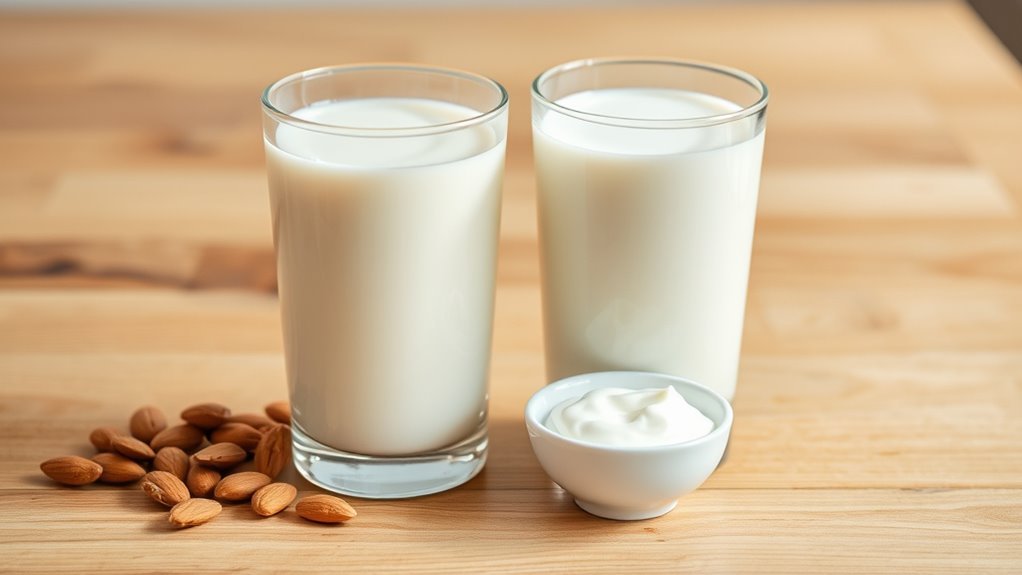
Is Almond Milk Better Than Regular Milk €“ 5 Key Differences
You might choose almond milk if you want fewer calories, no cholesterol, and a heart-healthy source of unsaturated fats. Plus, it’s a great vegan, lactose-free option that fits many dietary needs.
Cow’s milk, on the other hand, packs higher protein and natural calcium to support strong bones. But it does come with saturated fats and some ethical concerns.
Almond milk often contains additives and has environmental downsides due to water use.
Meanwhile, dairy production impacts greenhouse gases, which is another factor to consider.
So, your choice really depends on what matters most to you—nutrition, health, ethics, and sustainability. Keep exploring to get a clearer view of what suits you best.
Key Takeaways
- Almond milk has lower protein content compared to cow’s milk, which provides high-quality protein essential for muscle and bone health.
- Cow’s milk naturally contains calcium and vitamin D, while almond milk is typically fortified to match these bone-supporting nutrients.
- Almond milk contains unsaturated fats and no cholesterol, benefiting heart health, whereas cow’s milk has saturated fats and cholesterol.
- Almond milk production uses less animal-based resources but requires significant water and pesticides. On the other hand, dairy farming raises methane and animal welfare concerns.
- Almond milk is vegan and lactose-free, making it suitable for those with lactose intolerance. Cow’s milk offers richer nutrition but may not align with some ethical or dietary preferences.
Nutritional Differences: Almond vs. Cow’s Milk
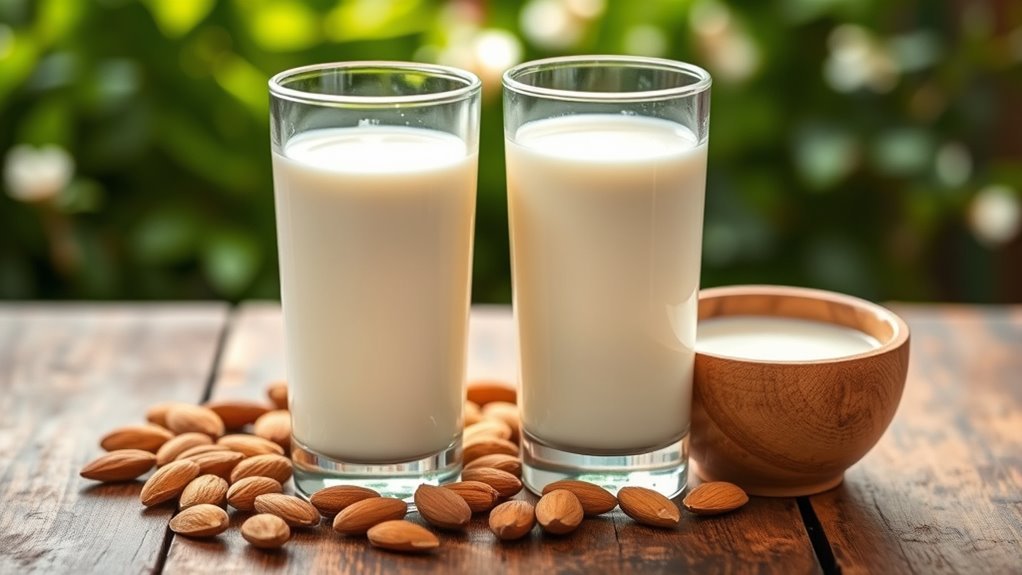
Although both almond milk and cow’s milk are popular beverage choices, they differ quite a bit in nutrition. Cow’s milk naturally provides about 8.5 grams of protein per cup. On the other hand, unsweetened almond milk contains only around 1 gram unless it’s fortified.
When it comes to carbohydrates, cow’s milk has roughly 12 grams, mostly lactose. Almond milk has about 3.4 grams from natural sugars and very little added sugar.
Calcium is naturally present in cow’s milk at about 314 mg per cup. But fortified almond milk often offers even higher levels, sometimes around 480 mg.
Cow’s milk contains about 4.7 grams of fat, with most of it being saturated fat. Almond milk, however, has about 2.5 grams of fat that are mostly unsaturated.
Vitamin D is naturally found in cow’s milk. For almond milk, it’s usually added to boost its nutritional value.
Bone and Heart Health: What the Milks Mean for You
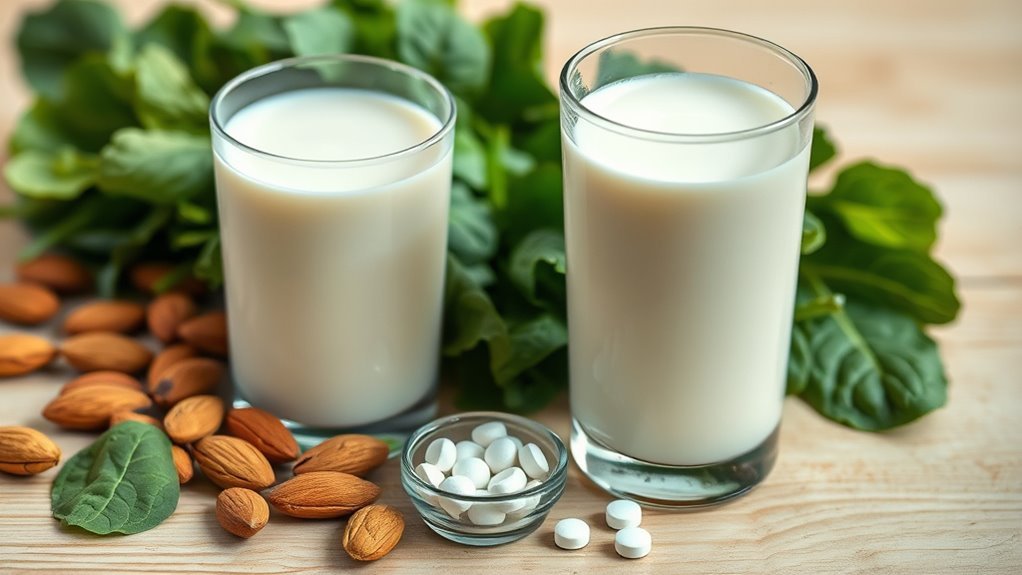
Understanding the nutritional differences between almond and cow’s milk sets the stage for examining how each impacts your bone and heart health. Dairy milk naturally contains about 314 mg of calcium per cup and vitamin D, which together support bone mineral density and overall bone health.
Almond milk, often fortified with calcium and vitamin D, can match these benefits. But when it comes to cardiovascular health, dairy milk’s saturated fats and cholesterol may raise some concerns.
Almond milk, fortified with calcium and vitamin D, offers bone benefits without dairy’s heart health concerns.
Almond milk contains mostly unsaturated fats and no cholesterol, which is great for promoting better heart health. Choosing almond milk can help you reduce your intake of saturated fats and support your cardiovascular health more effectively.
Ultimately, both milks offer benefits. However, almond milk’s fat profile generally favors heart health, while dairy milk provides highly bioavailable calcium that’s essential for strong bones.
Additives and Safety Considerations in Almond and Cow’s Milk
When choosing between almond milk and cow’s milk, you should consider the additives and safety factors involved. Many commercial almond milks include additives like carrageenan, stabilizers, gums, and preservatives.
Carrageenan, in particular, has been linked to inflammation and digestive issues in sensitive people. Plant-based milks often contain added sugars and flavorings, so checking ingredient labels is vital to avoid unwanted chemicals.
On the other hand, cow’s milk undergoes pasteurization, which guarantees safety by eliminating harmful bacteria. This is unlike raw milk that poses health risks.
The processing differences mean you should weigh potential digestive impacts from almond milk additives against the microbiological safety of cow’s milk. Ultimately, understanding these factors helps you make safer, informed choices based on your health needs and sensitivities.
Environmental and Ethical Factors in Milk Production
Beyond additives and safety, you should also weigh the environmental and ethical impacts of almond and cow’s milk production.
Almond farming demands high water usage—about 15 gallons for just 16 almonds—and often relies on pesticide use. This raises concerns about sustainability and pollution.
Dairy farming, on the other hand, contributes markedly to greenhouse gas emissions through methane. It also causes water pollution from manure. Ethical concerns arise from animal welfare issues in factory farming.
| Factor | Almond Milk | Cow’s Milk |
|---|---|---|
| Water Usage | High (15 gallons/16 almonds) | Moderate (feed and hydration) |
| Greenhouse Gas Emissions | Low | Elevated (methane from cows) |
| Pesticide Use | Present | Minimal |
| Ethical Concerns | Low (plant-based) | Elevated (animal welfare issues) |
Choosing Between Almond and Cow’s Milk: What Fits Your Lifestyle?
Although both almond and cow’s milk have unique benefits, choosing the right one depends largely on your dietary needs, lifestyle, and values.
Selecting between almond and cow’s milk hinges on your nutrition, lifestyle, and personal values.
If you’re lactose intolerant or prefer a plant-based option, almond milk is a great choice since it’s vegan and lactose-free. However, almond milk has less protein and calcium unless it’s fortified.
Cow’s milk naturally provides about 8.5 grams of protein and high calcium levels, which support bone health. Consider the environmental impact too—almond milk requires significant water, especially in drought-prone areas.
Cow’s milk offers robust health benefits but may not suit those with dairy allergies. Ultimately, weigh your priorities around nutrition, ethical concerns, and sustainability to decide which milk fits your lifestyle best.
Frequently Asked Questions
What Do Cardiologists Say About Drinking Almond Milk?
Cardiologists say you should choose unsweetened almond milk to reduce saturated fat and support heart health. Just watch out for added sugars, as they can harm your cardiovascular wellness despite almond milk’s benefits.
Why Are People Ditching Almond Milk?
You’re ditching almond milk because it uses lots of water, especially in drought areas, contains additives like carrageenan, offers low protein, and lacks natural nutrients unless fortified, making it less healthy and sustainable compared to regular milk.
Which Brand of Almond Milk Is Considered the Healthiest?
Picture a clean, crisp stream—Califia Farms and Malk flow just like that. You’ll want their unsweetened, fortified almond milk, free from added sugars and preservatives, to nourish your body with pure, natural goodness.
Is Almond Milk Really Better for You Than Regular Milk?
Almond milk isn’t necessarily better; it’s lower in protein and naturally lacks some nutrients. But if you want fewer calories, less saturated fat, or avoid dairy, almond milk can be a healthier choice for you depending on your needs.
Conclusion
When deciding between almond and regular milk, it’s all about what suits your unique needs and values. Almond milk might gently support your heart and environment, while cow’s milk offers a familiar boost for bones.
Both have their quirks, so trust your taste and lifestyle to guide you. After all, there’s no one-size-fits-all in this creamy conversation—just what feels right for you and your well-being.
Choosing between almond milk and regular milk depends on your health goals and preferences. Almond milk is lower in calories and dairy-free, making it a good option for those with lactose intolerance or who want to reduce their environmental impact. On the other hand, regular milk is rich in protein and calcium, which are essential for strong bones and muscle health.
So, when comparing almond milk vs regular milk, think about what matters most to you—nutrition, taste, or sustainability. Both can be part of a balanced diet, but the best choice is the one that fits your lifestyle and supports your overall well-being.