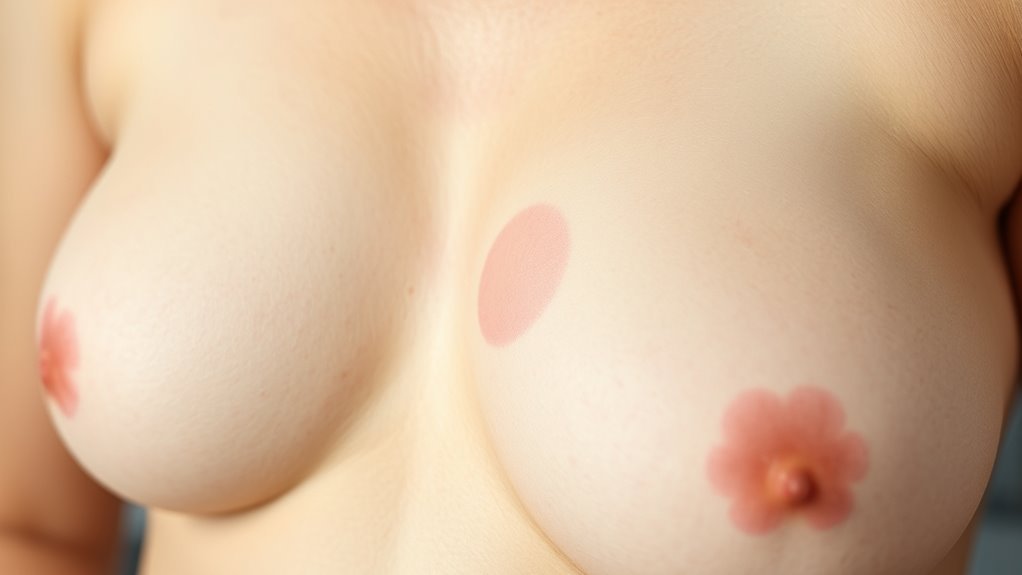
What Does a Clogged Milk Duct Look Like?
You’ll notice a clogged milk duct as a hard, tender lump in your breast that feels sore and firm. The area might be red, swollen, and warm to the touch, showing localized inflammation. This is a common sign that your milk duct is blocked and needs some care.
You may also feel pressure or tightness right behind the blockage. The discomfort can sometimes ease after breastfeeding or pumping, which helps clear the duct.
Paying attention to these signs is important so you can manage the blockage effectively and avoid complications.
Keep exploring to understand what to watch for and how to manage a clogged milk duct. Knowing these symptoms early can make a big difference in your comfort and breastfeeding experience.
Key Takeaways
- A clogged milk duct appears as a hard, tender lump localized in one area of the breast. The affected skin may show redness, swelling, and feel warm to the touch.
- The lump is firm, sore, and may cause a sensation of pressure or tightness behind the duct. Redness and swelling remain confined to the lump area, indicating localized inflammation.
- The lump may move or shrink temporarily after breastfeeding or pumping but causes discomfort during feeding. It’s common to feel some soreness while nursing, but this lump usually sticks around until the clog clears.
How Does a Clogged Milk Duct Feel and Look?
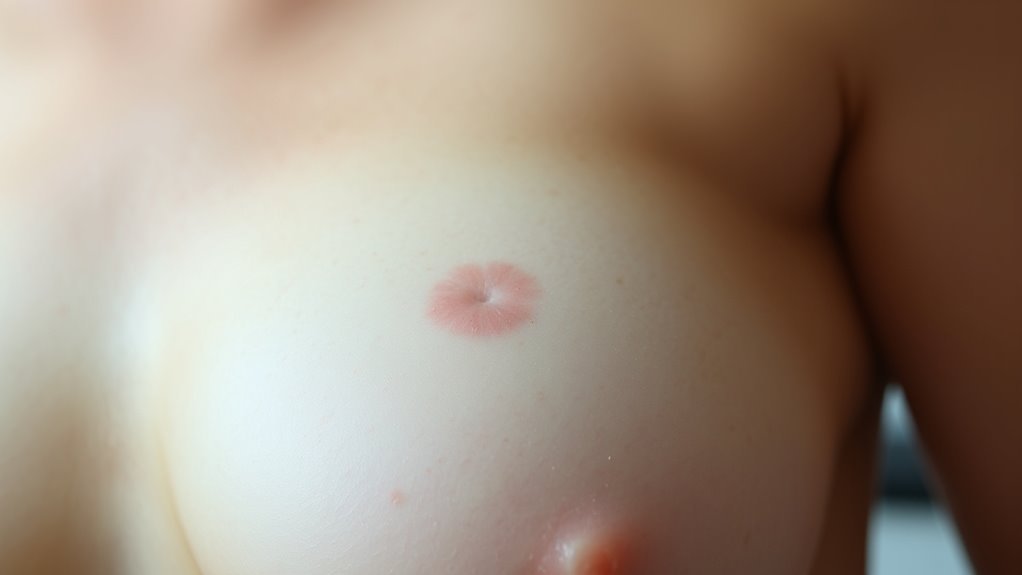
Although a clogged milk duct can vary in severity, you’ll often notice a hard, tender lump in one area of your breast. This lump usually feels sore and firm, causing discomfort when you breastfeed or pump.
The skin around the clogged milk duct might appear red, swollen, and warm, signaling localized inflammation. You’ll likely sense pressure or tightness behind the blocked duct, making the area feel increasingly uncomfortable.
Sometimes, after feeding or pumping, you may feel the lump move or shrink, which can bring partial relief. Paying attention to these signs helps you understand how a clogged milk duct feels and looks, so you can address it promptly and prevent further discomfort.
Recognizing Inflammation and Symptoms of a Clogged Milk Duct
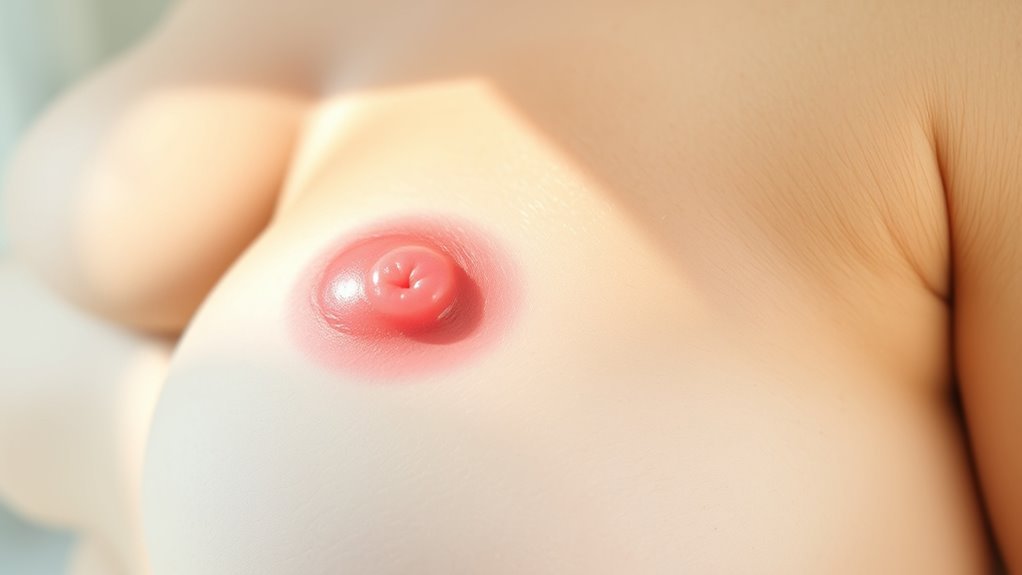
When you notice a hard, tender lump in your breast along with redness and swelling, these signs point to inflammation caused by a clogged milk duct. You’ll likely feel a firm lump that’s localized and painful, often accompanied by a sensation of fullness behind the duct.
The area may become hard and swollen, with red skin indicating worsening inflammation. This redness and swelling usually stay confined to the affected spot but can make breastfeeding or pumping uncomfortable.
Applying a warm compress can help reduce the pain and encourage milk flow, easing the blockage. If you experience these symptoms, recognizing them early is key to preventing infection and easing discomfort caused by the clogged milk duct’s inflammation.
Frequently Asked Questions
How Do You Unblock a Milk Duct?
To unblock a milk duct, apply a warm compress, gently massage toward the nipple, and start breastfeeding or pumping on that side. Change nursing positions and feed frequently to keep milk flowing and relieve the blockage effectively.
How Do You Know if You Got a Clogged Milk Duct?
You’ll know you’ve got a clogged milk duct if you feel a firm, tender lump in your breast, notice redness or warmth, and experience pain or decreased milk flow while breastfeeding. Don’t ignore increasing discomfort or fever.
Will a Clogged Milk Duct Fix Itself?
Yes, a clogged milk duct often fixes itself within two days if you regularly empty your breast, use warm compresses, and massage the area. If it lasts longer or worsens, you should see a healthcare provider.
What Could Be Mistaken for a Clogged Milk Duct?
You might think a clogged duct is the problem, but it could be mastitis, a milk bleb, engorgement, thrush, or even a benign lump. Don’t ignore symptoms—check carefully and get help if needed.
Conclusion
So, if you notice a painful, red lump on your breast that feels like it’s throwing a little temper tantrum, congratulations—you might have a clogged milk duct! It’s like your milk decided to throw a traffic jam party, and you’re the unwilling guest.
But don’t worry, with a little care and attention, you’ll clear the blockage and get things flowing smoothly again. Who knew milk could be so dramatic?
A clogged milk duct can cause discomfort and swelling, but it’s usually easy to treat at home. Applying warm compresses, gentle massage, and frequent breastfeeding or pumping can help clear the blockage. Paying attention to these symptoms early on can prevent complications like infection.
Remember, recognizing what a clogged milk duct looks like and taking prompt action is key to relief. With patience and proper care, you’ll be back to feeling comfortable in no time!