Can I Use Whole Milk Instead of Heavy Cream?
You can use whole milk instead of heavy cream when you want creaminess but don’t need thick or whipped textures. Whole milk works well if you’re aiming for a lighter option in sauces and baking.
It doesn’t have the same fat content or richness as heavy cream, so it won’t give you that thick, creamy texture.
To get closer to heavy cream’s richness, try mixing 3/4 cup whole milk with 1/4 cup melted butter. This combo adds fat and creaminess that whole milk alone can’t provide.
Just make sure to keep it chilled and give it a good stir before using. There’s a bit more to know if you want this substitution to work perfectly in your recipes!
Key Takeaways
- Whole milk lacks the fat content needed to fully replace heavy cream in recipes. It works well for adding moisture and mild richness but cannot create thick or whipped textures.
- Whole milk alone is unsuitable for recipes requiring stable whipped cream or thickening.
- Mixing whole milk with melted butter better mimics heavy cream’s fat content for cooking and baking. The milk and butter mixture should be refrigerated and stirred before use, but it still cannot be whipped.
When to Use Whole Milk as a Heavy Cream Substitute
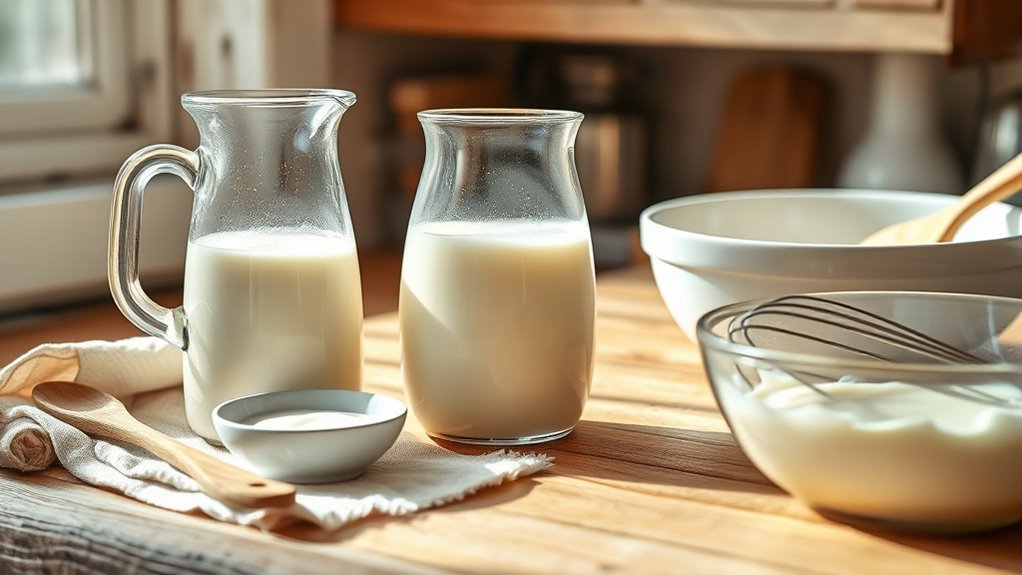
Although whole milk doesn’t have the same fat content as heavy cream, you can use it as a substitute by mixing it with melted butter to increase richness. Whole milk works well as a heavy cream substitute in recipes where you want creaminess without the need for whipped peaks or a thick texture.
It’s ideal for baking and sauces where the focus is on adding moisture and mild richness rather than creating stable, airy whipped cream. Keep in mind, whole milk alone won’t provide the same fat content or thickness.
How to Make a Heavy Cream Substitute With Milk and Butter
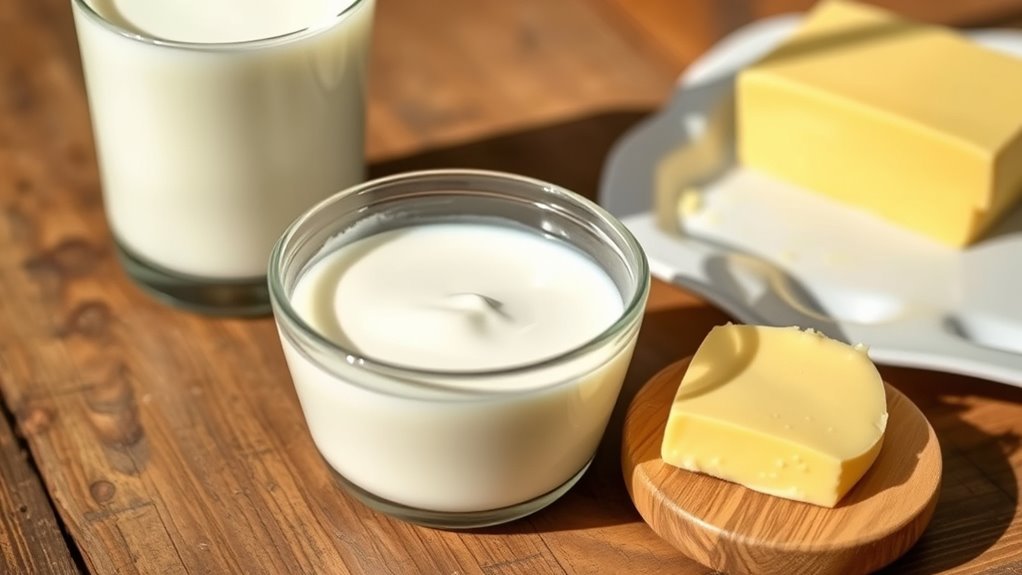
When you need heavy cream but only have whole milk and butter on hand, you can easily create a substitute by combining the two. Melt 1/4 cup of unsalted butter and let it cool to room temperature.
Then, whisk the melted butter into 3/4 cup of whole milk until fully blended. This mixture mimics the fat content and consistency of heavy cream, making it ideal for cooking and baking recipes.
Keep in mind, this substitute won’t whip into peaks like real heavy cream. Store it in the refrigerator and stir before each use to maintain consistency.
This substitute won’t whip like real cream; refrigerate and stir before each use for best results.
- 1/4 cup melted butter cooled to room temperature
- 3/4 cup whole milk
- Whisk until fully combined
- Suitable for cooking and baking
- Cannot be whipped but matches fat content
Frequently Asked Questions
What Happens if I Use Whole Milk Instead of Heavy Cream?
If you use whole milk instead of heavy cream, your dish will be less rich and creamy, sauces might be thinner, and whipped textures won’t hold. You’ll lose that indulgent flavor and velvety texture you expect.
What Is a Substitute for Heavy Cream?
You don’t need a magic wand—just mix whole milk with melted butter! This combo boosts fat content, giving you creamy richness like heavy cream for cooking and baking, but skip it if you want to whip up peaks.
How to Make Whole Milk Into Heavy Cream?
You can make whole milk into heavy cream by melting 1/4 cup unsalted butter, cooling it, then whisking it into 3/4 cup whole milk. This mixture mimics heavy cream’s fat content but won’t whip.
Can I Use Whole Milk Instead of Heavy Cream in Pasta?
You can use whole milk in pasta, but it won’t create that rich, velvety sauce you crave. Stir in melted butter or a thickener to keep your sauce creamy and smooth instead of thin and watery.
Conclusion
When you’re in a pinch, whole milk can step in for heavy cream like a trusty understudy ready to shine. It won’t bring the same rich curtain call, but with a bit of butter, it’ll play the part well enough to keep your dish center stage.
So don’t stress if heavy cream’s out of reach—just mix, whisk, and let your cooking dance on with a creamy encore! Using whole milk instead of heavy cream might mean a slightly lighter texture, but it’s a handy swap that still delivers on flavor. Just remember, adding butter helps mimic that rich creaminess you’re after.
In short, whole milk can be a great substitute for heavy cream in many recipes, especially when you’re looking for a quick fix. This simple trick keeps your dishes creamy and delicious without the heavy cream on hand. So next time a recipe calls for heavy cream, don’t hesitate to use whole milk with a touch of butter for a tasty and smooth result!