5 Key Facts About How Long You Can Freeze Breast Milk
You can safely freeze your breast milk for up to 6 months in a standard freezer and up to 12 months in a deep freezer at -4°F (-20°C).
This is important to know if you want to preserve the nutrients and quality of your milk for your baby. Freezing breast milk properly helps ensure it stays fresh and safe for feeding.
Make certain to store it in airtight containers, label with the date, and avoid freezer fluctuations. These simple steps can make a big difference in keeping the milk at its best.
Never refreeze thawed milk—you should use it within 24 hours after defrosting to keep nutrients intact.
Always check for spoilage before feeding. Keep these tips in mind if you want to guarantee your baby gets the best quality milk.
Key Takeaways
- Breast milk can be safely frozen up to 6 months in a standard freezer at 0°F (-18°C) without nutrient loss.
- If you have a deep freezer set at -4°F (-20°C), you can store it for up to 12 months.
- Just keep in mind, freezer fluctuations and poor sealing can reduce how long the milk stays good and its quality.
- Once breast milk is thawed, never refreeze it. You should use it within 24 hours.
- And before feeding, always check for spoilage signs like a sour smell or any discoloration. Better safe than sorry!
How Long Can You Safely Freeze Breast Milk?
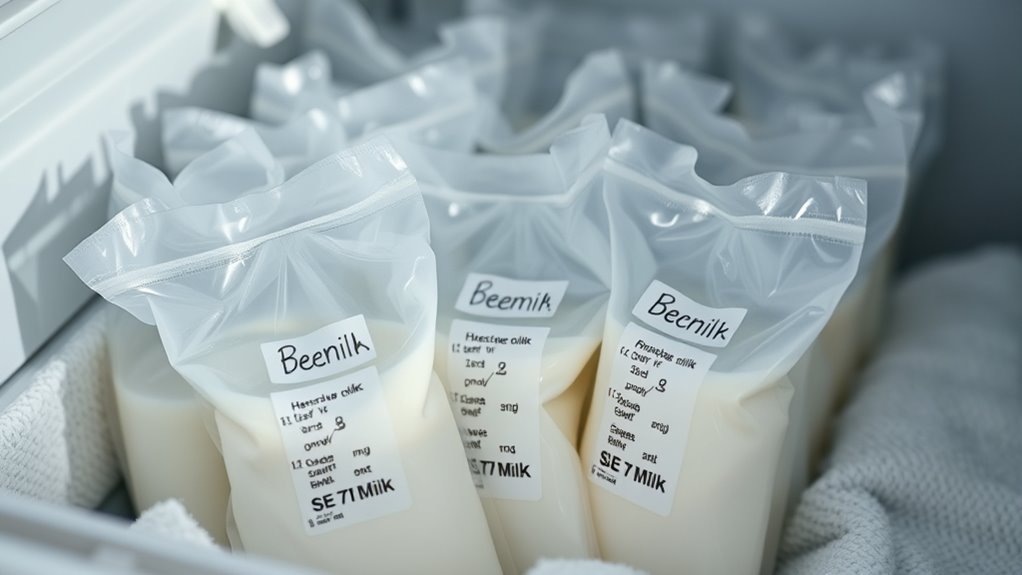
You can safely freeze breast milk for up to 6 months in a standard freezer at 0°F (-18°C) without compromising its quality. Beyond this storage time, while frozen breast milk remains safe, its nutritional value and ideal quality may decline.
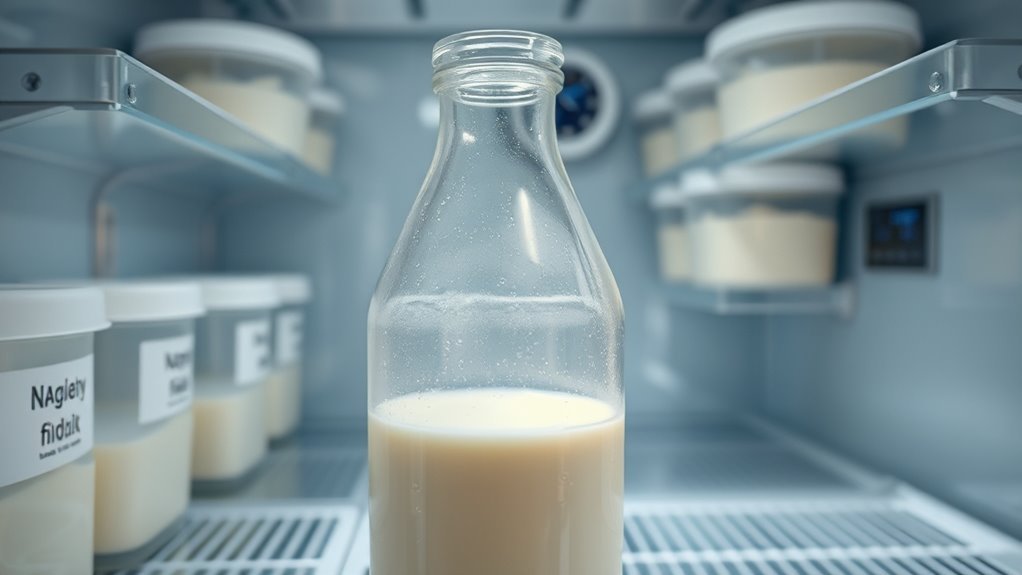
Using proper storage containers and maintaining consistent freezer temperatures are essential for safety and extending shelf life. If you have access to a deep freezer at -4°F (-20°C), you can store milk for up to 12 months, but it’s best to use the oldest milk first to prevent expiration.
When thawing, do so gently to preserve nutrients. Keeping track of storage time and conditions helps ensure your baby receives the best from frozen breast milk, balancing safety with nutritional benefits.
How Freezer Type Affects Breast Milk Storage
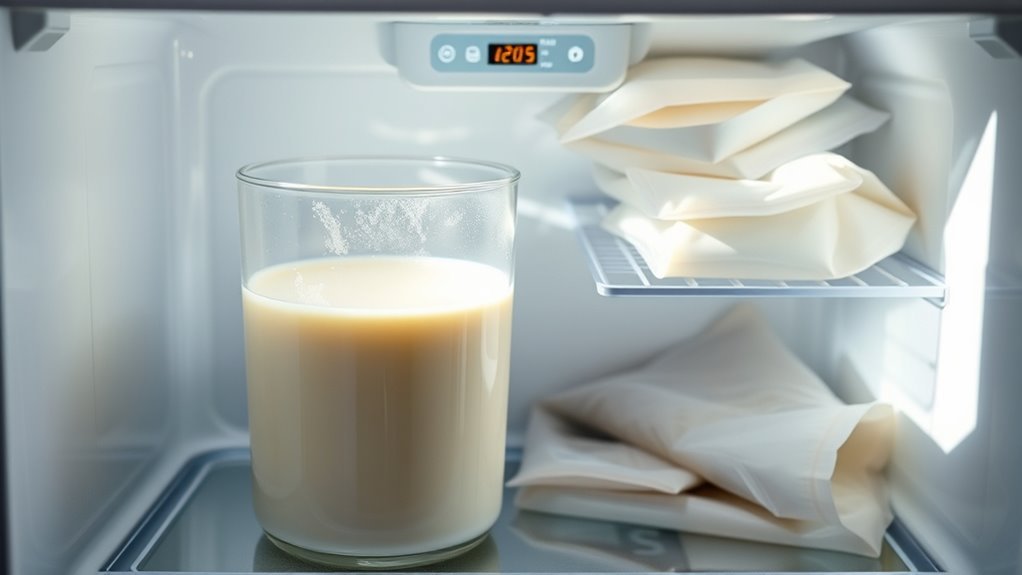
Freezer type plays a significant role in how long breast milk can be stored safely. A standard freezer at 0°F (-18°C) typically preserves frozen breast milk for up to 6 months, while a deep freezer at -4°F (-20°C) can extend storage duration to 12 months.
The freezer temperature stability matters, as frequent freezer fluctuations from opening the door reduce milk’s safe storage time regardless of freezer type. Using properly sealed storage containers helps prevent freezer burn, which can degrade nutrient preservation.
Additionally, keeping your freezer full rather than half-empty improves temperature consistency, allowing milk to stay safe longer—up to 9 months in standard freezers. Choosing the right freezer type and maintaining stable freezer conditions are key to maximizing the quality and safety of your frozen breast milk.
Best Practices To Maximize Frozen Breast Milk Quality
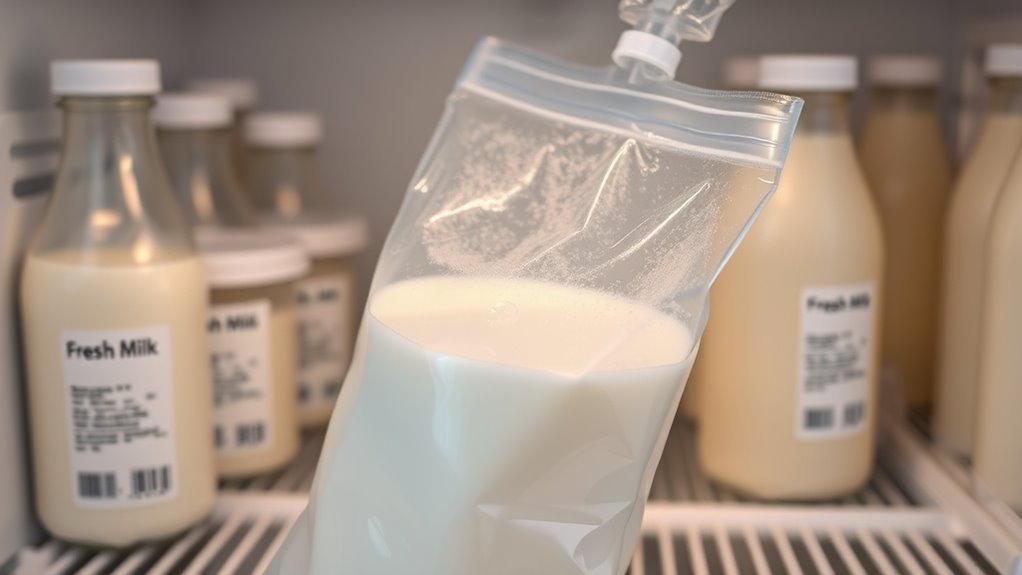
Although freezing breast milk preserves its nutrients, following best practices is essential to maintain its quality over time. You should store frozen breast milk at 0°F (-18°C) or below, ideally in the back of the freezer, for up to 6 months to guarantee excellent freezing and nutrient preservation.
Use airtight storage containers or bags to prevent freezer burn and contamination. Make sure to fill containers no more than three-quarters full to allow milk expansion.
Label each container with the freezing date, and always use the oldest milk first to keep things fresh. Also, follow proper thawing guidelines to keep the quality intact.
| Best Practice | Reason | Tip |
|---|---|---|
| Freezer Temperature | Prevents spoilage | Keep at 0°F (-18°C) or below |
| Storage Containers | Avoid freezer burn | Use airtight bags/containers |
| Milk Expansion | Prevents container damage | Fill 3/4 full |
| Labeling | Ensures freshness | Date and rotate stock |
Why You Shouldn’t Refreeze Thawed Breast Milk
Maintaining the quality of frozen breast milk requires careful handling even after thawing. You shouldn’t refreeze thawed breast milk because refreezing increases the risk of bacterial growth and contamination, compromising its safety.
Once thawed milk is refrigerated, it must be used within 24 hours, and any leftovers should be discarded according to health guidelines. Refreezing not only affects safety but also degrades the nutritional quality by breaking down beneficial antibodies and enzymes.
It can also alter the milk’s taste, smell, and texture, making your baby less likely to accept it. To protect your baby’s health, avoid refreezing thawed milk and follow recommended storage times to maintain its safety and nutritional benefits.
How To Tell If Frozen Breast Milk Is Good
When you thaw frozen breast milk, it’s important to check for signs that it’s still good before feeding your baby. Proper storage can keep milk safe for up to 6 months, or 12 months in a deep freezer, but always consider the expiration date first.
After thawing, take a moment to sniff the milk. It should have a clean, slightly sweet scent. If you notice any sour or rancid odor, that means it’s spoiled, and you should throw it out.
It’s normal for thawed milk to have some ice crystals or a slushy texture—that’s totally safe. But once the milk is fully thawed and free of ice crystals, try to use it within 24 hours.
Keep an eye out for any discoloration, like yellowing or clumping. That can mean bacteria have started to grow, so it’s best not to feed that to your baby.
Always trust your senses when checking breast milk. If something seems off, it’s better to be safe and not use it.
Frequently Asked Questions
What Is the 3-3-3 Rule for Breast Milk?
The 3-3-3 rule means you freeze breast milk for 3 months in a standard freezer, use it within 3 days after thawing, and store it in small 3-ounce portions to keep it fresh and safe for your baby.
How Do I Know if Frozen Breastmilk Has Gone Bad?
You’ll know frozen breast milk has gone bad if it smells sour, tastes soapy, or looks separated and won’t remix when you swirl it gently. If it feels warm or looks strange, toss it immediately.
Is Frozen Breastmilk Still Beneficial?
Yes, frozen breast milk is still beneficial. You’ll retain most nutrients and antibodies if you freeze it properly. Even after months, it provides your baby with essential immune support and nutrition when thawed and used correctly.
What Is the 6 6 6 Rule for Breast Milk?
The 6-6-6 rule means you should freeze breast milk for no more than 6 months, ideally use it within 6 months after expression, and store it at 0°F (-18°C) to keep nutrients and safety intact.
Conclusion
Freezing breast milk keeps it safe and nutritious, but you need to know the limits. For example, Sarah froze her milk in a deep freezer for six months and kept her baby healthy without any issues.
Remember, your regular freezer won’t last as long, and never refreeze thawed milk. By following these tips, you’ll guarantee your baby gets the best nutrition every time.
Keeping your breast milk fresh is key to providing essential nutrients and immune support for your little one. So, make sure to store it properly, use it within recommended times, and always label your milk with the date. This way, you can keep your milk fresh and your worries at bay while giving your baby the best possible start.