
How to Get Vitamin D From Milk
You can get vitamin D from milk by choosing fortified options that provide 100 to 150 IU per 8-ounce serving. Fortified milk is an easy and tasty way to boost your vitamin D intake, which is essential for bone health and immune support.
Be sure to check the nutrition label to confirm vitamin D3 is added, as it supports your body best.
Drinking a standard serving regularly helps maintain your vitamin D levels over time. Whether you prefer whole, skim, or lactose-free milk, most fortified milks offer similar vitamin D content. So, it’s pretty flexible depending on your taste and dietary needs.
Keep exploring to discover smart ways to select and use milk to boost your intake effectively. It’s all about making simple choices that fit your lifestyle and help you stay healthy.
Key Takeaways
- Choose milk labeled as “fortified with vitamin D” to make sure it actually has extra vitamin D added.
- Check the Nutrition Facts label to see how much vitamin D you’re getting. It’s usually around 100–150 IU per 8 oz serving.
- Try to pick milk fortified with vitamin D3 because it’s absorbed better and works more effectively.
- Drinking a standard 8 oz serving regularly can help keep your vitamin D levels steady.
- You can also add fortified milk to everyday foods like cereals and coffee. This is an easy way to boost your vitamin D intake without much effort.
How Much Vitamin D Is in Different Types of Milk?
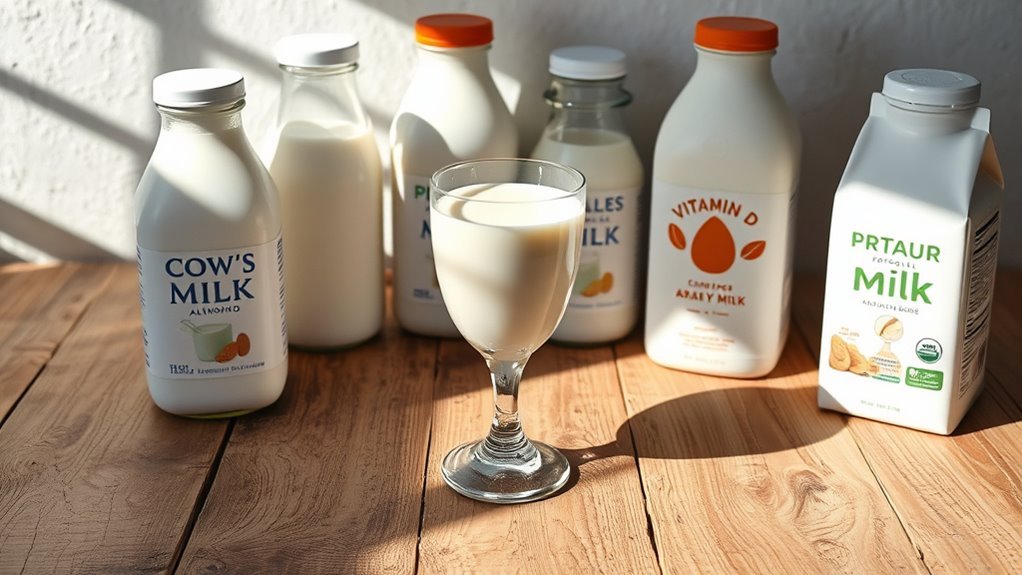
How much vitamin D you get from milk depends largely on the type and brand you choose. Most fortified milk types contain at least 100 IU of vitamin D per 8 oz serving, with some brands offering up to 150 IU. The vitamin D content in fortified milk is regulated, ensuring consistent vitamin D levels across products.
On the label, you’ll often find vitamin D3 listed as the added form, which is a preferred type for vitamin D supplementation. Different milk types, like whole, skim, or lactose-free, generally maintain similar vitamin D levels if fortified. Checking the nutrient content on food labels helps you track your vitamin D intake.
It’s also important to consider the serving size since it determines how much vitamin D you get from milk as a reliable food source. So, keep an eye on those labels and serving sizes to make sure you’re getting enough!
How to Choose and Use Milk to Boost Your Vitamin D Intake
When selecting milk to increase your vitamin D intake, always look for labels that say “fortified with vitamin D.” That way, you’ll make sure you get at least 100 IU per 8-ounce serving.
Check the Nutrition Facts label to confirm the vitamin D content. It can be as high as 150 IU per serving, which is great!
Also, take a peek at the ingredient list to see if the added vitamin D is vitamin D3. This form supports your vitamin D levels better than some other supplement sources.
Try to incorporate fortified milk regularly into your milk consumption. You can add it to cereals, coffee, or recipes to consistently meet your daily intake goals.
And don’t forget to mix it up with other fortified dairy products like yogurt and cheese. Since natural sources of vitamin D are limited, these fortified options really help you keep your levels up efficiently.
Frequently Asked Questions
Can You Get Enough Vitamin D From Drinking Milk?
You can get some vitamin D from drinking milk, but it likely won’t provide enough on its own. You’ll need to eat other vitamin D-rich foods or take supplements to meet your daily needs, especially with limited sun exposure.
How to Get 100% Vitamin D Daily?
You can get 100% of your daily vitamin D by drinking two cups of fortified milk daily. Combine this with other sources like fatty fish or supplements to guarantee you meet your total vitamin D needs consistently.
Is 2 Eggs a Day Enough Vitamin D?
Two eggs a day provide some vitamin D, but it’s not enough to meet your full daily needs. You’ll want to combine them with other sources like fortified foods or sunlight to get adequate vitamin D levels.
What Food Is Extremely High in Vitamin D?
You’ll find cod liver oil extremely high in vitamin D, offering about 34 micrograms per tablespoon. Wild-caught salmon and UV-exposed mushrooms also pack a strong vitamin D punch to boost your intake naturally.
Conclusion
To boost your vitamin D intake, choose fortified milk like whole or skim. These often contain about 100 IU per cup, making it an easy way to get your daily dose.
For example, imagine Sarah, who switched from almond milk to fortified cow’s milk. She noticed better energy and mood after making that simple change.
By simply picking the right milk and drinking a glass daily, you can easily meet your vitamin D needs. This helps support your bone health and overall well-being.
Small changes like this can make a big difference! Fortified milk is a convenient, tasty source of vitamin D that fits right into your daily routine. So, if you want to boost your vitamin D from milk, just grab a glass of fortified milk each day and enjoy the benefits for your health and vitality.