
What Happens When You Drink Spoiled Milk?
If you drink spoiled milk, you’ll likely experience nausea, vomiting, diarrhea, and stomach cramps. These symptoms happen because of harmful bacteria like Salmonella or E. coli that grow in the milk.
Even small amounts can cause discomfort, while larger amounts tend to make the symptoms worse.
Usually, these unpleasant effects pass within a day. But if they stick around, it could be more serious, so it’s important to be careful.
Always check your milk for a sour smell, lumps, or an off-taste before drinking it.
Want to know how to spot spoiled milk and keep yourself safe? It’s easier than you think, and a little attention can save you from a lot of trouble!
Key Takeaways
- Drinking spoiled milk can cause food poisoning due to harmful bacteria like Salmonella and E. coli. These bacteria can make you feel pretty awful.
- Common symptoms include nausea, vomiting, diarrhea, and stomach cramps. It’s no fun at all and can hit you pretty fast.
- The severity of symptoms depends on how much spoiled milk you drank and your overall health. Some people might feel worse than others.
- Usually, mild symptoms clear up within 12-24 hours. But if things get worse, it’s a good idea to see a doctor.
- To avoid this, always use your senses—smell and taste—to check if the milk is spoiled before drinking it. It’s a simple way to stay safe!
How to Tell If Your Milk Has Gone Bad
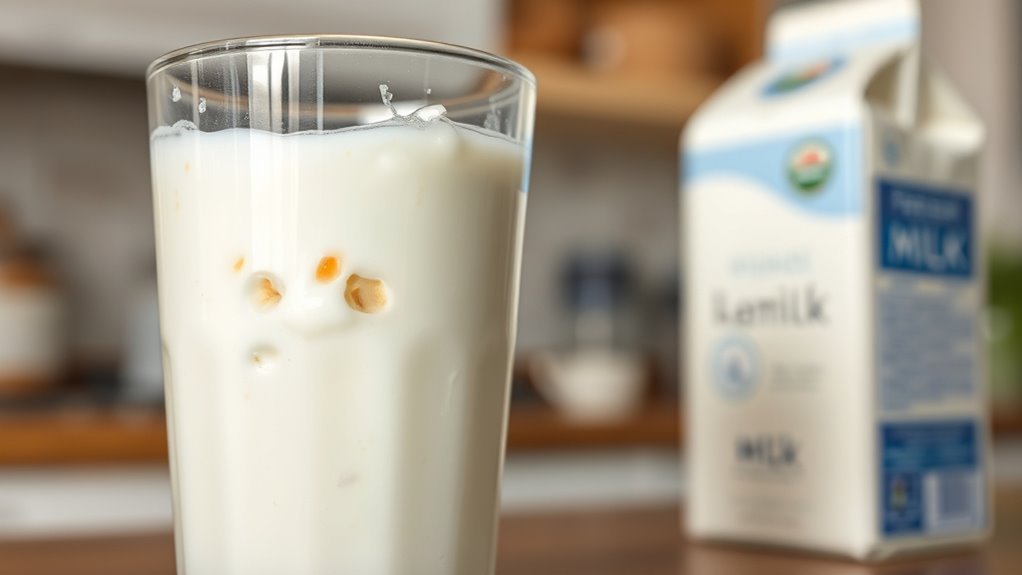
Although checking the expiration date is helpful, the best way to tell if your milk has gone bad is to rely on your senses. Spoiled milk usually gives off a strong sour smell that’s noticeably different from fresh milk’s mild scent.
Look for visible signs like curdling, lumps, or a yellowish tint—these indicate bacterial overgrowth. When you taste a small amount, an off-taste confirms spoilage.
Texture changes such as thickening or sliminess also signal that the milk isn’t safe to consume. These sensory cues are more reliable than the expiration date, which only offers a general guideline.
What Happens If You Drink Spoiled Milk?

If you drink spoiled milk, you might experience nausea, vomiting, diarrhea, and stomach cramps. Spoiled milk can harbor harmful bacteria like Salmonella or E. coli, even if it’s pasteurized milk.
Drinking spoiled milk can cause nausea, vomiting, diarrhea, and stomach cramps due to harmful bacteria like Salmonella or E. coli.
This raises your risk of food poisoning and foodborne illness. The gastrointestinal symptoms you face depend on how much spoiled milk you consume and your overall health.
Small amounts may cause minor discomfort, but larger quantities increase the likelihood of severe stomach cramps, dehydration, and prolonged diarrhea. Typically, mild symptoms resolve within 12 to 24 hours.
However, if issues persist, you should seek medical attention. To avoid these risks, always check milk freshness before drinking.
And don’t hesitate to discard spoiled milk to protect yourself from harmful bacteria and the unpleasant consequences of food poisoning.
Frequently Asked Questions
What Should I Do if I Drank Spoiled Milk?
If you drank spoiled milk, rinse your mouth with water, drink small sips to stay hydrated, and watch for symptoms like nausea or stomach pain. If symptoms worsen or persist, don’t hesitate to contact a healthcare professional.
How Long After Spoiled Milk Will You Get Sick?
You’ll usually get sick within 6 to 12 hours after drinking spoiled milk. Mild symptoms like nausea and stomach pain often appear first, but severe reactions can take up to a full day depending on your immune system.
What Are the Symptoms of Milk Poisoning?
You’ll experience stomach cramps, nausea, vomiting, and diarrhea. Symptoms usually start within hours. If you drink a lot, you might get dehydrated. If symptoms last or worsen, you should see a doctor right away.
What if I Drink 1 Day Expired Milk?
If you drink milk that’s just one day expired but looks and smells fine, you’re likely okay. However, if it tastes sour or smells bad, don’t drink it—you could get mild stomach discomfort or bloating.
Conclusion
You might think you’d never accidentally drink spoiled milk, but it happens—maybe you poured milk into your cereal without checking the smell first. Luckily, your body usually handles it pretty well, causing just mild stomach discomfort or a quick bout of nausea.
Still, it’s a good reminder to always check your milk before you drink it. That little sniff test can save you from an unexpected, unpleasant surprise every time.
Drinking spoiled milk can lead to stomach cramps, nausea, or even vomiting, but serious illness is rare. Your digestive system is pretty good at managing small amounts of bad bacteria found in sour milk. However, it’s always better to be safe than sorry. Checking the milk’s smell, taste, and expiration date helps you avoid the unpleasant effects of spoiled milk. So next time, trust your nose and avoid drinking spoiled milk to keep your stomach happy and healthy!