How Do You Heat up Breast Milk in 3 Easy Steps
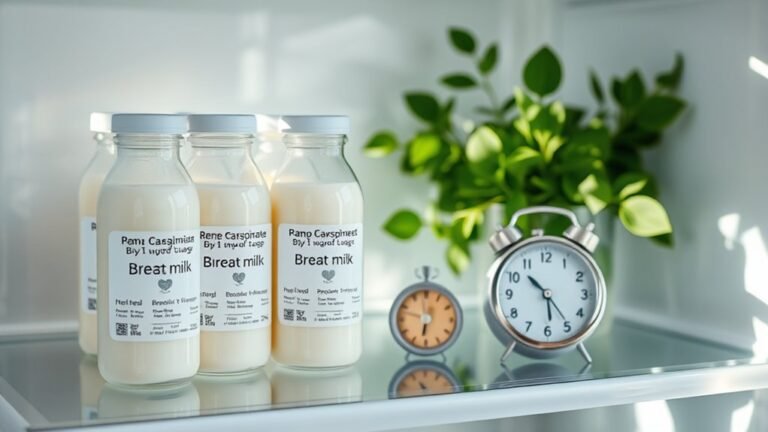
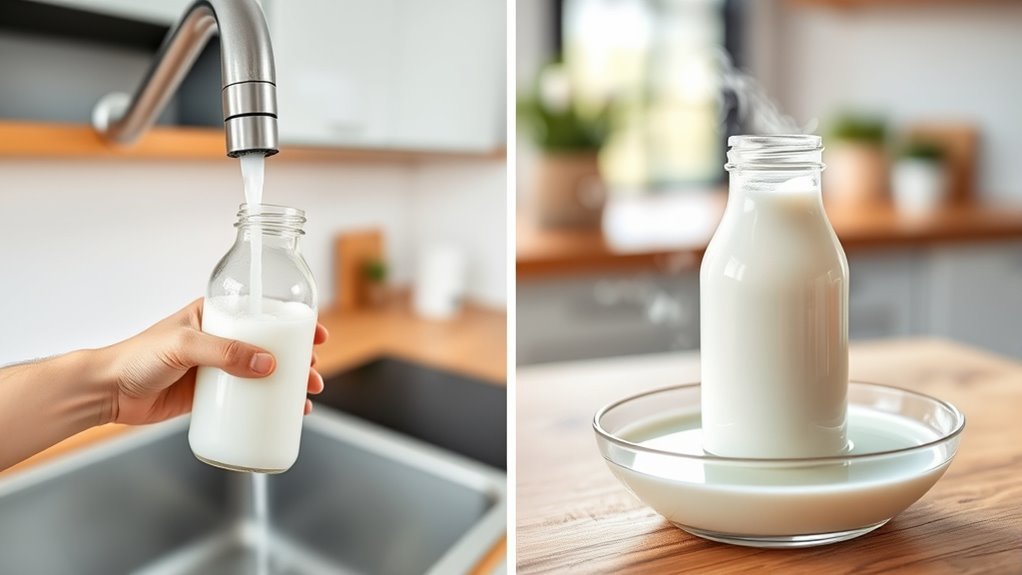
To heat up breast milk safely and effectively, start by thawing it in the refrigerator overnight or for up to 24 hours. This slow thawing keeps the milk fresh and preserves its nutrients.
Once your breast milk is fully thawed, warm it gently by placing the sealed container in lukewarm water, ideally around 98°F. Just let it sit for a minute or two until it’s warm enough.
Next, swirl the milk gently to mix the fats evenly — this helps keep the consistency smooth.
Before feeding, always test the temperature on your wrist to make sure it’s just right for your baby.
Keep following along to discover more tips for handling breast milk safely and effectively!
Key Takeaways
- Fully thaw breast milk in the refrigerator before warming.
- Place the sealed container in lukewarm water (~98°F/37°C) for 1-2 minutes.
- Gently swirl milk occasionally to evenly distribute fats without shaking.
- Test milk temperature on your wrist to ensure it is lukewarm, not hot.
- Use warmed milk within 24 hours and never refreeze thawed milk.
Safely Thaw or Remove Breast Milk for Warming
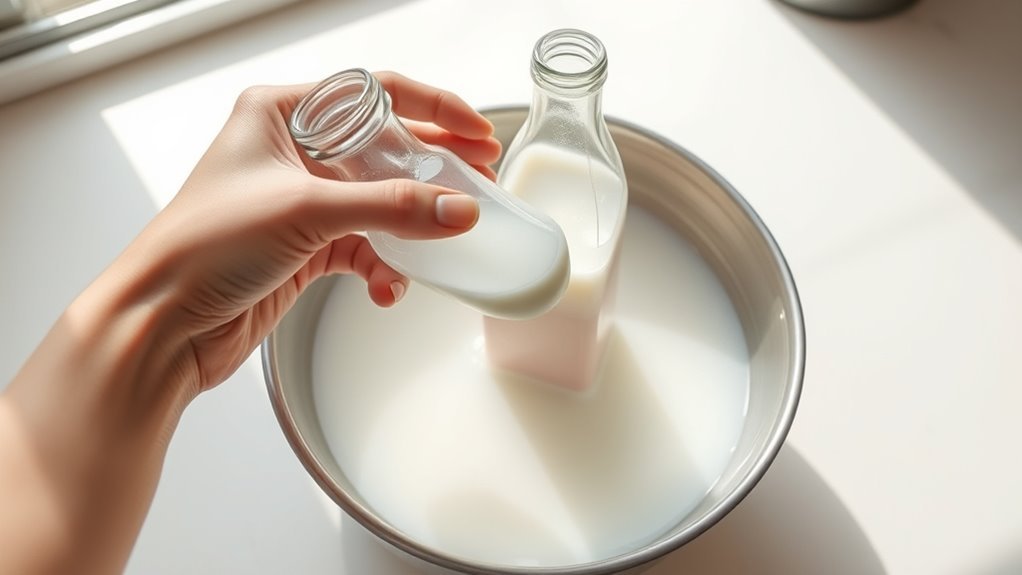
When you need to warm breast milk, start by thawing it safely to protect its nutrients and prevent bacteria growth. The best way to thaw breast milk is a gradual thaw in the refrigerator, allowing it to thaw overnight or up to 24 hours. This method keeps the milk fresh and minimizes bacterial growth.
Avoid thawing at room temperature because it can increase contamination risks. If you need to thaw it faster, place the container in lukewarm water and gently move it until fully thawed.
Before you safely warm the milk, make sure it’s fully thawed and at room temperature or below. Once thawed, keep it refrigerated and use within 24 hours. And remember, don’t refreeze it to maintain safety and quality.
Warm Breast Milk Gently Using Lukewarm Water
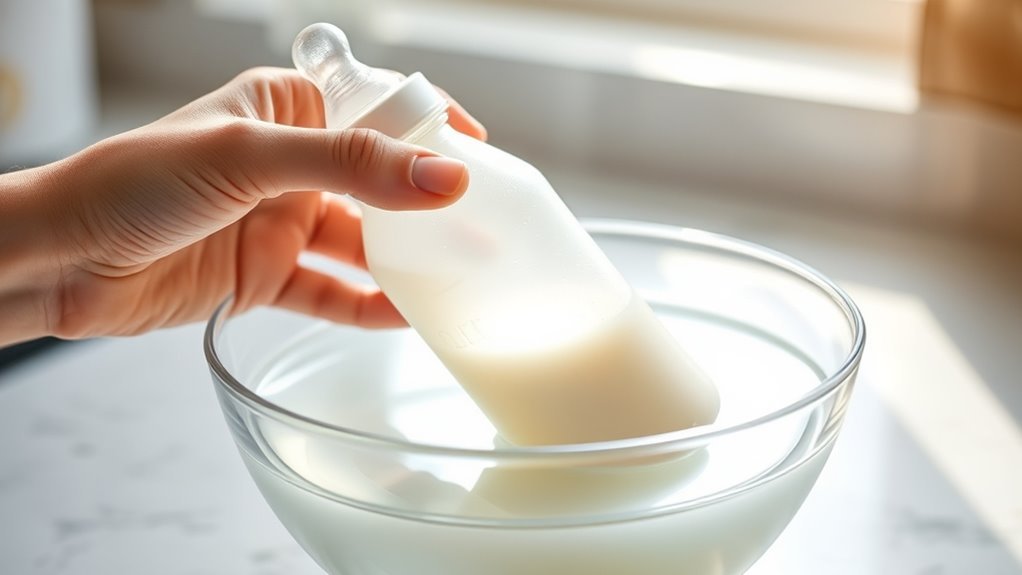
Although heating breast milk might seem straightforward, doing it gently with lukewarm water protects its valuable nutrients and antibodies. To warm breast milk safely, place the sealed container in a bowl or mug filled with lukewarm water, ideally around 98°F (37°C).
This gentle warming method helps heat the milk evenly without damaging its quality. Let the container sit for 1-2 minutes, gently swirling it occasionally to distribute heat throughout.
Be sure to avoid hot water, as high temperatures can destroy essential nutrients. Once the milk reaches a safe temperature, remove the container from the water.
Swirl and Test Warmed Breast Milk Before Feeding
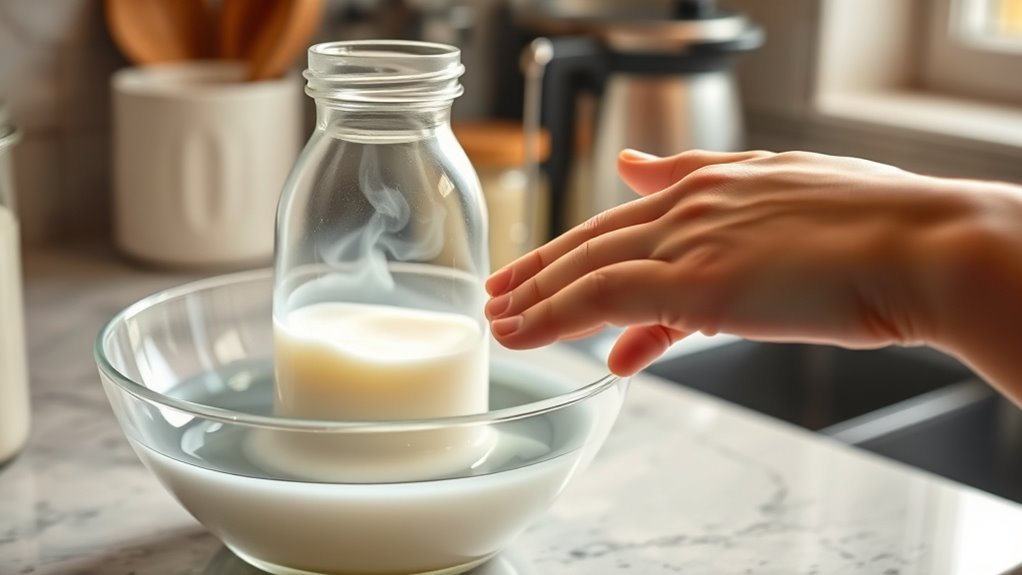
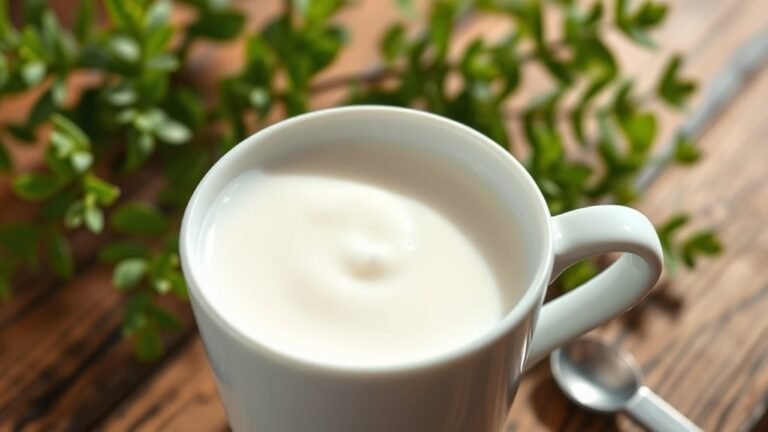
Since breast milk naturally separates, you should gently swirl the container to evenly distribute the fats without shaking. This helps preserve its nutrients and original consistency.
Avoid vigorous shaking, as it can damage beneficial proteins and antibodies. After swirling, it’s important to test the warmed breast milk’s temperature before feeding.
Use the wrist test by placing a small drop on your wrist; it should feel lukewarm—not hot—to ensure it’s safe and comfortable for your baby. Checking the temperature helps prevent burns and makes feeding a pleasant experience.
Frequently Asked Questions
What Is the Easiest Way to Warm up Breast Milk?
The easiest way to warm breast milk is by placing the sealed container in hot water for a few minutes. You’ll gently swirl it, avoid shaking, and test the temperature on your wrist before feeding your baby.
What Is the 3-3-3 Rule for Breast Milk?
The 3-3-3 rule means you thaw frozen milk for 3 hours, warm it, then use it within 3 hours. You shouldn’t refreeze it. This rule keeps your baby’s milk safe, fresh, and full of nutrients.
How Do You Heat up Your Breast Milk?
You heat up breast milk by placing the sealed container in warm water for a couple of minutes, gently swirling it to mix, then testing a drop on your wrist to guarantee it’s warm, not hot, before feeding.
Can I Microwave Breast Milk for 10 Seconds?
No, you shouldn’t microwave breast milk for 10 seconds. It heats unevenly, risking burns and destroys essential nutrients and antibodies. Instead, gently warm it using a bottle warmer or warm water for safe, even heating.
Conclusion
Warming breast milk is easier than you think, and by following these simple steps, you’ll never have to stress about feeding time again.
Remember, gently thawing and warming it with lukewarm water keeps all those precious nutrients intact—like preserving liquid gold. Always swirl and test the temperature before feeding to keep your baby safe and happy.
You’ve got this; your little one’s comfort and health are worth every careful step! Heating breast milk properly ensures your baby gets all the nutrients they need without any hassle. So next time you warm breast milk, just follow these easy steps and enjoy a smooth, stress-free feeding experience.