7 Things to Know Before You Substitute Heavy Whipping Cream for Milk
Before substituting heavy whipping cream for milk, it’s important to know that cream contains much more fat. This extra fat gives dishes a richer taste and the unique ability to whip into peaks—something milk just can’t do.
If you try mixing milk with butter, it might mimic cream’s fat content, but it won’t whip or create the same texture. Milk-based substitutes work best in sauces and baked goods, but watch out—they can separate if boiled too quickly or mixed with acid incorrectly.
Using the right tools and techniques can help you get closer to cream’s texture. Keep exploring these tips and tricks, and you’ll master the art of substituting heavy whipping cream for milk in no time!
Key Takeaways
- Heavy whipping cream has 36-38% fat, while milk has just 0-4%. This difference really affects the texture and richness when you substitute one for the other.
- Milk can’t be whipped or create stable peaks like heavy cream because it’s low in fat and protein. So if you’re looking to whip something up, milk won’t cut it.
- You can mix milk with melted butter to mimic the fat content of heavy cream. But keep in mind, this mixture won’t whip or hold its shape the same way.
- Milk-based substitutes work best in sauces, soups, and baked goods. They’re not great for recipes that require actual whipped cream.
- When using milk substitutes, avoid boiling them rapidly. Also, add acids off the heat to prevent curdling and separation. It helps keep things smooth and creamy.
What Makes Heavy Cream Different From Milk in Recipes?
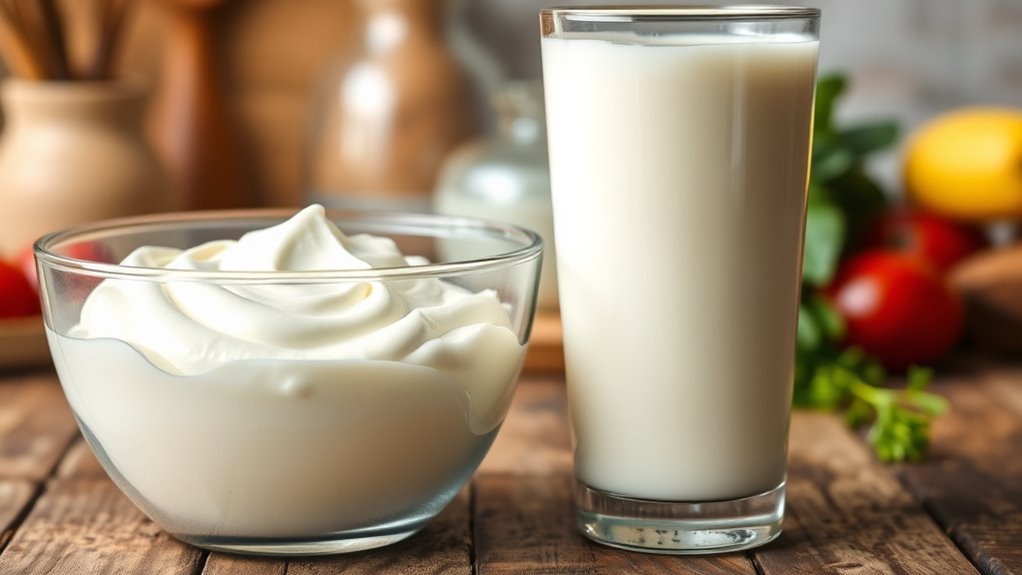
Although milk and heavy cream might seem similar, their differences dramatically affect your recipes. Heavy cream contains 36-38% butterfat, while whole milk has only 0-4%.
Milk and heavy cream may look alike, but their fat content makes all the difference in your cooking.
This high fat content in heavy cream gives your dishes a rich, velvety texture that milk simply can’t provide. When you use heavy cream, you can whip it into stiff peaks, perfect for toppings or mousses—something milk can’t do because of its low fat.
In cooking, heavy cream thickens sauces and soups more effectively due to its fat and protein. Milk lacks these emulsifying properties, so it won’t offer the same creaminess or stability.
Knowing these distinctions helps you decide when heavy cream or milk suits your recipe best.
How to Make a Heavy Cream Substitute Using Milk and Butter
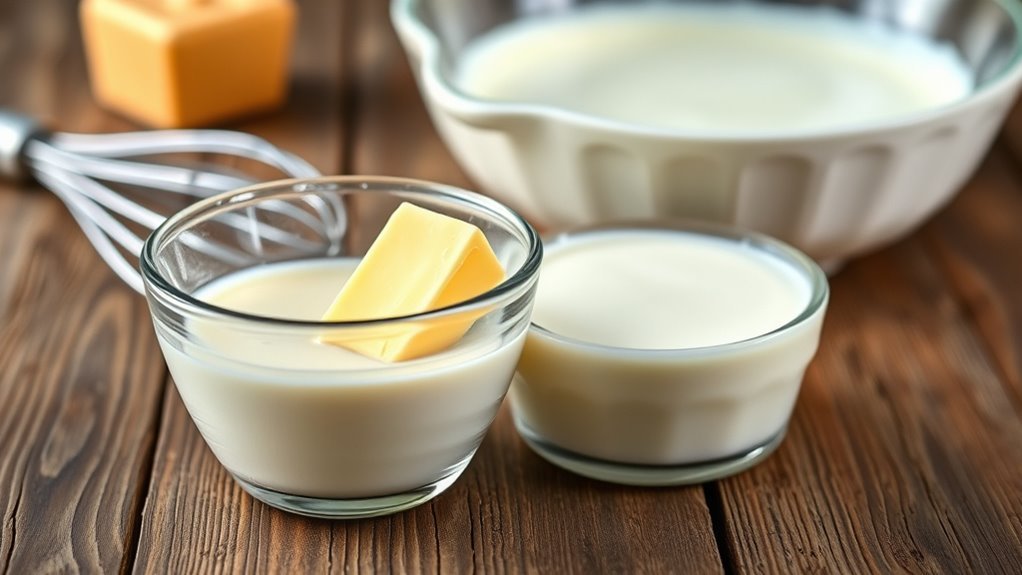
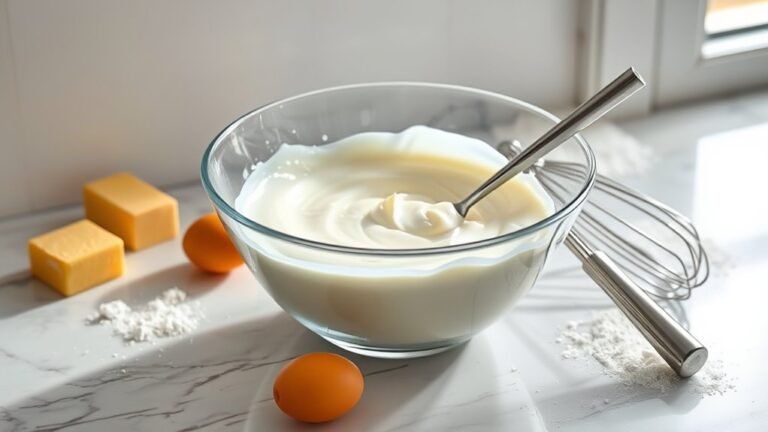
You can easily make a heavy cream substitute by whisking 1/4 cup of melted butter into 3/4 cup of whole milk. Just make sure the butter is cooled before mixing for the best texture.
This blend works great in sauces and baked goods but won’t whip like real heavy cream. So, it’s perfect when you need creaminess without the fuss of whipping.
Butter And Milk Ratio
To make a heavy cream substitute using milk and butter, start by melting 1/4 cup of unsalted butter and letting it cool to room temperature. Next, mix it with 3/4 cup of whole milk to mimic the richness of heavy cream.
This simple ratio gives you about 1 cup of substitute cream that’s perfect for most recipes, except whipped cream.
Here’s the butter and milk ratio to remember:
- Use 1/4 cup of unsalted butter, fully melted and cooled.
- Add it to 3/4 cup of whole milk.
- Whisk thoroughly for a smooth, creamy blend.
This ratio guarantees you get a stable, rich texture similar to heavy cream without separation. Easy, right? Give it a try next time you need heavy cream but don’t have any on hand.
Preparation And Mixing
Once you’ve mastered the butter and milk ratio, the next step is combining them properly to create a smooth, creamy substitute for heavy cream. Start by melting 1/4 cup of unsalted butter and letting it cool to room temperature.
Then, whisk the cooled butter into 3/4 cup of whole milk until the mixture is fully combined. This mixture works as a 1:1 substitute for heavy cream in most recipes.
Keep in mind, this homemade substitute won’t whip into stiff peaks like traditional whipped cream. For best results, refrigerate the mixture until it’s very cold before adding it to your dishes.
This ensures a rich texture, making your recipes creamy and delicious without the heavy cream.
Usage And Limitations
Although this milk and butter mixture closely mimics heavy cream’s fat content and texture, it won’t perform exactly the same in every recipe. When using this cream substitute, keep these points in mind:
You can use it in sauces, soups, and baked goods where richness and creaminess matter. But don’t try whipping it—this mixture lacks the stability to form peaks like real heavy cream.
Also, let the melted butter cool before mixing to ensure the fat blends well with the milk. This helps enhance the texture.
This cream substitute offers a practical alternative when heavy cream isn’t available. Just remember, it’s not suited for toppings or recipes requiring whipped cream’s structure.
Use it where fat content and smooth texture are key.
When Can You Use Milk Instead of Heavy Cream Without Losing Texture?
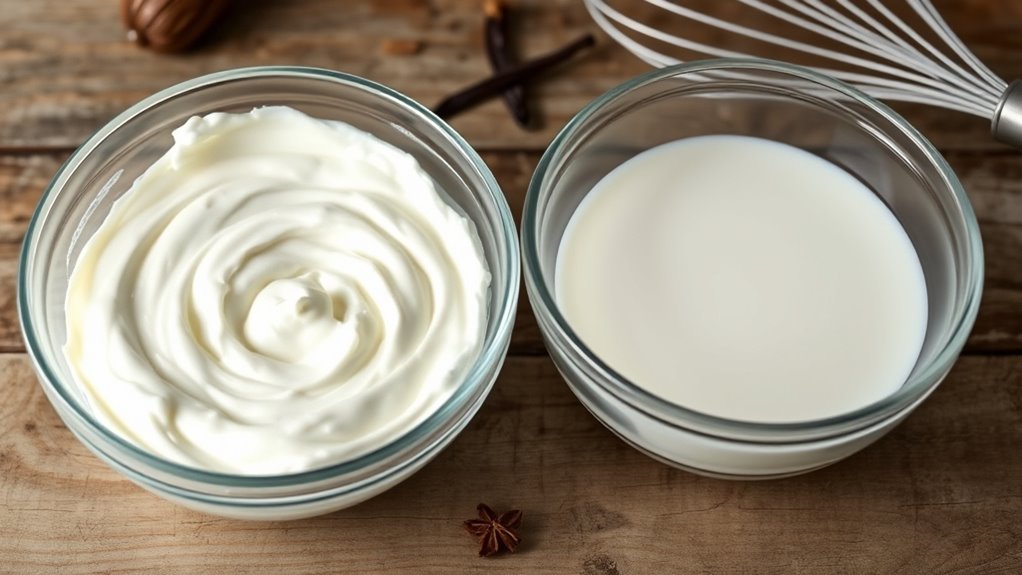
When can you swap milk for heavy cream without sacrificing texture? Milk alone lacks the fat content needed to match heavy cream’s richness and creaminess, which comes from its 36-38% butterfat.
You can use milk instead of heavy cream in recipes where the cream’s role is primarily to add moisture or thinness, like sauces, soups, or baked goods. This works especially well when the mixture is heated.
But if you want to keep that velvety texture, milk alone won’t cut it. It won’t whip or thicken like heavy cream does.
In these cases, combining milk with melted butter or a thickening agent can help mimic heavy cream’s texture in cooked dishes. However, for raw or whipped uses, milk just won’t deliver.
Why Milk-Butter Mixtures Don’t Work for Whipped Cream
You might think mixing milk and butter could mimic heavy cream, but it won’t whip properly. The mixture lacks the fat structure needed to trap air and hold peaks.
Without that, you’ll end up with a dense, runny texture instead of fluffy whipped cream. So, it’s not really a good shortcut if you want that light, airy finish.
Lack Of Whipping Ability
Since milk and butter mixtures lack enough fat and the right structure, they can’t trap air to form the stable, stiff peaks needed for whipped cream. Unlike light cream or heavy whipping cream, these mixtures don’t have the whipping ability to create that airy texture you want.
Here’s why:
- The fat content in milk-butter blends is usually below 30%, which isn’t enough for whipping.
- The melted butter and milk emulsion lacks the protein structure needed to hold air bubbles.
- So, you might get slight thickening, but never the volume or foam of true whipped cream.
Insufficient Fat Structure
Three key factors make milk and butter mixtures unsuitable for whipping into cream: insufficient fat content, lack of proper emulsification, and the absence of a stable protein network. Heavy cream contains about 36-38% butterfat, which is essential for forming a stable foam.
When you try to whip milk and butter together, the fat content is too low and the structure too weak to trap air. As a result, the mixture won’t hold soft or stiff peaks.
Unlike heavy cream, which thickens and holds shape during whipping, milk-butter blends simply melt and remain liquid. Even though adding melted butter to milk mimics cream’s richness in cooking, it lacks the heavy, stable fat structure needed for whipping.
Best Recipes for Using Milk as a Heavy Cream Substitute
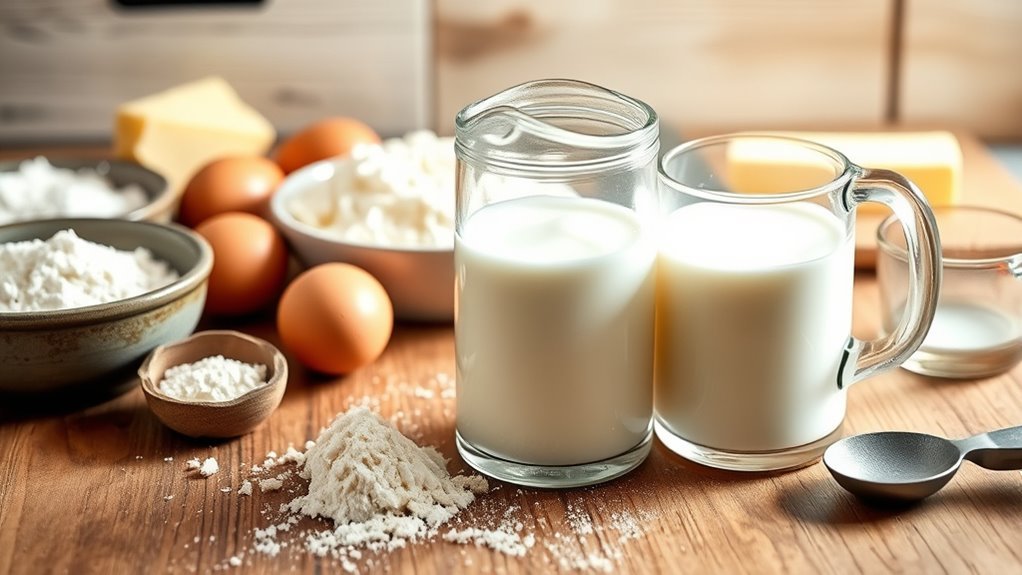
When a recipe calls for heavy cream but you only have milk on hand, you can still achieve great results by combining milk with butter or a thickening agent. Mixing 3/4 cup of whole milk with 1/4 cup of melted butter creates a rich substitute that works well in many dishes.
Here are the best recipes to try with this milk-based cream substitute:
- Creamy sauces and gravies – Add a bit of flour or cornstarch to thicken and enrich your sauce without heavy cream.
- Soups – Use the milk and butter mix to add creaminess to pureed or chowder-style soups.
- Baked goods – Incorporate the substitute for moistness and richness in cakes or muffins where heavy cream is called for.
This mixture won’t whip, but it really shines in cooked dishes. So go ahead and give it a try!
How Cooking Methods Affect Milk-Based Cream Substitutes
Using milk and butter as a substitute for heavy cream can work well in many recipes, but how you cook with this mixture makes a big difference. High heat risks curdling or separation, so gentle simmering is best.
Rapid boiling breaks emulsions, thinning your cream substitute and ruining texture. Acidic ingredients can cause curdling if added too early or hot.
To keep your substitute stable and achieve stiff peaks when whipping, consider adding thickening agents like cornstarch or flour.
| Cooking Method | Effect on Milk-Butter Substitute | Tips |
|---|---|---|
| High Heat | Separation, curdling | Avoid or temper carefully |
| Gentle Simmering | Maintains stability | Preferred method |
| Rapid Boiling | Breaks emulsion, thins mixture | Avoid |
| Acid Addition | May cause curdling | Add last, off heat |
| Thickening Agents | Improves stability | Use cornstarch or flour |
Kitchen Tools to Improve Your Heavy Cream Substitutes
Although you can mix milk and butter by hand, a high-speed blender like a Vitamix or NutriBullet makes a huge difference in achieving the smooth, stable emulsion that mimics heavy cream. These kitchen tools handle hot liquids well and have vent caps to release steam safely.
An immersion blender also works great for smaller batches and helps maintain an even texture as you stir. To improve your heavy cream substitutes, consider these essentials:
- High-speed blender for thorough fat incorporation and stable emulsions.
- Immersion blender for easy blending and preventing skin formation during cooling.
- Covered containers for proper cooling and storage to whip the mixture into a fluffy texture.
Using these tools guarantees your milk-based cream substitute is as close to real heavy cream as possible. Trust me, it makes all the difference!
Frequently Asked Questions
What Happens if I Substitute Heavy Whipping Cream for Milk?
If you substitute heavy whipping cream for milk, your dish becomes richer and thicker. You’ll get a creamier texture and denser consistency, but be ready for higher fat content and possibly altered flavors or thickness in sauces or batters.
What Can I Use if I Don’t Have Heavy Whipping Cream or Milk?
If you don’t have heavy whipping cream or milk, try coconut cream or full-fat canned coconut milk—they’re like the Renaissance artists of richness. You can also blend cottage cheese or plant-based creams with oil for creamy results.
How Much Heavy Cream Is Equal to Milk?
You’ll want to use about one-third heavy cream mixed with two-thirds water to replace one cup of milk. This helps match the milk’s consistency and fat content, keeping your recipe balanced and creamy without being too rich.
Is There a Healthy Heavy Cream Substitute?
Think of swapping heavy cream like choosing a steam-powered carriage over a sleek electric car—Greek yogurt or cashew milk blended with a bit of oil offers creaminess and healthier fats you’ll appreciate in your modern kitchen.
Conclusion
So, you want to swap heavy cream for milk and pretend it’s the same? Cute! Sure, you can mix milk with butter and call it a day, but don’t expect silky textures or heavenly whipped peaks.
Just remember, cooking is part science, part magic—milk won’t always fool your taste buds. So go ahead, experiment, and embrace those “creative” textures.
After all, who needs perfect when you’ve got enthusiasm and a dash of kitchen chaos? Substituting heavy whipping cream for milk can change the texture and flavor of your dish, so keep that in mind as you cook. Enjoy the process, and don’t be afraid to try new things in the kitchen!